
Bottom line up front: Both watches are now real, priced, and confirmed. The Galaxy Watch Ultra 2 launched July 22 with an 800mAh battery, a 5,000-nit display, and FDA-cleared sleep apnea detection. The Fenix 9 officially launched August 25, starting at $999.99, with a brighter AMOLED display, doubled storage, and — on the Pro Solar tier — a battery rated for up to 291 days in power-saving mode. This is no longer a “confirmed vs. rumored” comparison. It’s a genuine head-to-head between two finished products.
Every spec below is now sourced from each brand’s official product pages — no leaks, no projections.
These two watches are finally competing on equal footing. Samsung launched the Ultra 2 at Unpacked on July 22. Garmin followed just over a month later, officially confirming the Fenix 9 and Fenix 9 Pro at its “Play Harder” event on August 25.
Quick Overview
Samsung Galaxy Watch Ultra2 + $100 GC, Titanium Silver, 47mm LTE … Samsung Galaxy Watch Ultra2 + $100 GC, Titanium Silver, 47mm LTE … $699.99 Buy on Amazon

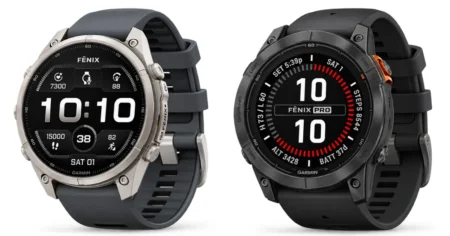
Garmin Fenix 9 — Officially launched August 25, 2026 · Price – $999.99 confirmed (43/47mm base) · Orders open August 28, 2026

The Ultra 2 still arrives first by about five weeks, and it’s been shipping and reviewed since early August. The Fenix 9 is confirmed but not yet in customers’ hands — orders open August 28. Garmin’s outdoor and battery-life track record remains real, but now it’s backed by actual confirmed numbers instead of history and rumor.
Full Comparison
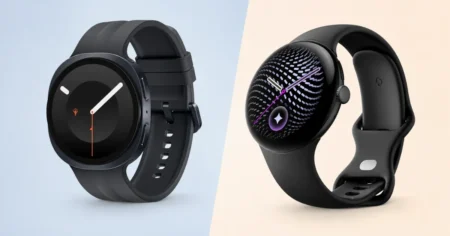
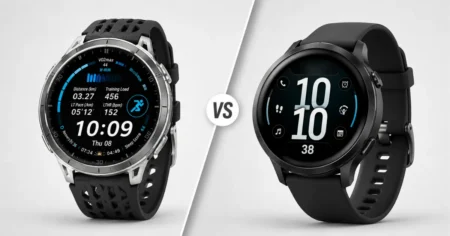
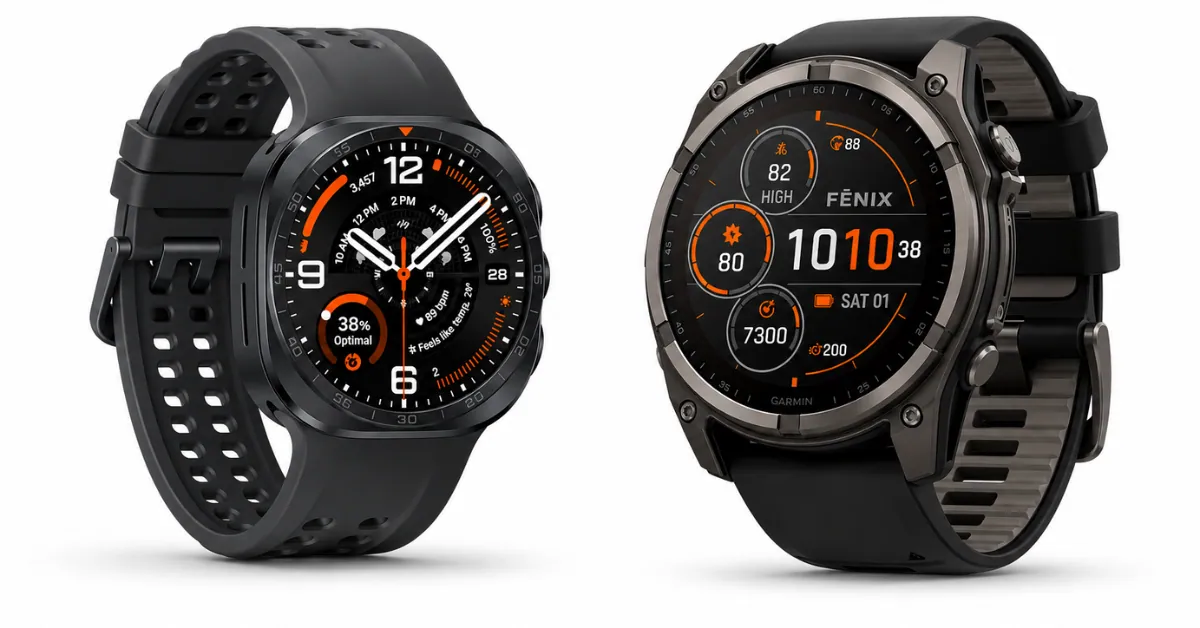
Comparison graphic showing Samsung Galaxy Watch Ultra 2 vs Garmin Fenix 9 side by side, both now officially confirmed.
| Specification | Samsung Galaxy Watch Ultra2 | Garmin fēnix 9 |
|---|---|---|
| Status | Official | Official |
| RAM | 2GB | 50% more RAM than Fenix 8 |
| Internal Storage | 64GB | 64GB |
| Processor | Qualcomm Snapdragon Wear Elite | Not officially disclosed by Garmin |
| Processor Architecture | 3nm platform | Not officially confirmed |
| Map Performance | GPS/GPX navigation | Updated map engine; map panning up to 30% faster |
| Maps Storage | 64GB total storage | 64GB; up to twice as many maps as fēnix 8 |
| Music Storage | 64GB total storage | Up to 7,000 songs |
| Display | 1.52-inch AMOLED, up to 5,000 nits | AMOLED options; Pro AMOLED up to 3,000 nits |
| Battery Capacity | 800mAh | Garmin does not publish mAh capacity |
| Battery Life | Up to 60 hours depending on mode | Up to 29 days depending on model/configuration |
| GPS | Built-in GPS, multi-system positioning | Multi-band GNSS + SatIQ |
| Offline Maps | GPX route support/navigation | Full topographic maps |
| Connectivity | LTE, Wi-Fi, Bluetooth | Bluetooth/Wi-Fi; Pro models add LTE + satellite/inReach |
| Water Rating | 10 ATM + EN13319 | 10 ATM / 40m dive rating |
| Operating System | Google Wear OS | Garmin proprietary platform |
| iPhone Support | No | Yes |
| Android Support | Yes | Yes |
| Payments | Samsung Wallet/Samsung Pay | Garmin Pay |
| Best Known For | Smartwatch apps, health tracking, AMOLED display, LTE, outdoor features | Advanced training, navigation, long battery life, maps and outdoor performance |
What We Now Know About the Fenix 9
Every open question from our earlier coverage has been answered:
- Official launch date: August 25, 2026
- Price: $999.99 to $1,199, plus a $100 satellite add-on on Pro models
- Battery life: Published in days per size, not a battery capacity spec — see table above
- Display technology: AMOLED across the board; Solar/MIP as a separate Pro-only option; no MicroLED
- New sensors: None. The Elevate 5 heart rate sensor carries over unchanged from Fenix 8 Pro Final design:
- Titanium bezel and sapphire lens now standard even on the base model, not just Pro/Sapphire trims
With the full spec sheet public, every comparison below reflects Garmin’s actual numbers — including the categories where Garmin turns out to be a clear winner, and the one or two where the pre-launch expectations didn’t fully hold up.
Quick Decision Tree
Need a watch this month?
├─ YES → Buy Galaxy Watch Ultra 2 (shipping now; Fenix 9 orders open Aug 28)
└─ NO → Already own a Garmin?
├─ YES → Get the Fenix 9
└─ NO → Need smartwatch features (apps, voice, LTE)?
├─ YES → Galaxy Watch Ultra 2
└─ NO → Need outdoor battery/navigation?
└─ YES → Get the Fenix 9
Samsung Galaxy Watch Ultra 2 — What’s Actually Confirmed
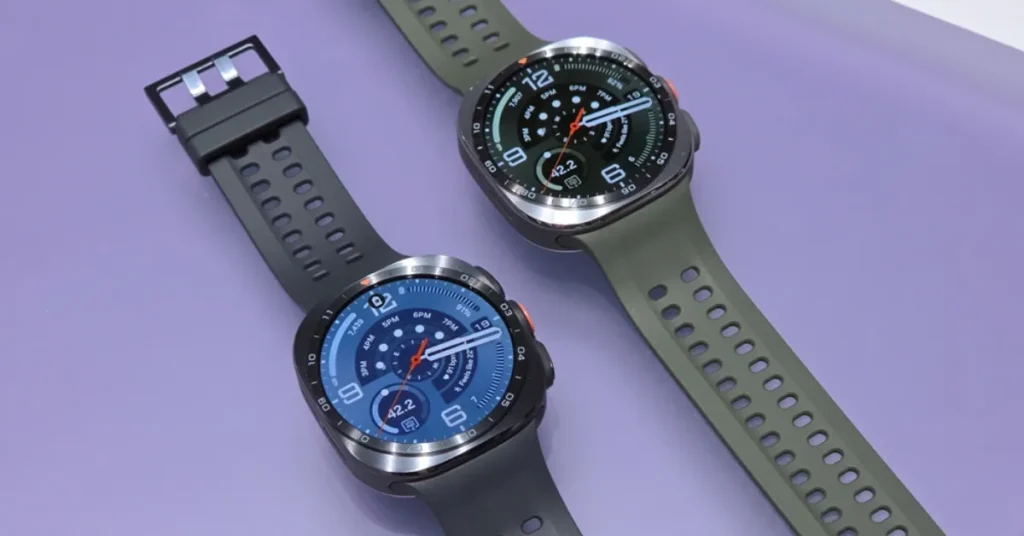
Samsung announced the Ultra 2 and watch 9 on July 22, 2026, at Galaxy Unpacked in London. It keeps the original Ultra’s titanium, cushion-shaped design but targets that watch’s defining complaint — battery life — with an 800mAh cell, a 35% capacity jump paired with the new Snapdragon Wear Elite chipset for efficiency.
The display now hits 5,000 nits peak brightness, up from 3,000 on the original, though resolution holds at 480×480. Durability steps up too: IP69K rating, 10ATM water resistance, and EN13319 dive certification with automatic dive tracking.
On health, Samsung’s pitch is largely software: FDA-cleared Sleep Apnea detection screening over a two-night window, a “Vitals” feature that learns your personal overnight baseline, and a Heart Health Score.
One correction worth being explicit about: earlier pre-launch reporting (including on this site) expected 5G connectivity on the Ultra 2.
Samsung’s official spec sheet doesn’t list it — confirmed connectivity is LTE, Bluetooth 6.0, Wi-Fi, and NFC. If cellular independence without 5G specifically mattered to your decision, that’s worth knowing before you buy.
Winner — Confirmed Availability: Samsung, simply because it’s been shipping since August 7 and has real-world reviews already out. Garmin’s watch is now fully specced but still a few days from actually being in anyone’s hands.
Garmin Fenix 9 — Now Fully Confirmed
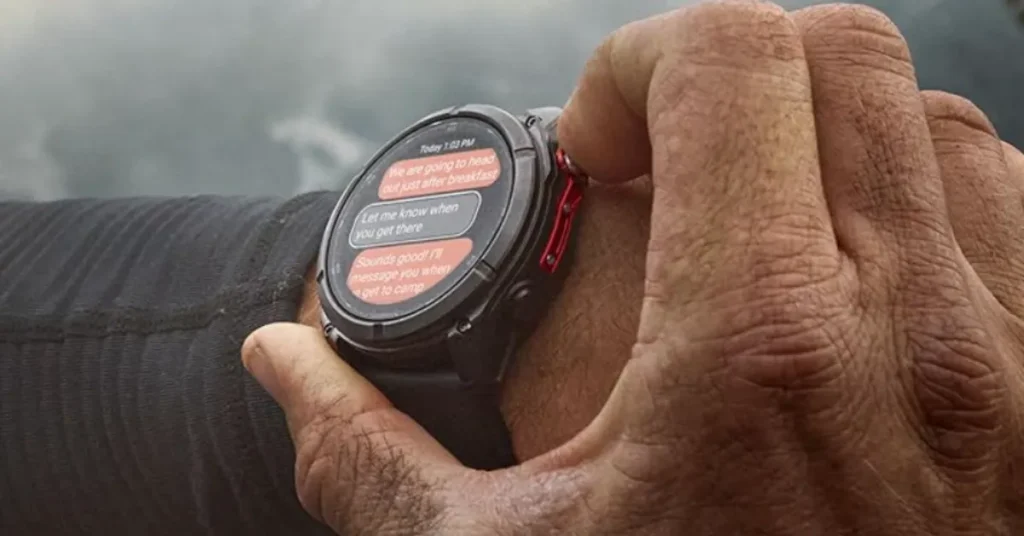
The Fenix 9 is no longer a code reference — Garmin confirmed everything at its August 25 “Play Harder” event. Here’s what’s real:
Price: $999.99 for the 43mm or 47mm base model, $1,099.99 for the 51mm base. The Fenix 9 Pro starts at $1,099 (43/47mm AMOLED or 47mm Solar) and reaches $1,199 for the 51mm Pro. Adding inReach satellite messaging to any Pro model costs an additional $100, plus a required subscription — it is never available on the base Fenix 9, at any price.
Battery: The base Fenix 9 is nearly flat versus the Fenix 8 at the smaller sizes — 10 days at 43mm, 16 days at 47mm, both close to what the Fenix 8 already offered. The 51mm base holds at 29 days, matching the Fenix 8. The real jump is on the Fenix 9 Pro Solar (51mm): up to 57 days of normal use and an extraordinary 291 days in power-saving mode — nearly 7x the Fenix 8 Pro Solar’s power-saving figure.
GPS: Garmin confirmed multi-band GNSS and SatIQ are retained from the Fenix 8. There is no published tri-band GNSS spec or sub-50cm accuracy claim — the pre-launch rumor of a GPS hardware leap did not materialize as a headline spec. The confirmed navigation upgrade is in map software: smoother rendering and a new NextFork map guide, not raw positioning accuracy.
Display: The rumored “hybrid solar-over-AMOLED” panel did not ship. Instead, Garmin kept a clean split: AMOLED (base and Pro, all sizes) more than twice as bright as the Fenix 8, versus a separate Solar/MIP option restricted to the Pro tier at 47mm and 51mm only. No MicroLED anywhere in the lineup, at any price.
Health: The rumored “Muscle Battery” / SmO2 muscle-oxygen feature is not part of the confirmed Fenix 9 spec sheet. What is confirmed: HRV status, Body Battery, stress tracking, and a Garmin ECG app, all carried over largely unchanged from Fenix 8. The heart rate sensor itself — Elevate 5 — is identical to the one in the Fenix 8 Pro; there’s no new sensor hardware this generation.
Release: Confirmed for August 25, 2026, with orders opening August 28 — landing right in the “August–September 2026” window this site projected months ago.
Winner: Now fully scorable. Garmin wins on price-for-endurance (Pro Solar’s 291-day figure has no real competitor), navigation software polish, and cross-platform support. Samsung wins on raw display brightness, confirmed health-screening features, and being available for weeks longer. Neither watch got everything pre-launch reporting expected — Garmin’s GPS and HR sensor turned out to be carryovers, not upgrades.
If you’re still unsure whether the Fenix 9 is worth it over the Fenix 8 specifically, see our full Fenix 9 vs Fenix 8: Is the Upgrade Worth It? comparison for that generational breakdown.
If you’re still unsure whether the Fenix 9 is worth waiting for, our guide to Best Garmin Running Watches in 2026 compares every major Garmin model—from beginner-friendly Forerunner watches to the rugged Fenix 8—to help you choose the right running watch today.
Battery Life
This is the category worth taking seriously even with Garmin’s side unconfirmed. Samsung’s 800mAh is a real, meaningful jump for Samsung’s own lineup — but Garmin’s current Fenix 8 baseline (16 days smartwatch / 42 hours GPS) already exceeds what Samsung has ever offered by a wide margin.
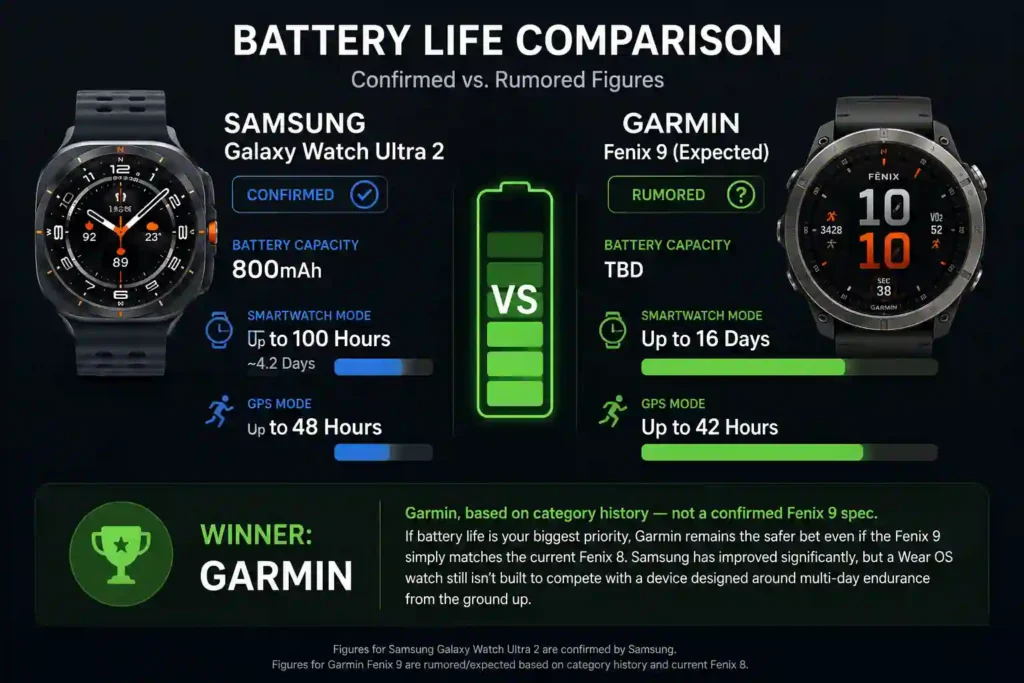
The base Fenix 9 doesn’t dramatically outpace the Fenix 8 — 10 to 29 days depending on size, essentially the same territory Garmin has occupied for two generations.
What changes the picture entirely is the Fenix 9 Pro Solar at 51mm: 57 days of normal use, and up to 291 days in power-saving mode. That number isn’t in the same conversation as an 800mAh smartwatch battery — it’s a fundamentally different design goal.
Winner: Garmin, and this time it’s a confirmed spec, not a historical pattern. If battery life — especially extreme multi-week or multi-month battery life — is your top priority, the Fenix 9 Pro Solar has no real competitor in this comparison, or arguably anywhere in the smartwatch market right now.
Samsung has improved significantly, but a Wear OS watch still isn’t built to compete with a device designed around multi-day endurance from the ground up.
GPS & Outdoor Navigation
Samsung’s confirmed dual-frequency GPS matches today’s premium-smartwatch standard. Garmin’s confirmed spec is multi-band GNSS with SatIQ — the same hardware class as the Fenix 8, not the tri-band, sub-50cm-accuracy upgrade some pre-launch reporting (including ours) expected. The genuine Fenix 9 navigation upgrade is software: smoother map rendering, a new NextFork map guide, and dynamic round-trip routing.
Winner: Garmin, but by a narrower margin than expected. Offline mapping and trail-navigation depth still favor Garmin’s ecosystem over Samsung’s smartwatch-first approach, and that gap is real. But anyone specifically waiting for a GPS hardware leap on the Fenix 9 didn’t get one — this generation’s navigation win is in usability, not raw positioning technology.
Health & Smart Features
Samsung’s confirmed health suite (Sleep Apnea detection, Vitals, Heart Health Score) is real and has been in customers’ hands since early August.
Garmin’s confirmed health features — HRV status, Body Battery, stress tracking, ECG — are solid but represent continuity from the Fenix 8 rather than a new capability. The rumored SmO2 “Muscle Battery” feature did not ship on the Fenix 9.
On everyday smartwatch use — apps, voice assistant, notifications — Samsung’s Wear OS foundation remains more built out than anything Garmin has historically prioritized.
Winner: Samsung, and now decisively rather than just on a timing advantage. Samsung shipped genuinely new, FDA-cleared health screening; Garmin’s health platform on the Fenix 9 is proven and reliable but not meaningfully expanded over the Fenix 8.
If health-feature innovation specifically is what you’re shopping for, Samsung has the stronger confirmed case this generation.
Timeline: Why This Comparison Exists Right Now
June 2026 — Fenix 9 referenced in Garmin Connect app code
        ↓
July 22, 2026 — Samsung officially launches Galaxy Watch Ultra 2
        ↓
August 7, 2026 — Ultra 2 ships and becomes widely available
        ↓
August 25, 2026 — Garmin officially launches the Fenix 9 and Fenix 9 Pro
        ↓
August 28, 2026 — Fenix 9 orders open
Garmin’s actual timing landed almost exactly where this site projected back in June — a genuinely accurate call on the release window, even though several individual spec predictions (GPS hardware, a new HR sensor, hybrid solar display) didn’t pan out.
Verdict Scorecard
| Category | Winner |
|---|---|
| Smartwatch features | Samsung |
| Outdoor navigation | Garmin (confirmed, though a software win more than hardware) |
| Battery | Garmin (confirmed — decisively, thanks to Pro Solar) |
| Health features | Samsung |
| Apps | Samsung |
| Running analytics | Garmin (confirmed continuity of Fenix 8’s depth) |
| Buy today | Samsung (available now vs. orders opening Aug 28) |
| Best long-term value | Garmin (unchanged Fenix 8 pricing, doubled storage, brighter display) |
Every result above is now a confirmed spec comparison — no asterisks, no “based on history” caveats required.
Who Should Buy Which
| User Type | Recommendation |
|---|---|
| Android user | Galaxy Watch Ultra 2 |
| iPhone user | Fenix 9 (confirmed iOS support; Ultra 2 is Android/Wear OS only) |
| Hiker | Fenix 9 |
| Marathon runner | Fenix 9 |
| Casual gym user | Galaxy Watch Ultra 2 |
| Smartwatch enthusiast | Galaxy Watch Ultra 2 |
| Trail runner | Fenix 9, especially the Pro Solar if you’re doing multi-day routes |
| Traveler | Fenix 9 |
| Everyday user | Galaxy Watch Ultra 2 |
Buy the Galaxy Watch Ultra 2 if you…
Want a watch you can order and receive fastest — it’s been shipping since August 7 Are on Android Had battery life as your only complaint about the original Ultra Want FDA-cleared health features that are real right now
Get the Fenix 9 if you…
Are already invested in Garmin’s ecosystem and training data Prioritize multi-day (or multi-month) battery and offline mapping over smartwatch polish Can wait a few days for orders to open on August 28 Want satellite messaging as an option — available on any Fenix 9 Pro size for +$100
Pros & Cons
Samsung Galaxy Watch Ultra 2
Pros:
Available and shipping since August 7 Real 35% battery capacity increase FDA-cleared Sleep Apnea detection 5,000-nit display, genuinely bright outdoors IP69K and dive certification
Cons:
No confirmed real-world battery-life figure from Samsung No 5G, despite earlier pre-launch reports suggesting otherwise Android/Wear OS only — no iPhone support
Garmin Fenix 9 (Confirmed)
Pros:
Base pricing unchanged from Fenix 8 — $999.99 entry point Pro Solar battery life up to 291 days in power-saving mode — no real competitor at any price Display over 2x brighter than Fenix 8; Pro AMOLED reaches 3,000 nits Storage doubled to 64GB; new Garmin Epic multi-day activity feature Full iOS and Android support
Cons:
No new GPS hardware — multi-band GNSS is unchanged from Fenix 8, despite tri-band rumors No new heart rate sensor — Elevate 5 carries over from Fenix 8 Pro No MicroLED option at any price, and no SmO2/”Muscle Battery” health feature this generation Orders don’t open until August 28, a few days behind this article’s publish
FAQ
Which watch has better battery life?
Now confirmed rather than projected: the Fenix 9 Pro Solar (51mm) is rated for up to 291 days in power-saving mode, far beyond anything Samsung’s 800mAh Ultra 2 battery can offer. Even the base Fenix 9 at smaller sizes (10–16 days) comfortably beats a typical Wear OS watch, though it’s roughly flat versus the outgoing Fenix 8.
Is the Galaxy Watch Ultra 2 better than the Garmin Fenix 9?
It depends on your priorities. Both watches are now fully confirmed products, not a real-vs-rumored matchup. The Galaxy Watch Ultra 2 is the better choice if you want a full-featured smartwatch with Wear OS, Google apps, LTE support, and seamless integration with Samsung and Android phones. The Garmin Fenix 9 is the better option for serious athletes, outdoor adventurers, and users who prioritize training metrics, offline navigation, and extreme battery life — though it didn’t gain a new GPS chip or HR sensor this generation, so if those specifically were your reason to switch, know that they carried over from the Fenix 8.
Does the Galaxy Watch Ultra 2 support offline maps?
The Galaxy Watch Ultra 2 supports navigation features through Wear OS and compatible apps. However, Garmin watches — including the now-confirmed Fenix 9, with its new NextFork map guide and smoother rendering — traditionally provide more comprehensive offline mapping and outdoor navigation tools designed for hikers, trail runners, and explorers.
Should I buy the Galaxy Watch Ultra 2 or Garmin Fenix 9?
Both are officially available. If you want a smartwatch you can receive fastest, the Galaxy Watch Ultra 2 has been shipping since August 7. If your priority is endurance sports, outdoor adventures, or maximum battery life, the Fenix 9 is now fully confirmed and worth ordering once sales open August 28.
Does the Fenix 9 have the SmO2 “Muscle Battery” feature that was rumored?
No — this feature did not ship with the Fenix 9 or Fenix 9 Pro. Garmin’s confirmed health feature set (HRV status, Body Battery, stress tracking, ECG) is largely unchanged from the Fenix 8.
Final Verdict
Both watches are now real, confirmed products, and the decision comes down to what you actually value rather than what’s available versus what’s still a rumor. If you want a full-featured Wear OS smartwatch with FDA-cleared health screening and you can order it today, the Galaxy Watch Ultra 2 remains the easy pick.
If multi-day battery life, offline navigation, and training-analytics depth matter most — especially if you’re eyeing the Fenix 9 Pro Solar’s 291-day battery figure — the Fenix 9 is the clear choice, and it’s priced the same as the outgoing Fenix 8 to get there.
The one honest correction from our pre-launch coverage: Garmin’s GPS hardware and heart rate sensor turned out to be carryovers from the Fenix 8, not upgrades. If those specifically were driving your decision to wait for the Fenix 9 over Samsung, that expectation didn’t materialize — everything else did.
Related Reading
- Garmin Fenix 9: Every Confirmed Spec and Feature
- Garmin Fenix 9 vs Fenix 8 — Is the Upgrade Worth It?
- Samsung Galaxy Watch Ultra 2: Every Confirmed Spec
- Garmin Fenix 9 vs Apple Watch Ultra 4 — Which Adventure Watch Wins?
- Samsung Galaxy Watch 9 vs Apple Watch Series 12 — Full 2026 Comparison
- Garmin Enduro 4 Leaked: Release Date, Features & The Big Display Question (2026)
Samsung Galaxy Watch Ultra 2 details sourced from Samsung’s official July 22, 2026 announcement. Garmin Fenix 9 details sourced from Garmin’s official product pages, confirmed at launch on August 25, 2026. Last updated: August 25, 2026.