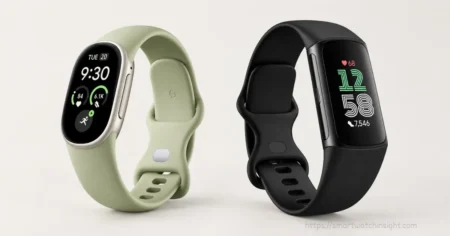

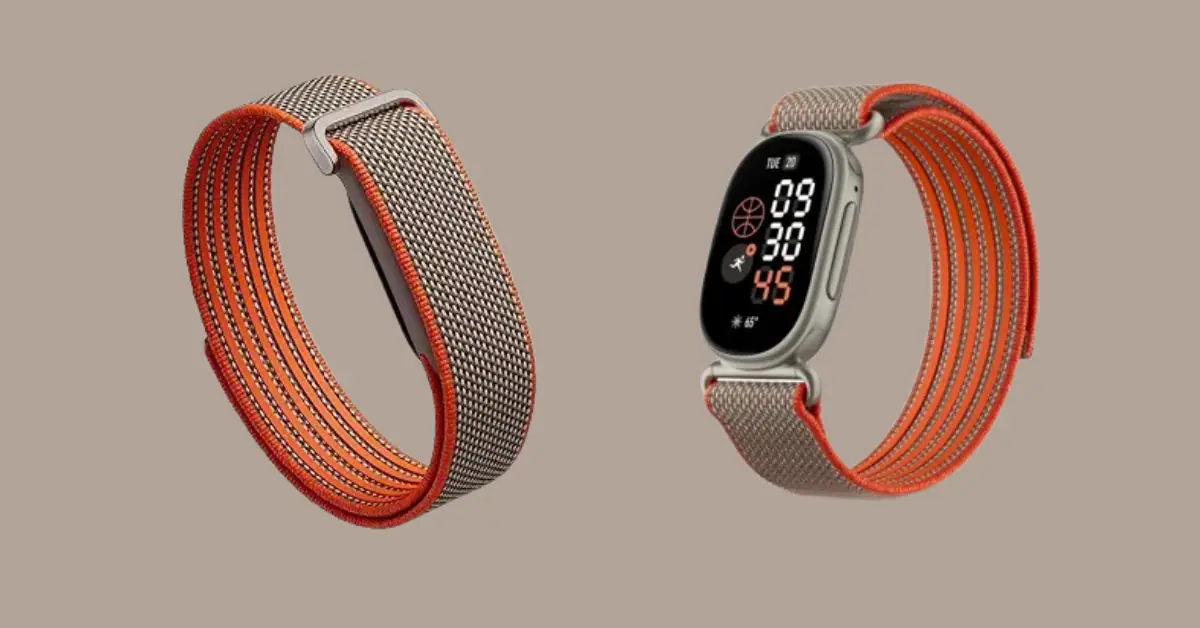
Google announced the Fitbit Edge on October 12, 2026. There is no Charge 7. The Edge takes its place, and it sits between the screenless Fitbit Air and Google’s Pixel Watch 5. If you were waiting for a new Charge, my earlier Fitbit Charge 7 coverage explains how we got here.
This guide compares the Fitbit Air vs Fitbit Edge on price, battery, GPS, health tracking and iPhone support, and tells you who should buy which.
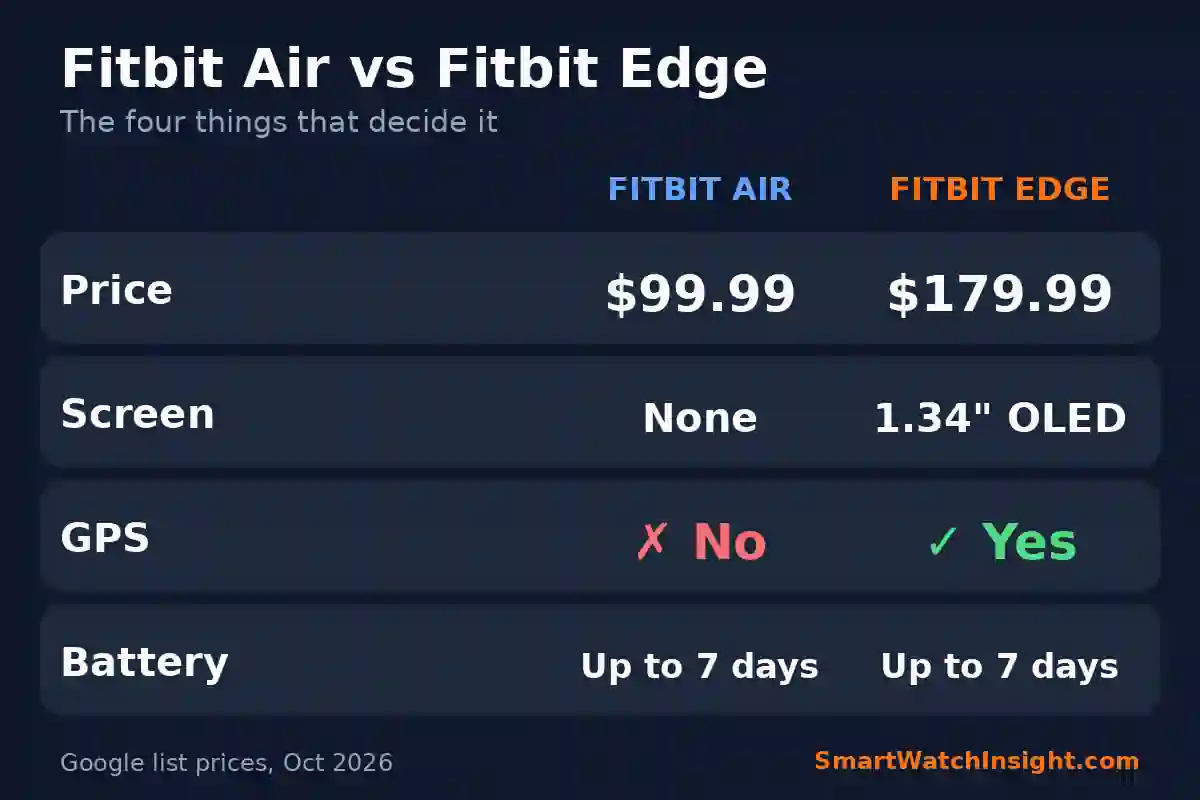
Quick answer: Buy the Fitbit Edge ($179.99) if you want a screen, built-in GPS, an altimeter and ECG. Buy the Fitbit Air ($99.99) if you want a screenless tracker for sleep and recovery that you forget you are wearing. Both are rated for 7 days of battery, both work with iPhone and Android, and both now detect about 100 sports automatically. The Edge is available to pre-order and ships October 27. Both trackers include three months of Google Health Premium.
A note on testing: The Edge ships on October 27, so I have not worn it yet. This comparison uses Google’s announcement details and early hands-on coverage. I will add my own results once I have both on my wrist.
Fitbit Air vs Fitbit Edge at a glance
| Fitbit Air | Fitbit Edge | |
|---|---|---|
| List price (US) | $99.99 | $179.99 |
| Screen | None | 1.34″ OLED, always-on |
| Built-in GPS | No | Yes |
| Altimeter | Not listed | Yes |
| Weight | 12g with band | 17.7g without band |
| Battery | Up to 7 days | Up to 7 days |
| Fast charging | 5 min for 1 day | 5 min for 1 day |
| ECG | No ECG app, has AFib alerts | Yes |
| Notifications | No | Yes |
| Water resistance | 50m | 5 ATM (50m), IP68 |
| Availability | Available now | Pre-order, ships Oct 27 |
Prices are Google’s list prices, not Amazon’s. Amazon prices change often, so click through to see today’s price.
What the Fitbit Edge adds
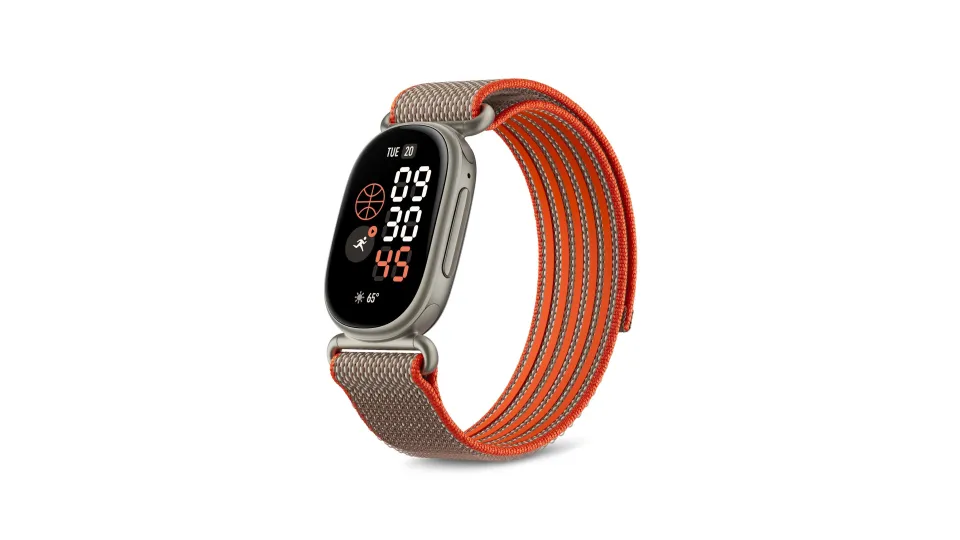
The Edge is the better choice if you want to look at your wrist. It has a 1.34-inch screen with 46% more viewing area than previous Fitbit trackers, which Google says is easy to read in direct sunlight, plus a physical side button that actually clicks. The old Charge had a touch area.
It also adds built-in GPS, an altimeter for stairs and elevation, ECG with background atrial fibrillation detection, and notifications. Google claims up to 40% better GPS tracking accuracy than previous generations, thanks to a new chipset and an aluminum case.
My Fitbit Edge vs Charge 6 comparison goes through everything that changed from the last Fitbit tracker.
Sensors and health tracking
The Edge has an optical heart rate sensor, an on-wrist ECG app, a skin temperature sensor, HRV and sleep stage tracking, and an altimeter.
Google also lists Health Guardian features, which watch for blood pressure trends, insulin resistance trends and high or low heart rate alerts in the background.
The Air tracks heart rate, resting heart rate, SpO2, HRV and sleep stages, with heart rhythm monitoring and AFib alerts. It has no ECG app and no GPS. Health Guardian reports are also rolling out to Fitbit Air users, so that is not an Edge exclusive.
Full feature comparison: Fitbit Air vs Fitbit Edge
These rows cover the features that are not in the table above.
| Feature | Fitbit Air | Fitbit Edge |
|---|---|---|
| Controls | Companion app, status LED | Physical side button, touch |
| Start workouts on the wrist | No | Yes, 50+ modes |
| Real-time workout guidance | No | Yes |
| Structured workouts | Not listed | Yes |
| AFib alerts | Yes | Yes |
| Skin temperature | Not listed by Google | Yes |
| Health Guardian reports | Rolling out | Yes |
| Quick replies | No | Android only |
| Google Maps and media controls | No | Yes |
| Contactless payments | No | No (Google Pay removed) |
| Replaceable battery | Not listed | Yes |
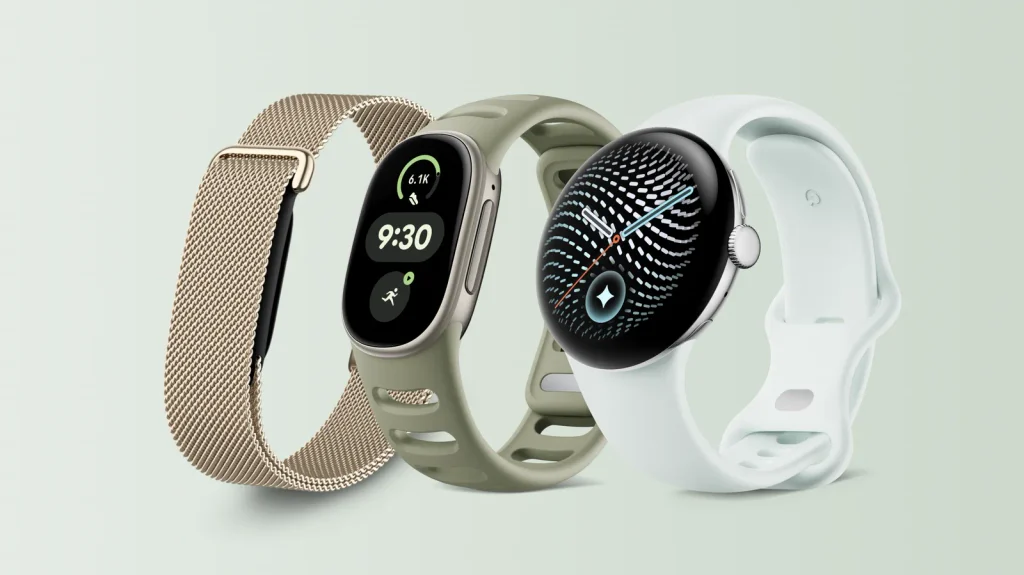
| Band options | Performance Loop (in box), Active, Elevated, metal mesh | Active Sport, Performance Loop, Magnet, Metal Links |
| Phone support | iPhone and Android | iOS 16.4+, Android 11+ |
| Google Health Coach | 3 months included | 3 months included |
In short, the two trackers match on battery, charging and automatic workout detection. The Edge pulls ahead on screen, GPS, altimeter, ECG and smart features, while the Air wins on weight, simplicity and price.
What the Fitbit Air does better
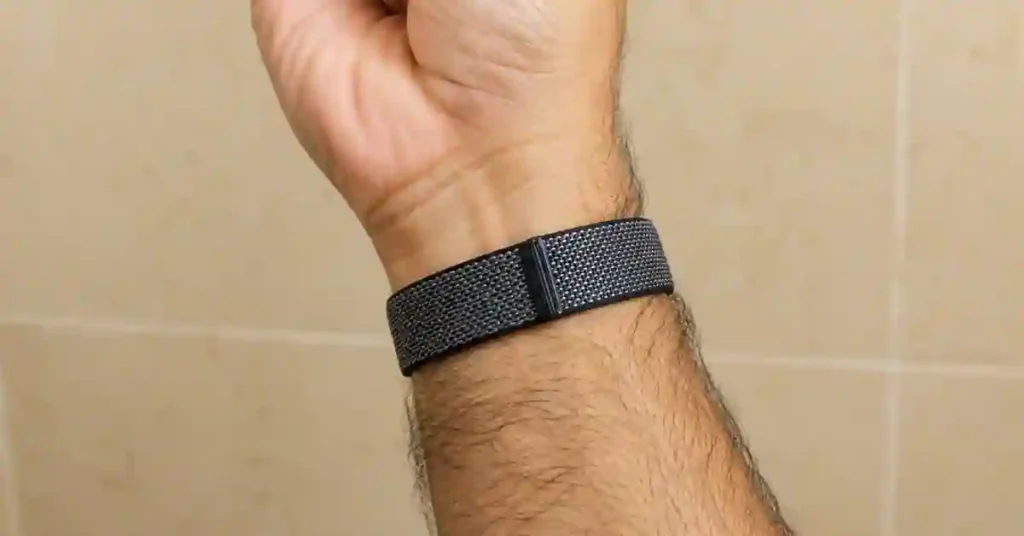
The Air is cheaper by $79. It is also the lightest wearable you can sleep in, at 12 grams with the band, and it has no screen to distract you.
Because there is nothing to look at, it works best as a 24/7 health tracker: sleep, heart rate, recovery and workouts all live in the Google Health app. Core features do not need a subscription, although Google Health Premium is optional.
You can start a workout from the Google Health app, follow a guided workout, or let the Air detect common activities and send you a recap.
If you are choosing between the Air and other budget trackers, my best fitness trackers under $100 guide compares your options.
What you give up on each
On the Air: no screen, no notifications, no built-in GPS (it uses your phone’s), no ECG app and no way to check the time.
On the Edge: Google Pay is gone, and so is the EDA Scan feature, although it still tracks stress in the background. It also costs $179.99, which is a lot more than the Charge 6’s usual street price.
What it costs in year one
The Air is $99.99 and the Edge is $179.99, a gap of $80. Both include three months of Google Health Premium, which unlocks the AI Health Coach and deeper insights.
After that, Premium is optional. Launch coverage of the Air lists it at $9.99 a month or $99 a year, so a full year would add about $99 to either tracker. You can skip it and still use the core tracking.
In the US, Google says the standard Fitbit Air is HSA and FSA eligible for qualifying customers, which can lower the cost if you have pre-tax health funds. The Special Editions are not eligible. Google has not said the same about the Edge.
What about automatic workout detection?
This is the big shared upgrade. Both the Air and the Edge now support about 100 sports with automatic detection, up from roughly 10 on the Air at launch. Google says the new algorithm is twice as accurate and misses fewer than half as many workouts.
Some of it relies on your history. If you tell the app that your Saturday ride is mountain biking, it will label future Saturday rides the same way. Workouts still need to last at least 15 minutes.
The Air’s update rolls out through firmware, so check that yours is current.
iPhone or Android: does it matter?
Both work with iPhone (the Edge needs iOS 16.4 or later) and Android 11 or later. There is one difference to know about: on the Edge you can reply to messages on Android, but not on iPhone, and notification integration is deeper on Android.
If you use an iPhone and want quick replies, you will not get them on this tracker. My Apple Watch alternatives for iPhone guide covers watches that handle iPhone better.
Can you use both?
Yes. The Edge supports dual use with the Pixel Watch and the Fitbit Air, so you can switch between them. A common setup is the Air for sleep and the Edge for workouts, although you would be paying for two devices.
Which Edge model should you pick?
The Edge comes in four finishes (Obsidian, Fog, Olive and Canyon) and a $219.99 Stephen Curry edition. They all have the same features, so it comes down to style and band size. I cover the colors, bands and sizing in my Fitbit Edge guide.
Which one should you buy?
- Want the cheapest tracker for sleep and recovery? Fitbit Air.
- Want built-in GPS and a screen for runs and rides? Fitbit Edge.
- Need ECG? Fitbit Edge, because the Air does not have an ECG app.
- Hate wearing anything with a screen to bed? Fitbit Air.
- Want to read notifications on your wrist? Fitbit Edge.


If you want a different screenless option, my Garmin CIRQA vs Whoop 5.0 comparison looks at the main rivals.
Should you wait for Edge reviews?
The Edge ships on October 27. If GPS accuracy matters to you, waiting two weeks for hands-on results is reasonable, because Google’s “up to 40%” claim has not been tested independently yet.
If you just want a cheap tracker today, there is nothing to wait for. The Air is available now.
Questions people ask
What is the difference between the Fitbit Air and Fitbit Edge?
The Air is a $99.99 screenless tracker with no GPS. The Edge is a $179.99 tracker with a 1.34-inch screen, built-in GPS, an altimeter and ECG.
Does the Fitbit Edge have GPS?
Yes. Google says it delivers up to 40% better tracking accuracy than previous generations, even without your phone. The Fitbit Air has no built-in GPS.
Which is better, the Fitbit Air or the Fitbit Edge?
It depends. The Edge is better for GPS, ECG and a screen. The Air is better for price, weight and wearing at night.
Is the Fitbit Edge worth $80 more than the Fitbit Air?
Only if you will use the screen, GPS, altimeter, ECG or notifications. For sleep and recovery tracking alone, the Air does the job.
Can I wear the Fitbit Air and Fitbit Edge together?
Yes. Google says the Edge supports dual use with the Air, so you can switch between them.
Does the Fitbit Edge work with iPhone?
Yes, with iOS 16.4 or later. Quick replies only work on Android.
How long does the Fitbit Edge battery last?
Up to 7 days, with fast charging that gives about one day of use in 5 minutes.
Where to buy
The Fitbit Air on Amazon is the pick if you want a cheap, screenless tracker today.
The Fitbit Edge on Amazon is the pick if you want a screen, GPS and ECG. Amazon now lists it with an October 27 release date, and each listing comes with both small and large bands.
If you are still unsure, tell me what you want from a tracker in the comments, and I will help you choose.
For a wider comparison across brands, my best Fitbit to buy guide covers the full lineup.
Sources : Google’s Fitbit Edge announcement (Google blog), October 12, 2026, and DC Rainmaker’s coverage