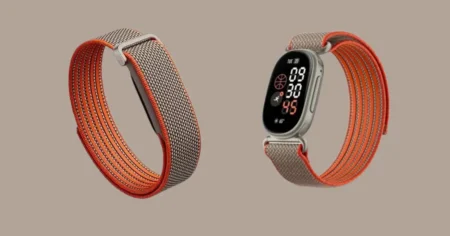

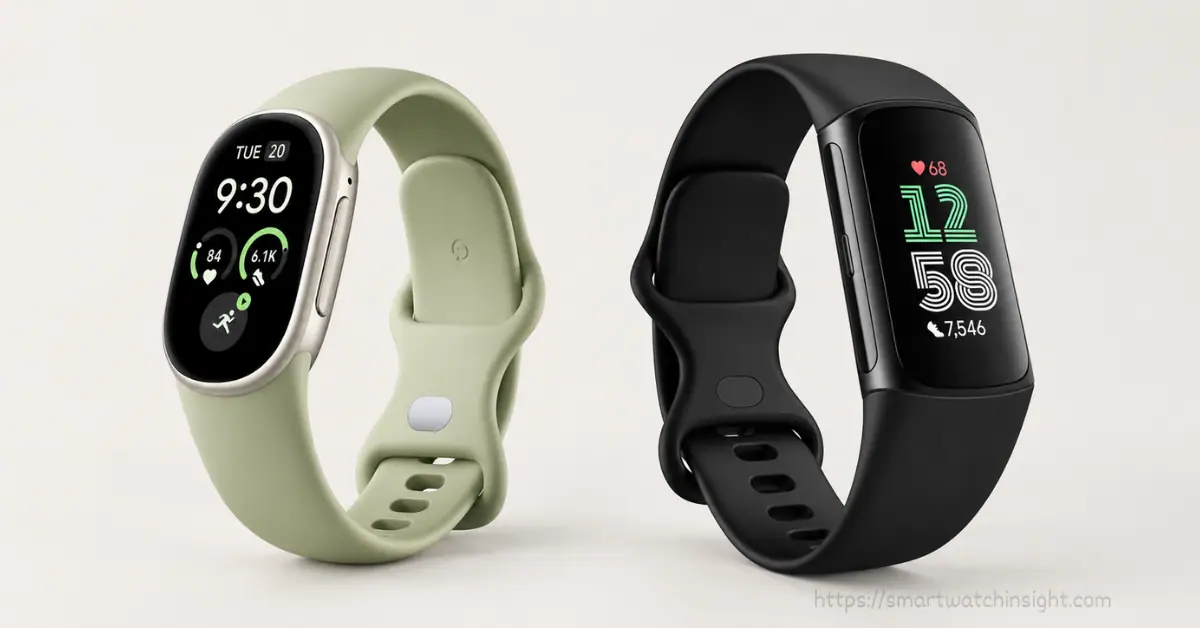
Google announced the Fitbit Edge on October 12, 2026. It costs $179.99 and goes on shelves October 27 (pre-orders are open now).
The Fitbit Charge 6 is on sale at Amazon for $89.95. So the real question is simple: is the Edge worth roughly $90 more, or is the Charge 6 at this price the smarter buy?
Quick Answer
- Need a tracker now, or want to spend less? Buy the Charge 6. At $89.95 on Amazon it costs about half of the Edge’s official price.
- Want better GPS, a bigger screen and newer health features? Buy the Edge at $179.99 on Amazon and Google. Google lists a larger Hybrid OLED display, an altimeter, up to 40% better GPS accuracy than previous generations, ECG, a skin temperature sensor and Health Guardian trends.
- Care about stress tracking (EDA) or contactless payments? The Charge 6 has both. Google’s Edge announcement mentions neither, so confirm on the Google Store page before buying.
Heads-up on the Edge: Edge specs below come from Google’s official October 12 announcement. We have not tested the Edge yet, so performance claims such as GPS accuracy and battery life are Google’s own.
Charge 6 details come from the product’s spec page, published reviews and our own testing.
Price Today: Fitbit Charge 6 vs Edge
| Tracker | US price | Notes |
|---|---|---|
| Fitbit Charge 6 | $89.95 on Amazon (list price $159.95) | Limited-time deal. Check the current price before publishing. |
| Fitbit Edge | $179.99 (Stephen Curry Special Edition: $219.99) | Pre-order now on the Google Store and through retail partners. In stores October 27. Includes 3 months of Google Health Premium. |
Sale price versus the Edge’s price puts the gap near $90. At full list price, the gap is much smaller (about $20), which is why the Edge looks attractive only if you can’t find a good Charge 6 deal.
Quick Comparison
| Feature | Fitbit Edge (official) | Fitbit Charge 6 |
|---|---|---|
| Release | Pre-order now, in stores October 27 | Available now |
| Real-world testing | None yet | Widely reviewed |
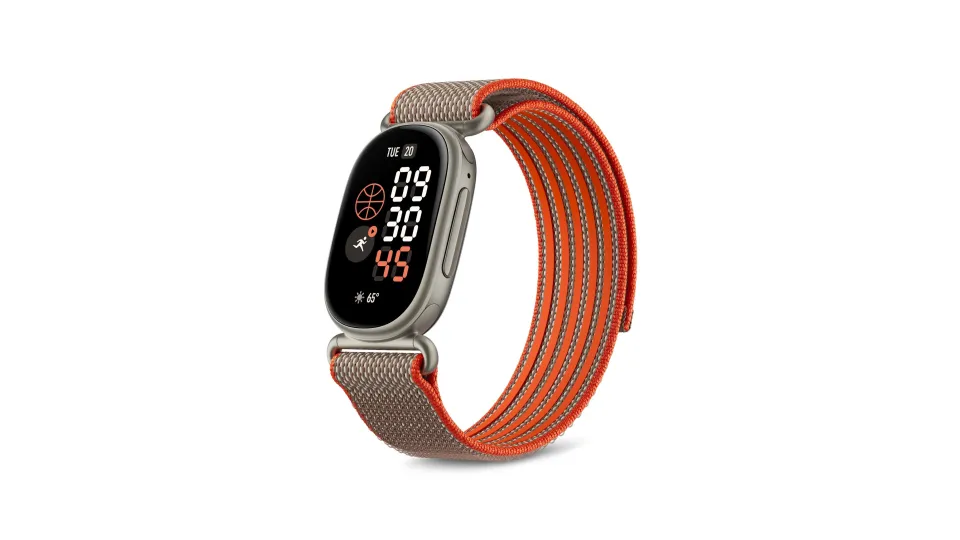
| Display | 1.34-inch Hybrid OLED, 46% more viewing area than previous trackers. | 1.04-inch AMOLED |
| Weight / thickness | 11.5mm thin. Google says the case is 45% lighter than the Apple Watch Series 12. Weight in grams not stated. | Weight: 0.066 lb (30 g) |
| Battery | Up to 7 days | Up to 7 days, less with always-on display and SpO2 |
| Charging | Fast magnetic charging: 5 minutes gives about a day of battery (per Google) | About 2 hours |
| GPS | Built-in (Google claims up to 40% better accuracy than previous generations) | Built-in (GPS + GLONASS) |
| Altimeter (floors climbed) | Yes | No |
| ECG and SpO2 | Yes | Yes |
| Skin temperature | Yes using a built-in far-field skin temperature sensor. | Yes |
| EDA stress sensor | Not | Yes |
| Blood pressure and insulin resistance trends | Yes (Health Guardian, shown as trends) | No |
| Contactless payments | Not | Yes (Google Wallet) |
| Water resistance | Up to 50 meters | 5 ATM, not waterproof |
| Repairable battery | Yes (replaceable battery, modular design) | No |
Our Charge 6 Experience

We tested the Charge 6 ourselves. Here is what stood out:
- Comfort and screen: The silicone band is comfortable and comes in small and large sizes. The 1.04-inch AMOLED screen is bright and easy to use with swipes, though the design is almost identical to the Charge 5.
- Heart rate accuracy: Against a Polar H10 chest strap, the Charge 6 performed exceptionally well and stayed consistent.
- Sleep and recovery: Sleep tracking works well, but the band needs to fit snugly. A loose fit can make it miss your sleep. Each morning you also see SpO2, body temperature, breathing rate and HRV, and the HRV readings looked accurate.
- GPS: This is the weak spot. Results were often inaccurate, and the GPS sometimes turned off mid-run. We suggest using the setting that borrows your phone’s GPS.
- Battery in daily use: The seven-day rating only holds with light use. With the always-on display on and about an hour of GPS a day, battery life dropped close to two days.
- Biggest annoyances: The sleep stage breakdown (deep, light, REM) sits behind the paid plan, and music controls only work with YouTube Music.
Read our full Fitbit Charge 6 review for the complete test results.

A note on the Premium plan: In our review, the Charge 6 came with six months of Premium. The Amazon listing today includes three months.
Why this matters for the Edge: GPS was the Charge 6’s weakest point in our test, and GPS is exactly where Google says the Edge improves. We will test it once we have a unit.
What the Fitbit Edge Improves vs. Charge 6
The Fitbit Edge brings a larger 1.34-inch display compared with the Charge 6’s 1.04-inch screen, making workout stats, notifications, and maps easier to view. It also adds a redesigned physical side button for quicker controls.
However, the Charge 6 already offers built-in GPS, Google Wallet, and Google Maps support, so the Edge’s biggest advantage is its larger display and updated design rather than a clear upgrade in core fitness features.
Who Should Buy What
Buy the Charge 6 if you:
- Want a tracker this week
- Found it at or near $90
- Use stress scans or pay with your wrist
- Prefer tested hardware over new hardware with unverified claims
Buy the Fitbit Edge if you:
- Want a larger screen and lighter design
- Climb stairs or hike and want floors and elevation data
- Run or cycle and want better built-in GPS so you can leave your phone at home
- Are interested in the newer health features (ECG, Health Guardian trends, skin temperature, Google Health Coach)
- Want a replaceable battery and a repairable design
- Don’t mind pre-ordering before independent reviews are out (shelves October 27)

Consider a Pixel Watch 5 instead if you:
- Want a full smartwatch with apps
- Have an Android phone and a bigger budget. On Amazon today, the 41mm model is $334.99 (list $399.99) and the 45mm is $364.99 (list $429.99).
Google Health Premium: The Extra Cost
The Charge 6 works without a subscription, although some features require Google Health Premium, which costs $9.99 per month or $99 per year.
The Charge 6 deal on Amazon includes a 3-month membership. The Edge also includes 3 months of Google Health Premium with purchase.
Google says the deeper Coach guidance and Health Guardian interpretation need Premium, so budget for $9.99 per month or $99 per year after the trial if you want them. Include this in your budget when comparing prices.
If you are also considering a cheaper screenless option, I compare the Fitbit Air and the Edge side by side.
FAQ
Is the Fitbit Edge better than the Charge 6?
The Fitbit Edge offers a larger 1.34-inch display, more viewing space, and a redesigned physical side button compared with the Charge 6. However, the Charge 6 already includes built-in GPS, Google Wallet, and Google Maps support. If you want a bigger screen and updated design, the Edge is worth considering. If you’re happy with a compact tracker, the Charge 6 remains a capable option.
Final Verdict
The Fitbit Edge is the better tracker on paper. For $179.99 you get a bigger display, an altimeter, ECG, a skin temperature sensor, Health Guardian trends, up to 40% better GPS accuracy (per Google) and a replaceable battery. But the Charge 6 is still the better deal if you find it near $90.
At $89.95 it gets you proven health tracking, an EDA sensor and Google Wallet for roughly half the Edge’s cost.
If GPS is your main reason to upgrade, buy the Edge and check our testing once units ship on October 27. If you just want a solid daily tracker for the lowest price, the Charge 6 at $89.95 remains the safer buy.
Related Posts
- Fitbit Edge (Charge 7 Successor): Release Date, Leaked Specs, Price & iPhone Support (2026)
- Fitbit Charge 6 Review: Our Full Hands-On Test
- Best Fitbit Trackers to Buy in 2026
- Pixel Watch 5 Review
- Best Screenless Fitness Trackers 2026: A Full Side-by-Side Comparison