
Last Updated: Sept, 2026 — Independent battery testing is now in from multiple outlets, two full weeks after launch, and the results are more mixed than Samsung’s spec sheet suggested. Full breakdown below in the Battery section. RAM and storage specs have also been confirmed since our original post: 2GB RAM, 64GB storage (up from 32GB on the original Ultra).
The original Galaxy Watch Ultra had one problem everyone agreed on: battery life. One day of real-world use from a $649 watch felt wrong — especially when Garmin’s watches at similar prices were lasting two weeks.
Samsung’s answer arrived today. The Galaxy Watch Ultra 2 is official, priced, and shipping next month.
Everything below has been checked against Samsung’s own announcement. Where our pre-launch reporting called it right, we’ve left it in place. Where we got it wrong, it’s marked clearly — no quietly editing history.
Announced: July 22, 2026, Samsung Unpacked, London —
- Confirmed On sale: August 7, 2026
- Pre-orders: Open now, July 22
- Chip: Snapdragon Wear Elite — confirmed on both Ultra 2 AND Watch 9 (see correction below)
- Battery: 800mAh — confirmed
- Display: 1.52-inch Super AMOLED, 5,000 nits — confirmed
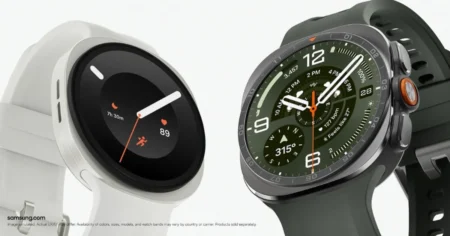
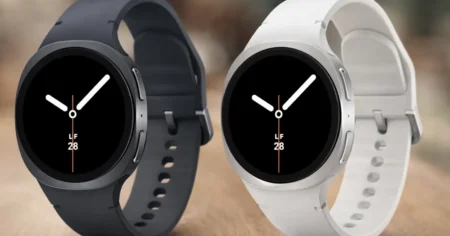
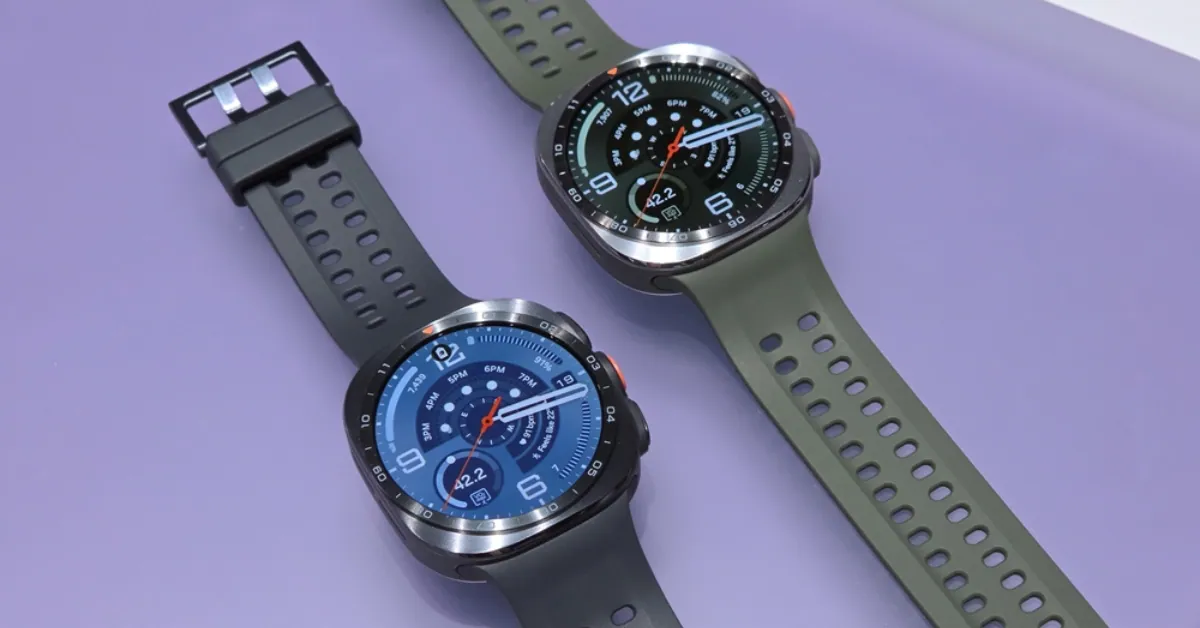
- Case: 47mm only, Titanium Silver or Titanium Gray, sapphire crystal
- Water resistance: 10 ATM, IP69K, EN13319 (dive-certified)
- Price: $699 US — confirmed , matches original Ultra
Buy if: Galaxy Watch Ultra owner frustrated by 1-2 day battery life
Skip if: You own the original and battery wasn’t your main complaint
Wait if: You want real-world battery numbers before committing — Samsung hasn’t published hour estimates
Also wait if: you’re specifically hoping the bigger battery means faster charging too — early independent testing found the opposite (see Battery section).
— Assessment updated by Sunil Bhatt, Smartwatch Insight — August 16, 2026

The Correction We Owe You
Before anything else: we, along with most of the leak ecosystem, reported that the Snapdragon Wear Elite chip would be exclusive to the Ultra 2, with the Watch 9 keeping last year’s Exynos W1000.
Samsung’s official announcement confirms both watches share the Snapdragon Wear Elite platform. If that was a factor in whether you’d consider the cheaper Watch 9 instead, that concern is gone — you get the same chip either way.
Two other things we flagged as “biggest unknowns” simply didn’t appear in Samsung’s materials today:
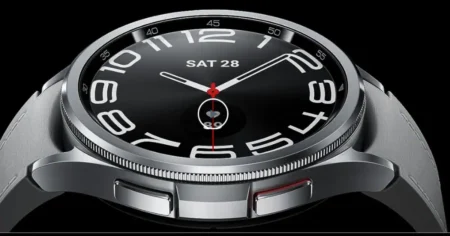
- The numbered rotating bezel from the June 25 Evan Blass renders — not mentioned anywhere in Samsung’s official spec sheet or announcement. Unconfirmed until hands-on units are out.
- NB-NTN satellite messaging — also absent. The confirmed connectivity list is LTE, Bluetooth 6.0, Wi-Fi (2.4GHz+5GHz), NFC and dual-frequency L1+L5 GPS. No satellite standard mentioned.
Glucose monitoring, as we said all along, is not a feature on this watch.
The Battery Story — Confirmed
Samsung confirms an 800mAh battery, a 35% increase over the original Ultra’s cell — right in line with what we projected back in June.
It’s paired with the Snapdragon Wear Elite chip’s efficiency gains, which Qualcomm has claimed delivers roughly 30% better battery life from the silicon alone.
Two weeks of independent testing is now in, and the results genuinely conflict with each other. Stuff reported making it to the end of a third day with always-on display active, longer with it disabled, calling it better than both the Pixel Watch 5 and Apple Watch Ultra 3.
A Samsung Community user reported the same, “3+ days without charge” with AOD on. GSMArena’s lab testing got 96 hours (4 days) with AOD off and a mix of GPS workouts, heart rate sampling, and sleep tracking.
But AndroidHeadlines’ two-week review landed on a very different conclusion: despite the 35% larger battery, real-world life came out at roughly 3 days with AOD on and 4–5 days with AOD off, which they measured as essentially identical to the original Ultra’s battery life. Their read: the bigger cell is being spent on the brighter 5,000-nit display and the new chip, not on extending runtime.
There’s also a genuine downside several reviewers flagged that Samsung’s announcement didn’t mention: charging got slower, not faster. AndroidHeadlines measured close to 2 hours for a full charge from 10%, compared to 40–50 minutes on the Pixel Watch 4 and roughly 75 minutes on the Apple Watch Ultra 3.
Samsung’s own fast-charging claim, confirmed separately by SamMobile, is 40% in about 30 minutes, which is a reasonable top-up but doesn’t offset the slow full-charge time if you let it run flat.
GSMArena also flagged a charging compatibility issue worth knowing about before you buy: their review unit refused to charge on third-party wireless chargers, older genuine Galaxy Watch chargers, or even via Wireless PowerShare from a Galaxy S26 Ultra, with the watch displaying an incompatibility message each time. They note this may be isolated to their unit, but flagged it as a real possibility rather than a one-off.
Bottom line on battery: don’t assume the 35% bigger cell automatically means 35% more runtime. Multiple independent testers are landing in the 3–5 day range depending on always-on display settings, which is a real improvement for some users and, according to at least one detailed review, no improvement at all for others.
If all-day charging speed matters to you as much as battery capacity, this generation is a step back, not forward.
The Chip — Snapdragon Wear Elite, Confirmed for Both Watches
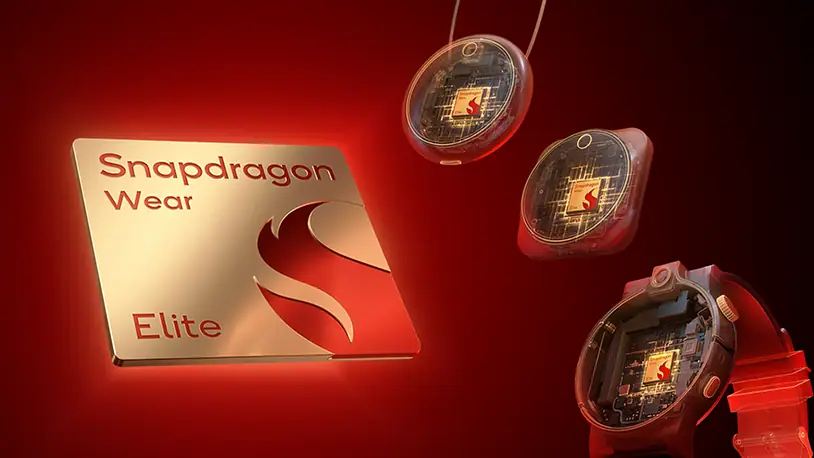
The Snapdragon Wear Elite processor is now official for the Ultra 2 — a 3nm chip built for AI-focused wearables, with the same big.LITTLE architecture (one performance core, four efficiency cores, plus a dedicated NPU) that Qualcomm detailed at MWC 2026.
The correction, again: this is not Ultra 2-exclusive. Samsung’s Watch 9 announcement confirms the same Snapdragon Wear Elite platform, not the Exynos W1000 we and other outlets expected it to keep.
GSMArena’s benchmarking puts real numbers on the chip claims: a 32% CPU performance jump and 19% GPU gains over the previous Exynos-based Ultra, along with improved GPS accuracy that Qualcomm specifically advertises as better in deep forest conditions.
In day-to-day use, GSMArena and AndroidHeadlines both describe the difference as noticeably snappier rather than dramatic, particularly in Samsung Health load times, workout auto-recognition, and “Raise to Speak” response time for Gemini.
Design — What Samsung Confirmed vs. What the Renders Showed
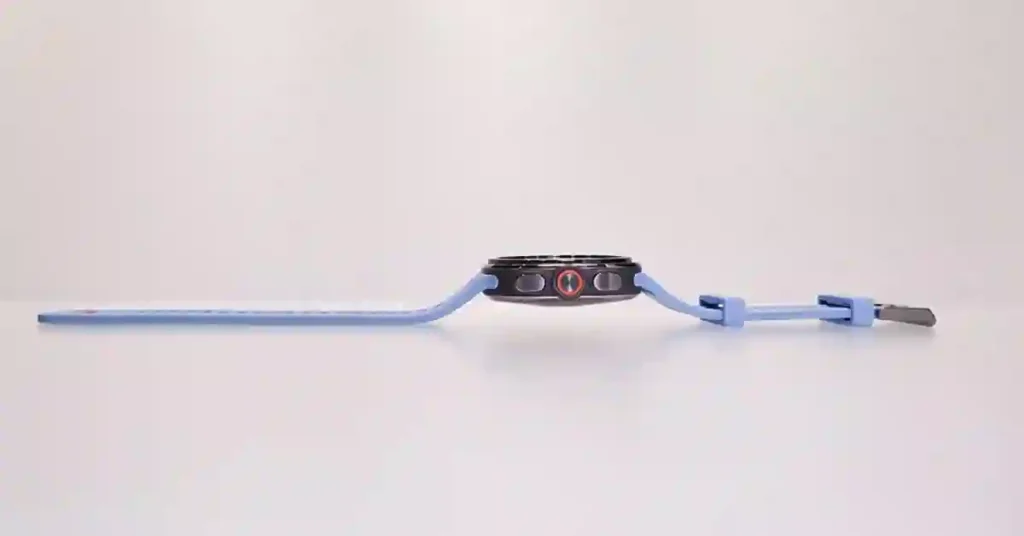
Samsung’s official images confirm the 47mm titanium case, sapphire crystal display, and a notably slimmer profile — the company says internal re-engineering cuts thickness by 12% compared to the previous generation, despite the larger battery.
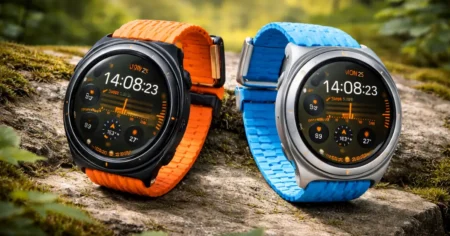
Color options are simplified to Titanium Silver and Titanium Gray, matching what the Blass renders showed and down from four colors on the original Ultra.
What we can’t confirm: the numbered bezel design element from the Blass renders. It’s not mentioned in Samsung’s materials, and whether it exists — let alone rotates — remains unverified. Treat that detail as still speculative pending hands-on coverage or a teardown.
Now confirmed by hands-on reviews: there’s no rotating bezel. Multiple independent reviewers who’ve had units for two weeks make no mention of one, which settles the question the original leak left open.
Also worth knowing before you buy: AndroidHeadlines specifically notes the watch is heavier than its predecessor despite being thinner, which may matter if wrist comfort over multi-day wear is a priority for you.
Display — 5,000 Nits, Confirmed
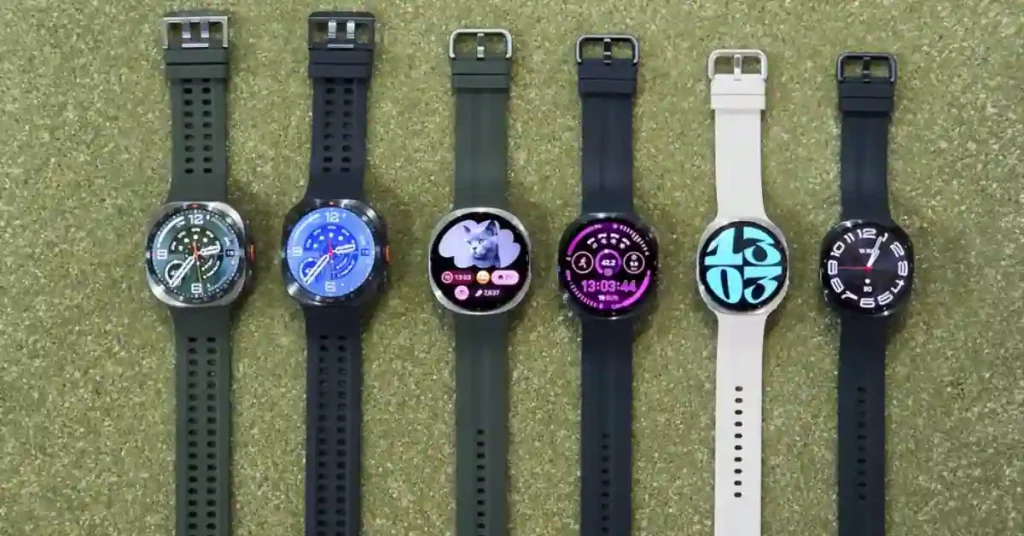
Samsung confirms a peak brightness of 5,000 nits on the 1.52-inch Super AMOLED display — matching our corrected June reporting and making it, by Samsung’s own market comparison, the brightest smartwatch display available at launch. Resolution comes in at 498×498, a touch higher than the 480×480 some earlier leaks cited.
Connectivity
Confirmed: LTE, Bluetooth 6.0, Wi-Fi 2.4GHz+5GHz, NFC, and dual-frequency L1+L5 GPS. Samsung’s announcement does not mention 5G RedCap or NB-NTN satellite connectivity — both features we’d flagged as possible based on chip-level capability. Until Samsung says otherwise, don’t factor satellite messaging into your buying decision.
The Galaxy Watch Classic Question — Settled
No Classic model was announced today, alongside the Ultra 2 and Watch9. That matches what the regulatory filings suggested back in June — no Classic model number appeared in any FCC or CMIIT filing.
However, the Galaxy Watch9 Classic has appeared in later filings, suggesting Samsung may not have completely abandoned the rotating-bezel model.
Health Features — What’s New, Confirmed
Samsung confirmed a full slate of AI-powered health features across both the Ultra 2 and Watch9, built on the BioActive sensor:
- Sleep Apnea detection — newly FDA-cleared, requires 2 nights of sleep data within a 10-day window, ages 18+
- Vitals — flags meaningful deviations from your personal health baseline during sleep
- Heart Health Score — a single cardiovascular wellness score with lifestyle guidance
- Daily Cardio Load — training volume and recovery guidance
- Fitness Index — a holistic fitness score with personalized goals
- Hearing — alerts for unsafe noise exposure
Ultra 2-specific additions include a new Trail Run mode (elevation, climbing progress, terrain impact) and a Nutrition Alert feature that builds on the existing Sweat Loss tool for real-time hydration guidance.
The dive story is also bigger than expected: automatic dive detection with depth/time/temperature tracking, plus a dedicated diving app developed with Mares — due later this year and exclusive to the Ultra 2 for two years.
One minor but useful addition GSMArena flagged in testing: a new Hydration Reminder feature, though they note it only triggers around workouts or hikes over 30 minutes rather than functioning as an all-day reminder, so don’t expect it to replace a dedicated hydration-tracking app.
Glucose monitoring: still not coming. Nothing in today’s announcement changes that.
One thing we didn’t originally cover that’s now confirmed: memory. The Ultra 2 ships in a single configuration — 2GB RAM and 64GB storage, double the original Ultra’s 32GB.
Unlike the Pixel Watch 5, which got a RAM bump this generation, Samsung held RAM flat and focused the upgrade on storage instead.
For a detailed breakdown of how Samsung’s fall detection compares to Apple’s, including the critical timing differences, see our best smartwatch for fall detection guide.
Price — Confirmed
$699 in the US — confirmed, matching the original Ultra’s price exactly. Samsung’s own press materials didn’t include pricing, but it’s been confirmed by multiple outlets covering today’s Unpacked event. The Watch9 starts at $349.
Should You Buy the Original Galaxy Watch Ultra Now?
With the Ultra 2 now official, Samsung and retailers are already discounting the original Ultra — it’s showing up at meaningful markdowns as of today.
If battery life wasn’t your top complaint and you can find it discounted, it’s still a solid buy. If battery life was the issue, the Ultra 2’s confirmed 800mAh cell and new chip make the upgrade case straightforward.
If the original Ultra’s battery was your dealbreaker, the Ultra 2 is still probably the safer buy. Just don’t assume the bigger cell automatically fixes it — one detailed two-week review found real-world battery life barely different from the original.
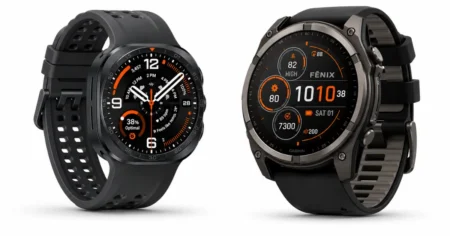
The Garmin Fenix 9, officially launched August 25, 2026, targets that use case specifically — see our Fenix 9 vs Galaxy Watch Ultra 2 comparison for the full breakdown.
Who Should Buy Galaxy Watch Ultra 2
Buy if:
✅ You own the original Galaxy Watch Ultra and battery life was your main frustration
✅ You’re an Android user who wants the brightest, most capable Samsung watch made in 2026
✅ You’re a runner or diver who’ll actually use Trail Run and the new dive tracking
✅ You want the Snapdragon chip — though note it’s no longer chip-exclusive vs. the Watch9
Skip if:
❌ You already own the original Ultra and battery wasn’t your main complaint
❌ You use an iPhone — Galaxy Watches require Android for full functionality
❌ You were counting on satellite messaging — unconfirmed and not mentioned today
❌ You need multi-week GPS battery — that’s still a Garmin conversation, not a Samsung one
❌ You charge overnight and need to top up quickly before heading out — independent testing found full charges now take close to 2 hours, slower than most competitors
Timeline — What Happened Today, July 22
- Galaxy Watch Ultra 2 officially announced
- Price confirmed: $699
- Full specs confirmed
- Pre-orders open
- Galaxy Watch9 also announced, starting at $349
August 7 — On sale: → In-store availability begins → Pre-order deliveries start → First real-world reviews publish
August 16 — Independent battery tests published: Multiple outlets (Stuff, GSMArena, AndroidHeadlines, SamMobile, Droid Life) have now completed two-week real-world testing.
Results range from genuinely improved (3+ days, beating the Pixel Watch 5 and Apple Watch Ultra 3) to essentially unchanged from the original Ultra, depending on the reviewer and always-on display settings. Charging speed has emerged as a consistent complaint across multiple reviews.
Smartwatch Insight Verdict
Galaxy Watch Ultra 2 — Updated August 16, 2026
Confirmed win: Battery capacity, 800mAh, exactly as projected — though real-world runtime gains are contested between reviewers Confirmed win: 5,000-nit display, brightest Samsung watch made Correction: Snapdragon chip is shared with Watch9, not Ultra 2-exclusive New finding: charging is meaningfully slower than the original Ultra and most competitors, close to 2 hours for a full charge Unconfirmed: Rotating bezel — now settled as absent, per multiple hands-on reviews. Satellite messaging — still unconfirmed. Don’t buy for: Glucose monitoring — still not coming Price: $699, confirmed, unchanged from original Ultra
Rating: 8/10 — revised down slightly from our launch-day 8.5, reflecting the mixed independent battery results and slower charging that Samsung’s own announcement didn’t mention
Buy: Original Ultra owners frustrated by battery. Android users wanting Samsung’s best 2026 watch.
Skip: iPhone users. Anyone counting on satellite messaging. Small-wrist users.
Related Read
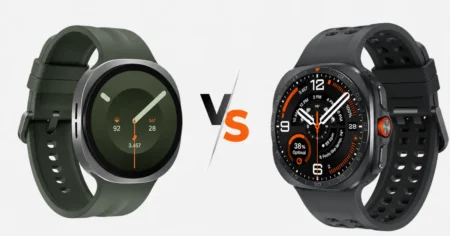
- Samsung Galaxy Watch 9 vs Ultra 2 — Which Should You Buy?
- Galaxy Watch 9 & Watch Ultra 2: Officially Launched — Full Specs (2026)
- Best Android Smartwatches 2026
- Best Upcoming Smartwatches 2026
- Apple Watch Ultra 4 — for iPhone users
FAQ
When does the Galaxy Watch Ultra 2 come out?
Announced July 22, 2026. On sale August 7, 2026.
How much does the Galaxy Watch Ultra 2 cost?
$699 in the US — confirmed, matching the original Ultra.
Does the Galaxy Watch Ultra 2 have 5G or satellite messaging?
Not confirmed. Samsung’s official connectivity list for the Ultra 2 covers LTE, Bluetooth 6.0, Wi-Fi and GPS only — no 5G RedCap or NB-NTN satellite standard mentioned.
Is the Galaxy Watch Ultra 2 worth upgrading from the original Ultra?
Yes, if battery life was your main complaint — most testers still measured a real-world improvement. But treat “35% bigger battery” as a ceiling, not a guarantee: at least one detailed two-week review found real-world battery life essentially unchanged from the original Ultra.
Does the Galaxy Watch Ultra 2 work with iPhone?
No. Galaxy Watches require an Android phone for full functionality.
Will the Galaxy Watch Ultra 2 have blood glucose monitoring?
No. Not announced, not confirmed, not part of today’s launch.
What chip does the Galaxy Watch Ultra 2 use?
Qualcomm Snapdragon Wear Elite — confirmed. Also confirmed on the standard Watch9, correcting earlier reports (including ours) that expected the Watch9 to keep the Exynos W1000. Independent benchmarking measured a 32% CPU and 19% GPU improvement over the previous generation.
Does the Galaxy Watch Ultra 2 have a rotating bezel?
No. This was unconfirmed at launch based on leaked renders, but two weeks of hands-on reviews from multiple outlets make no mention of a rotating bezel, which settles the question.
How long does the Galaxy Watch Ultra 2 battery actually last?
It depends who you ask. Independent testers report anywhere from 3 days (with always-on display active) to 5 days (AOD off), with one detailed review finding real-world life essentially identical to the original Ultra despite the bigger battery. If runtime is your top priority, wait for a review from a source whose testing conditions match how you’d actually use the watch.
How long does the Galaxy Watch Ultra 2 take to charge?
Slower than expected. Independent testing measured close to 2 hours for a full charge from 10%, compared to 40–50 minutes on the Pixel Watch 4 and about 75 minutes on the Apple Watch Ultra 3. A quick top-up (40% in roughly 30 minutes) is faster, but a full charge takes noticeably longer than most competitors.
This page will keep updating as independent reviews and real-world battery data come in over the next two weeks.
Sources
Samsung Global Newsroom — official Galaxy Watch Ultra2 and Watch9 announcement, July 22, 2026.
Stuff, GSMArena, AndroidHeadlines, SamMobile, Droid Life — independent two-week reviews, August 2026.
Written by Sunil Bhatt — founder of SmartWatchInsight, covering smartwatches and wearables since 2020. I’ve tracked every Galaxy Watch launch since Watch 4.