
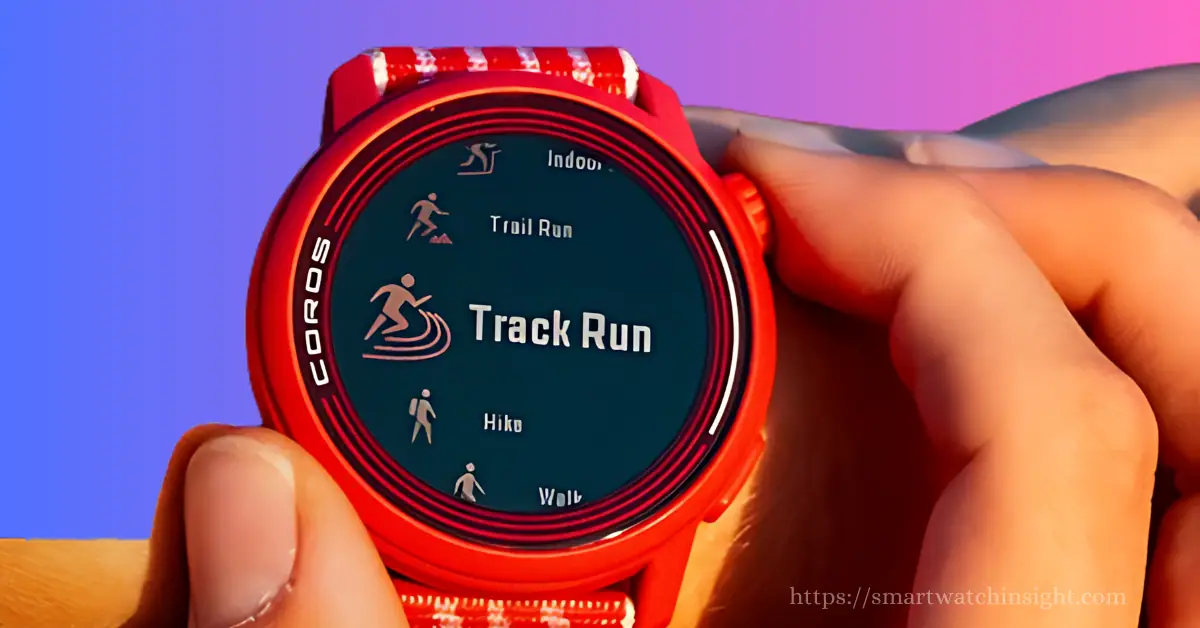
A good running watch changes how you train — it tells you when to push, when to back off, and whether your training is actually working. But most “best sports watch” lists throw in dive computers, golf gadgets, and adventure watches that happen to track runs on the side.
None of that is here. Every watch on this page is a genuine running watch, chosen for one job: making you a better runner.
Seven watches made the cut, not thirty, because most roundups pad their list with watches that don’t deserve the spot. We judged each one on what actually matters for training:
- GPS accuracy — dual-band or multi-band GNSS. A watch that can’t measure distance correctly can’t do anything else right.
- Heart rate accuracy — how it holds up during intervals, not just at an easy pace.
- Training features — VO2 max, training load, recovery time, race prediction.
- Battery life in GPS hours, not smartwatch-mode days — that’s the number that matters mid-run.
- Weight and comfort — lighter wins.
Picks are compiled from manufacturer specifications, published lab and track testing, and long-term owner feedback, and this page gets updated as new models launch.
Quick Comparison
| Watch | Best For | GPS Battery | Weight | Price |
|---|---|---|---|---|
| Garmin Forerunner 970 | Best overall | 26 hours (multi-band) | 57g | $749.99 |
| Coros Pace 4 | Best value | 31–41 hours | 32–40g | $249 |
| Garmin Forerunner 70 | Best new Garmin | 20 hours | 40g | $249.99 |
| Suunto Run | Best budget dual-band | 20 hours | 36–51g | $249 |
| Samsung Galaxy Watch 9 | Best for Android | ~25 hours always-on | ~34g | ~$379.99 |
| Apple Watch Ultra 3 | Best for iPhone | 42 hours | ~61g | $799 |
| Polar Pacer Pro | Best for recovery data | 35 hours | ~41g | $299.99 |
Just Tell Me Which One to Buy
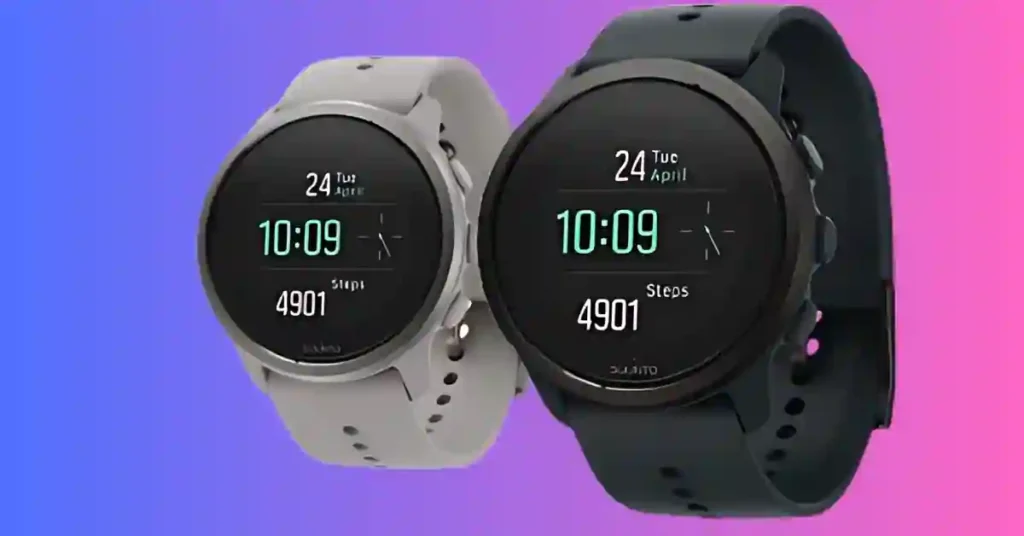
Want the best watch on the market, full stop? Get the Garmin Forerunner 970. Nothing here comes close on GPS accuracy, heart rate accuracy, or running-specific data.
Have about $249 to spend? Buy the Coros Pace 4. Three watches sit at this exact price — the Pace 4, the Suunto Run, and the Garmin Forerunner 70 — and it’s tempting to call it a toss-up. It isn’t. The Pace 4 beats the Forerunner 70 outright: dual-frequency GPS versus single-band, and GPS accuracy is the one thing a running watch cannot get wrong.
Against the Suunto Run, the Pace 4 still wins on the numbers that matter most for training — up to 10 hours more battery life, a lighter build, and a training analytics platform (EvoLab) that’s had years to mature versus Suunto’s newer, thinner software. Buy the Forerunner 70 only if you’re already committed to Garmin’s ecosystem and specifically want its watch faces, Connect app, or accessories.
Buy the Suunto Run only if offline music storage is a dealbreaker for you — it’s the one real feature the Pace 4 skips. Otherwise, at this price, the Pace 4 is the one to buy.
Just released and worth knowing about: the Garmin Forerunner 70 (May 2026) and Samsung Galaxy Watch 9 (July 2026) are both brand-new this year, though neither beats the Pace 4 on pure running performance.
On iPhone or Android and don’t want to fight your ecosystem? Ultra 3 for iPhone, Galaxy Watch 9 for Android. Both are strong enough that you won’t be compromising much.
Care more about recovery data than anything else? The Polar Pacer Pro is still the best in the business at telling you whether you’re actually ready to train hard.
Garmin Forerunner 970 — Best Overall
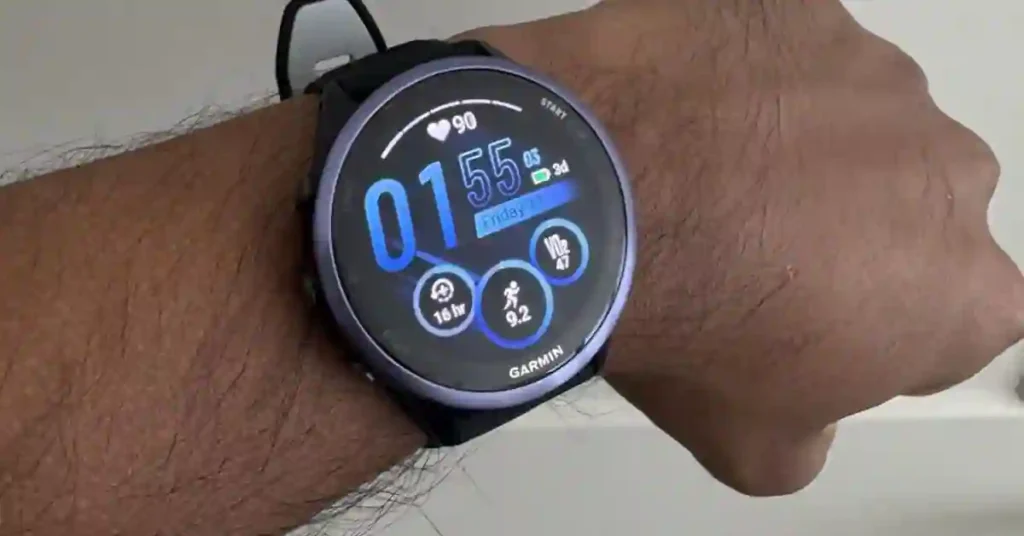
This is Garmin’s most complete running watch, and it’s not close. Multi-band GNSS across five satellite systems and the Elevate Gen 5 heart rate sensor make this accurate enough that most runners stop bothering with a chest strap.
You also get running tools nothing else here has — Running Tolerance, Running Economy, Impact Load Factor, and a race predictor that actually updates as your training changes.
At 57 grams, it’s lighter than it has any right to be for a watch this loaded. Battery runs 26 hours in GPS-only mode and 15 days in smartwatch mode — plenty for marathon training, though not built for ultras the way Garmin’s Enduro line is.
It’s also the only watch here with a built-in flashlight, speaker, and mic, plus offline maps. Read our full Forerunner 970 review for the deep dive, or see how it compares to the cheaper 570 if budget matters.
Pros: Best GPS and heart rate accuracy on the market, deepest running data available, comfortable despite the feature list
Cons: $749.99, 26-hour battery is tight for anything past a marathon

Ultra-runners choosing between Garmin’s top two can read Enduro 4 vs Fenix 9 for long-distance training.
Coros Pace 4 — Best Value
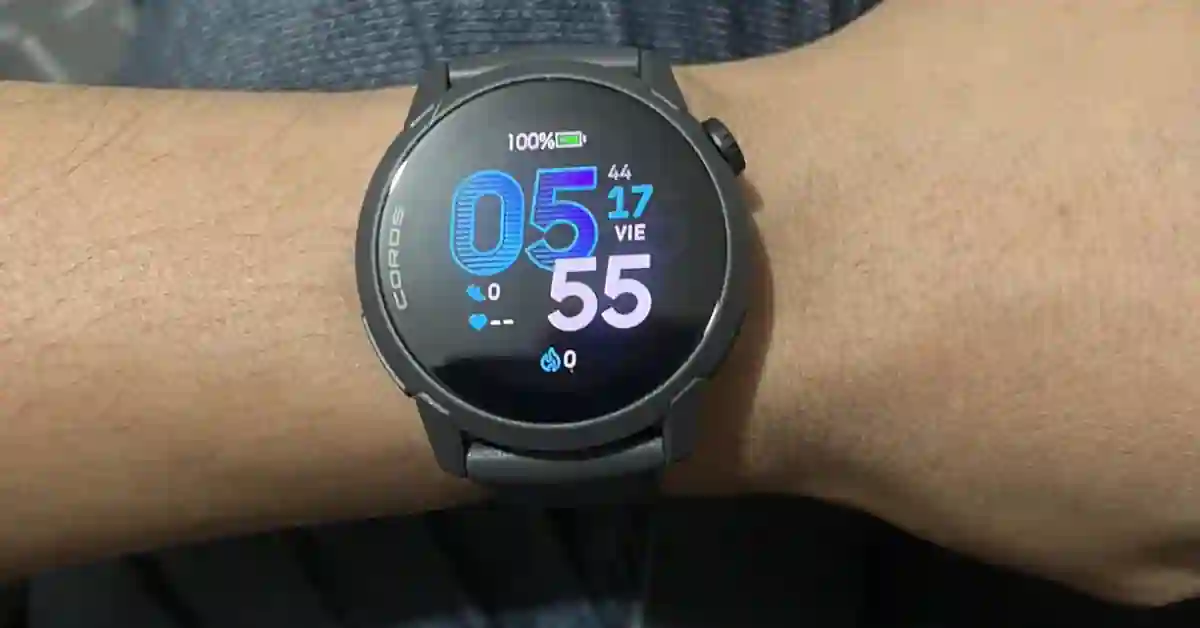
If you want real training data without paying Garmin prices, buy this watch — it’s the clear winner at its price point, beating both the Suunto Run and the Garmin Forerunner 70 on the specs that matter most.
At 32 grams with the nylon band, it’s the lightest full-featured GPS watch on this list, and its dual-frequency GPS holds up against watches costing three times as much.
Coros’s EvoLab platform delivers VO2 max, lactate threshold, and training load — no gimmicks, just data that works, refined over several generations longer than Suunto’s newer software.
The 1.2-inch AMOLED screen is a real upgrade over the older Pace 3’s MIP panel, and battery actually improved despite the brighter display: 31 hours with dual-frequency GPS, 41 hours if you drop to single-band. You give up full offline maps and a proper app store, but for pure training and racing, that trade is easy to make.
Pros: Lightest full-featured GPS watch here, dual-frequency GPS at an unbeatable price, real training analytics
Cons: No detailed offline maps, thin smartwatch feature set


Garmin Forerunner 70 — Best New Garmin
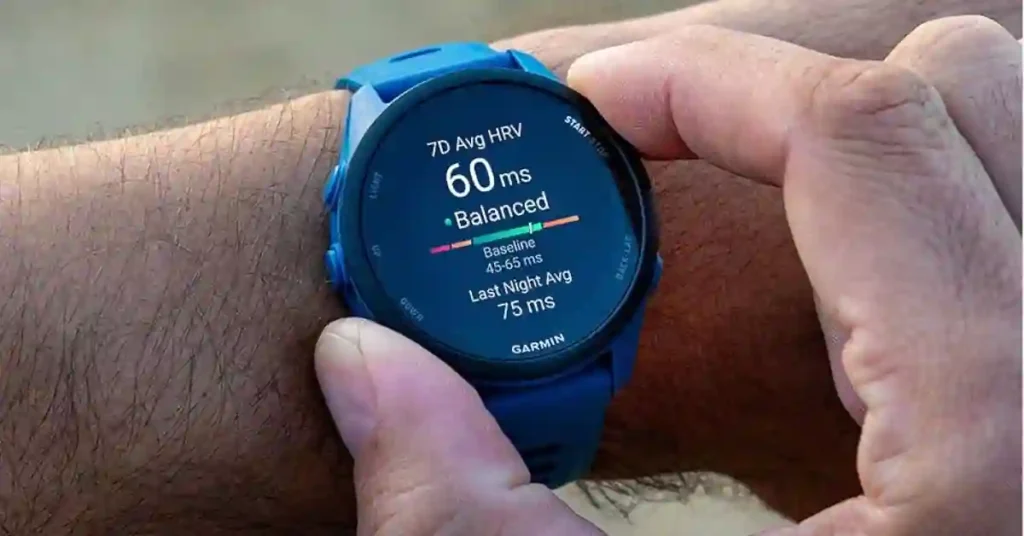
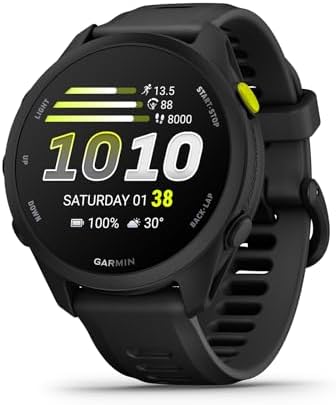
Garmin launched this one in May 2026, and it’s the pick if you want Garmin’s ecosystem without spending Forerunner 970 money. It shares its heart rate sensor (Elevate Gen 4) with the pricier 265 and runs the same software platform as the Fenix 8 and Forerunner 570.
It also adds BeiDou and QZSS satellites, so it locks onto GPS faster even though it’s still single-band, not dual-frequency — which is why the Coros Pace 4 beats it at the same $249 price. Buy this one specifically for Garmin’s app, watch faces, and accessory ecosystem, not for raw GPS accuracy.
At 40 grams, it’s one of the lightest full-featured Garmins ever made. Garmin rates it at 20 hours GPS and 13 days smartwatch mode, and real-world testing lands close — 11 to 12 days of typical use with a daily GPS run.
This is the watch to buy if you want a genuinely current Garmin at an entry price. Full breakdown in our Forerunner 70 review.
Pros: Brand new for 2026, very light, meaningfully better HR sensor than older entry Garmins
Cons: Still single-band GPS, no offline mapping
Not a dedicated runner? Our Garmin Venu 5 guide covers whether the lifestyle-focused Venu 4 is a better fit.
Suunto Run — Best Budget Dual-Band
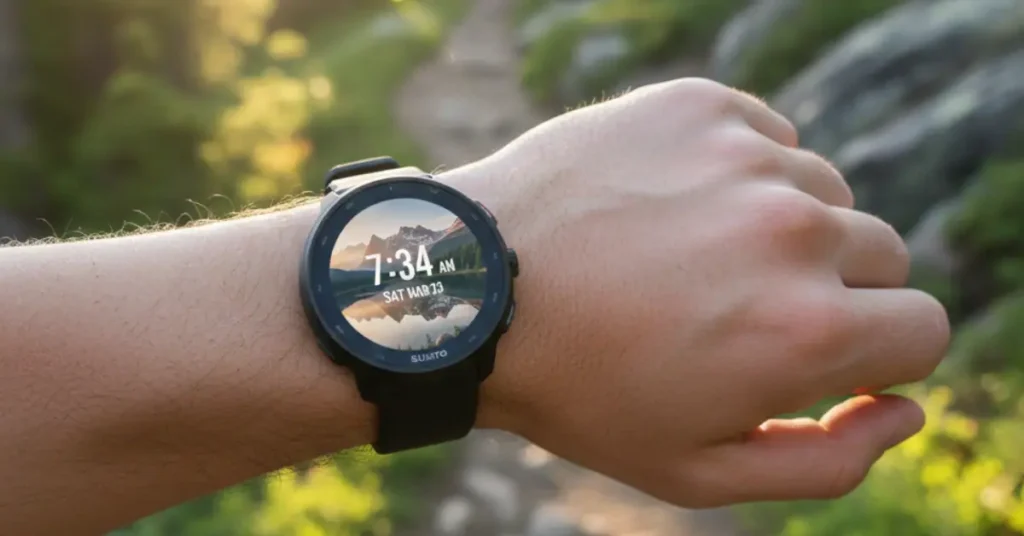
Suunto stripped away everything a runner doesn’t need and built exactly what one does. At $249, the Suunto Run undercuts the Forerunner 70 on GPS technology alone — it runs genuine dual-band GPS, something Garmin doesn’t offer below $450.
Independent testing against a Garmin Forerunner 965 found lap splits matching within a second or two per kilometer, even on tree-covered trails.
At 36 grams (nylon strap) it disappears on your wrist, and it holds 12 days of battery in daily use or 20 hours with GPS running. You get offline music storage, structured workouts, and solid recovery tracking, though the notification and app support side is thin. If you want more Suunto firepower than the Run offers, our Suunto Race 3 vs. Race 2 comparison covers where the pricier Race line picks up.
Its one real edge over the Coros Pace 4 is offline music — if you run without your phone and want songs on your wrist, this is the watch. Otherwise, the Pace 4’s longer battery and more mature training software make it the better all-around buy at the same price.
Pros: Dual-band GPS at a price Garmin can’t match, extremely light, strong battery life
Cons: Limited smartwatch features, smaller ecosystem than Garmin or Coros

Samsung Galaxy Watch 9 — Best for Android
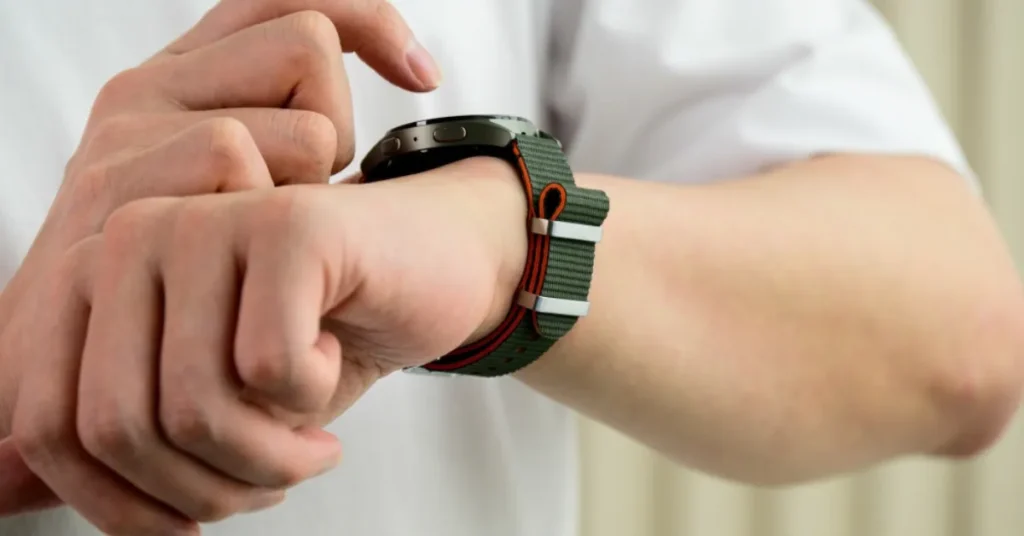
Launched July 2026, the Galaxy Watch 9 is the strongest Android running watch available right now. Its Running Coach feature runs a 12-minute fitness test and builds a full training plan around your current level, with 160 plans on tap. For the full rundown on what changed from the Watch 8 and where Samsung’s wearable strategy is headed next, see our Galaxy Watch 9 and Ultra 2 comparison.
GPS uses dual-band positioning, and it’s accurate enough for daily training, though it still trails dedicated watches like the Forerunner 970 in side-by-side accuracy tests.
Battery is the real trade-off — with the always-on display active, expect around 25 hours before a charge, which is short even by smartwatch standards. If you’re committed to Samsung or Android and want one watch that does everything well, this is the pick. If running accuracy is your only priority, a Coros or Garmin will out-track it.
Pros: Brand new for 2026, Running Coach with 160 structured plans, tight Android integration
Cons: Battery life is short, GPS accuracy trails dedicated running watches


Apple Watch Ultra 3 — Best for iPhone
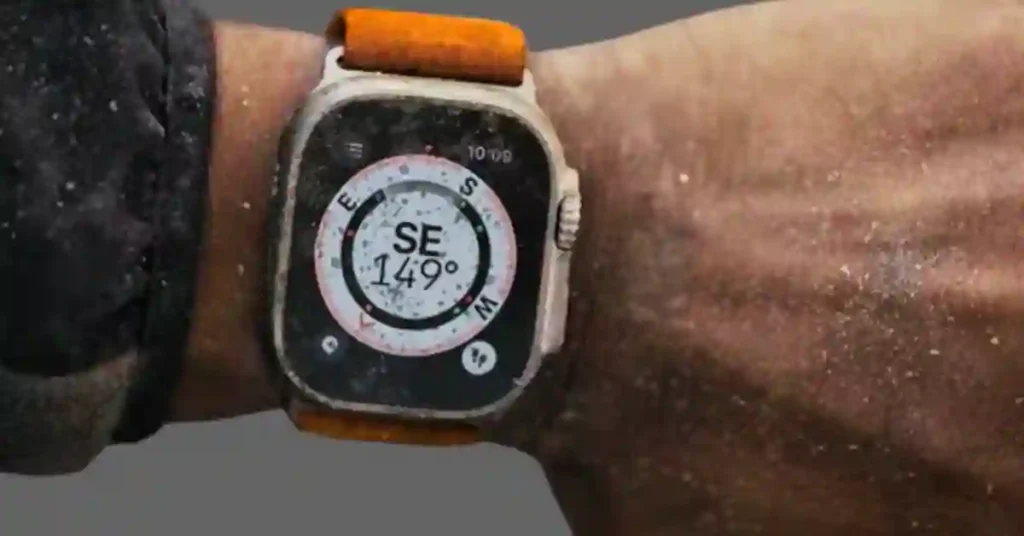
If you’re on iPhone and train seriously, this is your watch. It’s the first Ultra with dual-frequency GPS, and battery stretches to 42 hours of normal use or 72 hours in Low Power Mode — both real upgrades over the Series line.
Satellite messaging means you’re covered even off-grid. It’s still not a dedicated training tool the way a Garmin or Coros is — no Running Economy or equivalent metric — but for staying in the Apple ecosystem while training seriously, nothing else comes close.
One thing to know before you buy: Apple’s confirmed a fall event for September 9, where the Ultra 4 is expected. If you can wait a week or two, it’s worth seeing what changes. If you need a watch now, the Ultra 3 is proven and a strong buy today.
Pros: Best smart features and app support of any watch here, real dual-frequency GPS, strong battery for an Apple Watch
Cons: Still lacks dedicated running metrics, Ultra 4 is imminent
![Apple Watch Ultra 3 [GPS + Cellular 49mm] Running & Multisport Sm...](https://m.media-amazon.com/images/I/51TzswyvNFL._AC_.jpg "7 Best Watches for Runners in 2026 (Tested & Reviewed) 15")
Polar Pacer Pro — Best for Recovery Data
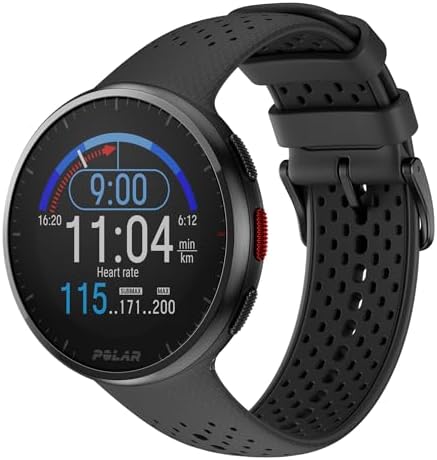
Polar built its reputation on recovery science, and the Pacer Pro is where that shows up best for the price. It’s MIL-STD durable, includes a barometer, compass, and running power straight from the wrist, and runs about 12 days on a charge with 35 hours in active training mode. It doesn’t try to be a full smartwatch, and that keeps both the price and the learning curve down.
What sets Polar apart is training load and recovery analysis — arguably still the best in the business for telling you honestly whether you’re ready for a hard session or need to back off.
If Garmin’s Training Readiness Score interests you but you want a second opinion on your data, Polar’s approach is worth the switch.
Pros: Best recovery and training load data on this list, serious durability, lightweight
Cons: Interface feels dated next to Garmin or Coros, fewer third-party app integrations
FAQ
What’s the single best running watch in 2026?
The Garmin Forerunner 970. It leads on GPS accuracy, heart rate accuracy, and running-specific training data.
What’s the best budget running watch?
The Coros Pace 4 at $249. It beats the same-priced Garmin Forerunner 70 on GPS accuracy and the Suunto Run on battery life and training software — the only reason to pick either alternative is Garmin’s ecosystem or Suunto’s offline music.
What’s actually new in 2026 on this list?
The Garmin Forerunner 70 (May 2026) and Samsung Galaxy Watch 9 (July 2026). Apple’s Ultra 4 is expected within days of this update.
Do I need dual-band GPS for running?
It matters most in cities, under tree cover, or in mountains. On open roads or a track, single-band GPS is still accurate enough for training.
Is the Apple Watch Ultra 3 worth buying with the Ultra 4 about to launch?
Yes, if you need a watch now — it’s proven and well-priced. If you can wait one to two weeks, see what the Ultra 4 actually brings before deciding.
Which watch has the best recovery data?
Polar’s Pacer Pro. Garmin’s Training Readiness Score is close behind, but Polar’s recovery science remains the deepest on the market.