
Oura officially launched the Ring 5 on May 28, 2026. This post has been fully updated with confirmed specs, official pricing, and our honest verdict.
I’ve been wearing a smart ring on my finger for over a year now.
Not a smartwatch. Not a fitness tracker. A ring.
And every time someone notices it, they ask the same thing: “Is that an Oura Ring? Are those actually worth it?”
The honest answer has always been: it depends on what you’re tracking — and which generation you’re buying.
Right now, that question just got more interesting. Oura officially launched the Ring 5 on May 28, 2026, and it’s not just a design refresh. It’s a ground-up hardware rebuild — and the result is what Oura calls the world’s smallest smart ring.
So should you buy it? Wait for a Ring 4 discount? Or skip Oura entirely?
Here’s everything you need to know — official specs, real testing data, and a clear answer for every type of buyer.
Key Takeaways
- Oura Ring 5 officially launched May 28, 2026 — shipping starts June 4
- 40% smaller than Ring 4: now 6.09mm wide and 2.28mm thick, from just 2 grams
- Battery life improved to 6–9 days (up from 5–8 days on Ring 4)
- 99% heart rate accuracy vs ECG and 95% sleep staging accuracy vs clinical sleep lab
- Price starts at $399 for Silver and Black — $499 for Gold, Stealth, Brushed Silver, and Deep Rose
- New features: blood pressure pattern tracking, GLP-1 medication insights, live workout tracking, AI Health Radar
- Ring 4 owners get most new software features free — hardware upgrade is optional
- New sizing kit required — fit differs from Ring 4 at the same size number
- Ring, charger, and membership are all HSA and FSA eligible in the US
What Is the Oura Ring? (Quick Overview)
If you’re new to smart rings, here’s the short version.
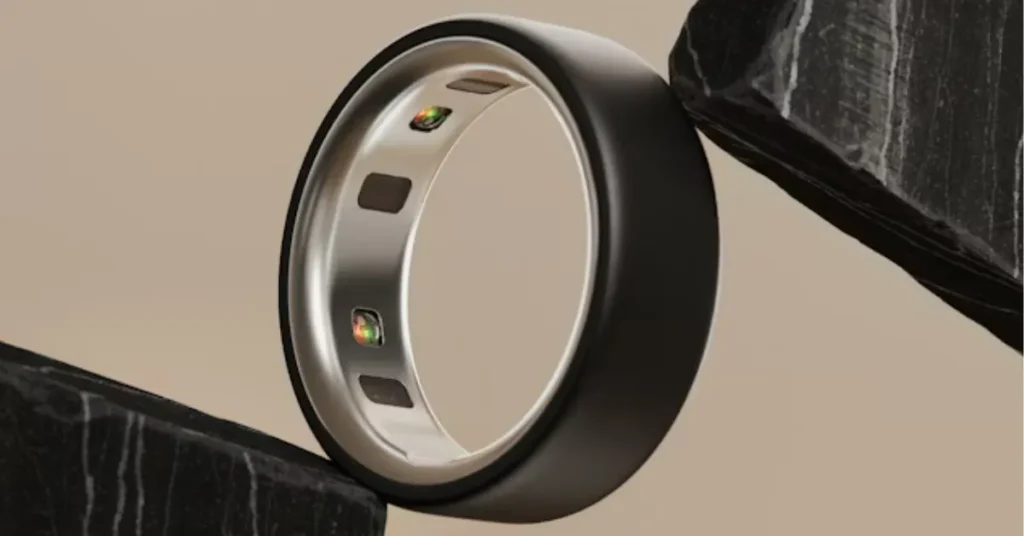
The Oura Ring is a titanium ring you wear 24/7. It looks like a normal ring — no screen, no buttons, no notifications. Inside are sensors that track your heart rate, heart rate variability (HRV), blood oxygen levels, skin temperature, and movement around the clock.
All of that data syncs to the Oura app, which translates it into three daily scores:
- Readiness Score — how recovered your body is and how ready you are to take on the day
- Sleep Score — how well you actually slept, broken down by sleep stages
- Activity Score — how active you’ve been and whether you’re hitting a healthy balance
Full access to your data requires an Oura Membership at $5.99/month or $69.99/year. The ring itself starts at $399 for the Ring 5, or a discounted Ring 4 price once that drops post-launch. New members get their first month free.
That combination — premium hardware plus a subscription — divides people. Some find it genuinely life-changing. Others think it’s overpriced. I’ve worn one long enough to have a clear opinion. I’ll share it throughout this post.
Oura Ring 5 vs Ring 4 — Official Specs Compared
All Ring 5 specs sourced directly from ouraring.com/store/rings/oura-ring-5
| Feature | Oura Ring 4 | Oura Ring 5 |
|---|---|---|
| Price — Base Colors | $349 (Silver, Black) | $399 — Silver / $399 — Black |
| Price — Premium Colors | $449 | $499 — Gold / $499 — Stealth / $499 — Brushed Silver / $499 — Deep Rose |
| Width | 7.99mm | 6.09mm |
| Thickness | 2.88mm | 2.28mm |
| Overall Volume | Baseline | 40% smaller |
| Weight | ~4–6 grams | From 2 grams (by size) |
| Build Material | High-performance titanium | High-performance titanium |
| Heart Rate Accuracy | Validated | 99% vs ECG |
| Sleep Staging Accuracy | Validated | 95% vs clinical sleep lab |
| Signal Pathways | 18-path PPG | 12-path PPG (4x stronger LEDs) |
| Battery Life | 5–8 days | 6–9 days |
| Charging Time | Up to 80 minutes | 20–80 minutes |
| Blood Pressure Tracking | No | Yes — nighttime patterns |
| GLP-1 Medication Tracking | No | Yes |
| Live Workout Tracking | No | Yes — real-time pace, distance, HR |
| Health Radar / AI Advisor | No | Yes |
| Brain Health Study | No | Yes — Oura Labs |
| Lab Results Import | No | Yes |
| Physical Action Button | No | Yes |
| Multi-Ring Support | No | Yes ($99) |
| Portable Charging Case | No | Yes ($99 optional) |
| Auto Activity Detection | 40+ activities | 40+ activities |
| Health Metrics | 30+ | 50+ |
| App Integrations | 100+ | 100+ |
| Water Resistance | 100m / 328ft | 100m / 328ft |
| Connectivity | Bluetooth Low Energy | Bluetooth Low Energy |
| Sizes Available | 4–15 | 6–13 |
| iPhone Compatible | Yes | Yes |
| Android Compatible | Yes | Yes |
| HSA / FSA Eligible (US) | Yes | Yes |
| Subscription | $5.99/month or $69.99/year | $5.99/month or $69.99/year |
Honest bottom line: The Ring 5 is a genuine hardware upgrade — not a cosmetic refresh. Smaller, lighter, more accurate, longer battery. But the core health tracking engine is the same one Ring 4 owners already trust. Most of the new software features are coming to Ring 4 for free.
What’s New in the Oura Ring 5 — Every Feature Explained
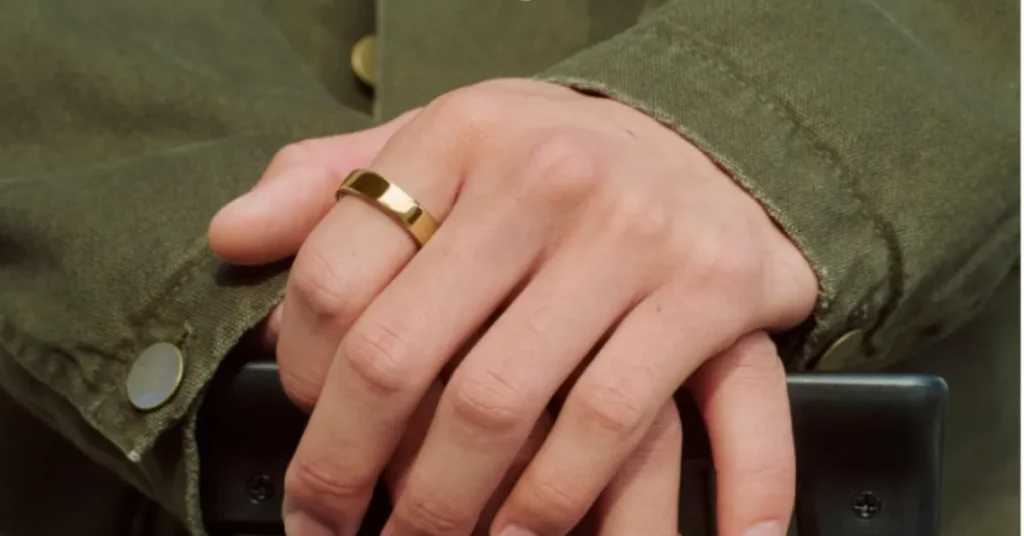
1. 40% Smaller — And It Actually Matters
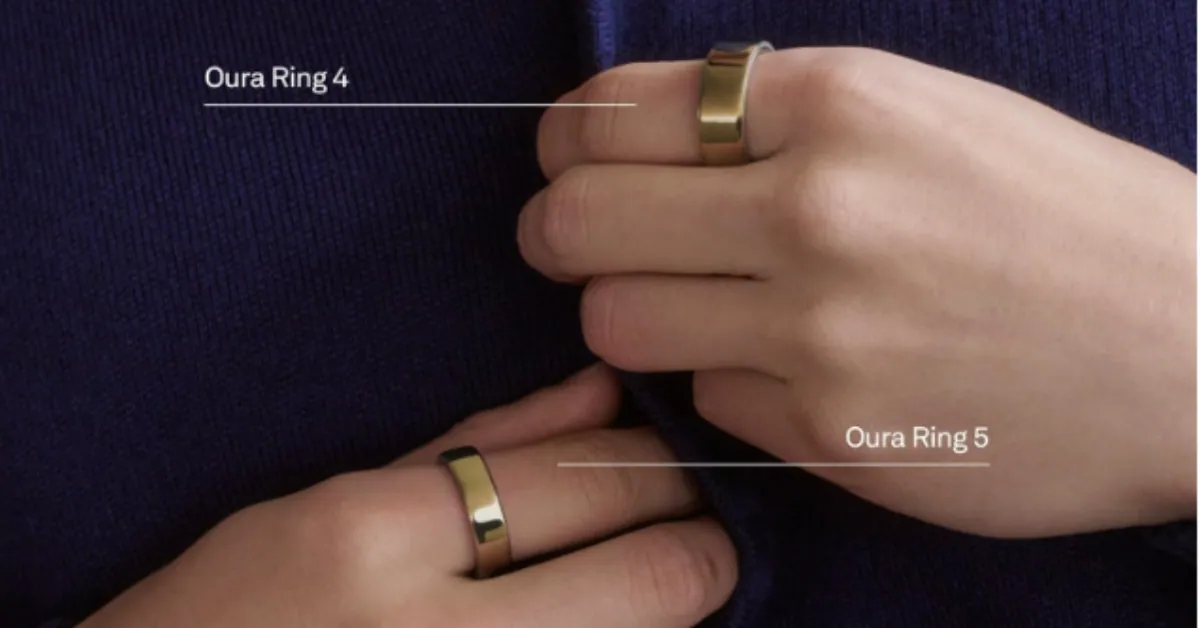
The Ring 5 measures 6.09mm wide and 2.28mm thick. That’s down from 7.99mm wide and 2.88mm thick on the Ring 4. Starting from just 2 grams, it’s one of the lightest wearables on the market.
Oura achieved this by completely rebuilding every internal system — mechanical, electrical, optical, battery, and sensing architectures were all redesigned from scratch. The goal, according to Oura’s VP of Product, was to make a ring that looks and feels like regular jewelry, not a health gadget.
At 2.28mm thick, that goal is achieved. The Ring 5 is genuinely comparable to a standard wedding band in profile. If you’ve ever held back from smart rings because of bulk — this one removes that objection entirely.
One important note: Oura specifically recommends ordering a new sizing kit for the Ring 5 even if you already know your Ring 4 size. The reduced volume means the fit can feel meaningfully different at the same size number.
2. 99% Heart Rate Accuracy and 95% Sleep Staging Accuracy
These are the two numbers that matter most — and they come directly from Oura’s own product page backed by validation studies.
- 99% heart rate accuracy compared to ECG
- 95% sleep staging accuracy compared to a clinical sleep lab
- 90% of new members report feeling healthier after using the ring
The Ring 5 achieves this with a redesigned sensor architecture: 12 signal pathways (down from 18 on the Ring 4) using LEDs that are four times more powerful, with precision-engineered sensor domes that sit closer to your skin. The result is better accuracy across more finger types and skin tones — not just for people with lighter complexions, which has been a limitation of optical sensors historically.
3. Blood Pressure Pattern Tracking — What It Actually Does
Let’s be precise here because Oura’s marketing can mislead: the Ring 5 does not give you a blood pressure reading. You will not see a 120/80 number.
What it does is use the new Health Radar feature to continuously monitor cardiovascular patterns during sleep over a 30-day window. The Nighttime Blood Pressure feature specifically tracks whether your blood pressure naturally drops during sleep — which is a well-established cardiovascular health signal most people never monitor.
Oura has also partnered with ResMed to add breathing pattern analysis during sleep, looking for signs of respiratory disturbances over the same 30-day view.
This feature launches in the US, India, and UAE starting June 2026. Global rollout comes later.
4. GLP-1 Medication Tracking — Nobody Else Has This
This is the feature that genuinely separates the Ring 5 from every competitor on the market. As millions of people use GLP-1 medications like Ozempic, Wegovy, and Mounjaro, nobody had built a dedicated health tracking tool around the experience — until now.
The GLP-1 Insights feature lets you:
- Log medication doses and schedules
- Track side effects over time
- Monitor weight changes
- See how the medication affects your sleep quality, HRV, readiness score, and stress levels — all in one longitudinal view
You can also import lab results directly into the app to see blood biomarkers alongside your Oura biometric data. No other smart ring or smartwatch offers anything close to this. If you or someone you know is on a GLP-1 medication, the Ring 5 becomes a uniquely useful health tool.
5. Live Workout Tracking — Finally Real-Time Feedback
Previous Oura Rings were passive health monitors. You wore them, they captured data silently, you reviewed it later. There was no real-time feedback during workouts.
Ring 5 changes that. You can now start a workout directly in the Oura app and monitor real-time pace, distance, and heart rate on your phone screen during runs, cycling sessions, and strength training.
Lock screen widgets keep metrics visible without opening the app mid-workout. The ring also supports connecting third-party heart rate monitors including AirPods Pro 3.
One honest limitation: GPS still requires your phone. The ring has no onboard GPS. For serious GPS-dependent training, a dedicated GPS watch remains essential alongside the ring.
6. Health Radar and AI Health Advisor
The new Health Radar continuously monitors your biometric signals and surfaces patterns that may warrant attention — cardiovascular, respiratory, metabolic. Think of it as a proactive health monitoring layer on top of the data you were already collecting.
Oura has also partnered with Counsel Health to bring licensed physician access directly into the app. Eligible members in 43 US states can ask health questions and connect with doctors without leaving the Oura ecosystem, for an additional fee. This is a meaningful shift — Oura moving from wellness tracking into actual healthcare delivery.
7. Brain Health Study via Oura Labs
A new opt-in Brain Health Study pairs cognitive assessments with your biometric data to build longitudinal insights about brain health over time. Early days, but a genuinely interesting direction for the platform.
8. Physical Action Button
A small but useful practical addition. The Ring 5 has a physical button to check charging status and quickly pair the ring in the app. No more guessing whether your ring is charged before a long trip.
9. Portable Charging Case ($99 — Sold Separately)
The Ring 5 ships with the standard size-specific charger and a USB-C cable. But Oura also launched a new optional portable charging case for $99 that holds roughly one month of charging power for the ring. It supports wireless charging and is the first major travel accessory Oura has released alongside the ring.
What’s Included in the Box
Every Oura Ring 5 ships with:
- Oura Ring 5
- Size-specific standard charger
- USB-C cable
The portable charging case ($99) is sold separately.
What Ring 4 Owners Get for Free
This is the most important section if you already own a Ring 4. Before you spend $399 on new hardware, understand what’s coming to your existing ring at no cost.
Coming to Ring 4 for free via app updates:
- Health Radar
- Blood Pressure Signals
- GLP-1 Insights
- Live Workout Tracking
- Lab Uploads
- Brain Health Study access
- Data Deletion tool
Exclusive to Ring 5 hardware:
- The 40% smaller, lighter form factor
- Improved sensor accuracy from the rebuilt architecture
- Better automatic activity detection for low-movement workouts like yoga and pilates
- The physical action button
- Multi-ring support
If your Ring 4 fits comfortably and the size isn’t bothering you, wait for your software updates to arrive before deciding whether you want the hardware upgrade.
Oura Ring 4 — Why It’s Still Worth Buying at a Discount
When Ring 5 ships on June 4, the Ring 4 will almost certainly drop in price — likely to $249–$299 for base colors. At that price point, it may be the best value in the smart ring market. Here’s why it’s still excellent.
Sleep Tracking — Still the Best Available
I’ve compared Oura’s sleep data against a Garmin Fenix 8 and a Samsung Galaxy Ring worn simultaneously for six months. Oura wins consistently.
Sleep stage accuracy is meaningfully better than anything wrist-based I’ve tested. Deep sleep, REM, light sleep, awake periods — Oura’s readings align more closely with how I actually feel in the morning. A tracker that tells you that you slept great when you feel terrible is useless. Oura doesn’t do that.
HRV Tracking — Where Behavior Actually Changes
Heart rate variability is the metric serious athletes and health-focused people track most closely — it’s a proxy for recovery, stress load, and overall readiness. Oura measures HRV continuously during sleep, which gives you a far richer picture than a single morning reading on a smartwatch.
After six months of consistent tracking, I started recognizing patterns that genuinely changed how I train. High HRV week — push harder. Three nights of poor HRV — back off and sleep more. That feedback loop is real, actionable, and hard to get from any other consumer device.
Readiness Score — More Accurate Than Expected
When my Readiness Score is below 70, I feel off. Above 85, I feel sharp. I was skeptical at first — a single number seemed reductive. But it’s a synthesis of your sleep quality, HRV trend, resting heart rate, temperature deviation, and activity balance. The correlation to how I actually feel is consistent enough that I’ve restructured how I schedule hard training sessions around it.
The Subscription — Honest Assessment
Yes, $5.99/month is an extra cost on top of an already premium device. But $72/year for actionable health data that genuinely changes behavior is less than a single PT session, and less than most fitness app subscriptions. If the subscription is a dealbreaker for you, the Samsung Galaxy Ring and Ultrahuman Ring Air are strong alternatives with no monthly fee.
Real Data From My 12 Months of Testing
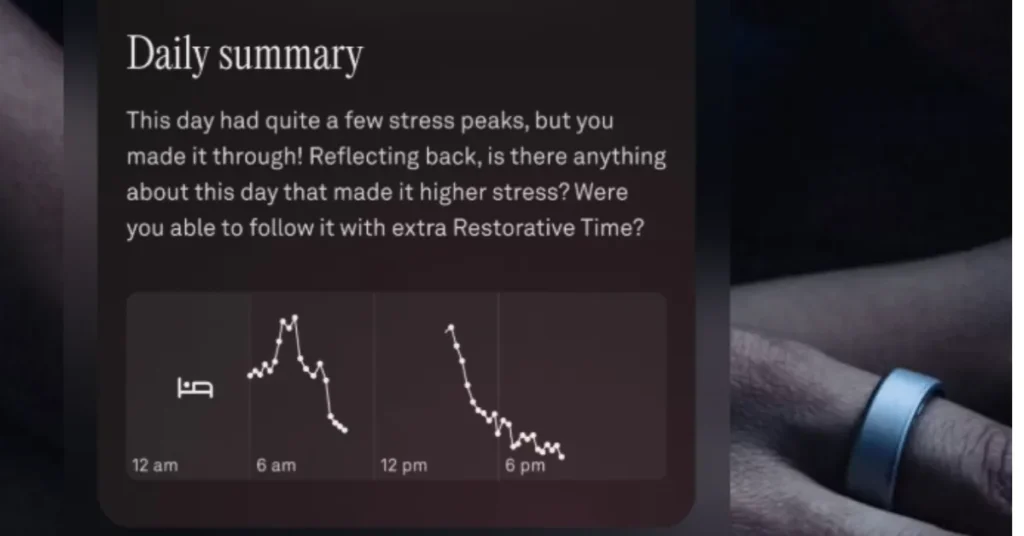
I started wearing the Oura Ring 4 in November 2024. Here’s what actually changed over time:
Month 1: Getting used to charging weekly. Sleep scores were all over the place — I was surprised how inconsistent my sleep actually was when I had the data to prove it.
Months 2–3: Started adjusting training based on Readiness Score. When below 70, I shifted hard runs to easier evening walks. Resting heart rate dropped 3 bpm over this period.
Months 4–5: Body temperature trends became useful. I caught a viral illness two full days before symptoms appeared — temperature deviation went above +1.5°C for three consecutive nights before I felt sick. That early warning was genuinely useful.
Month 6 onward: Sleep efficiency improved from 79% average to 87%. Consistent morning feedback made me more intentional about sleep hygiene — earlier bedtimes, less screen time, cooler bedroom.
None of this is dramatic. But it’s real, measurable change from a device that costs less than three months of gym membership.
Should You Buy the Ring 5, Ring 4, or Something Else?
You don’t own any smart ring yet
→ Buy the Ring 5 on June 4
You’re buying into the best hardware available with a full 2026 software platform. The Ring 5 is smaller, more accurate, longer battery, and future-proofed for the health features rolling out over the next 12–18 months. At $399 for Silver or Black, it’s the right call for a first-time buyer.
You own an Oura Ring Gen 3 or earlier
→ Upgrade to Ring 5
The accuracy improvements, software platform, and comfort jump from Gen 3 to Ring 5 are significant across every dimension. You’ve been patient. This is your upgrade moment.
You own an Oura Ring 4
→ Wait and see
Most of the compelling new features are coming to your ring for free. The hardware upgrade is real but not urgent unless the Ring 4’s size genuinely bothers you or you’re actively using a GLP-1 medication. Hold your money until the Ring 4 software updates land and then decide.
You’re considering Samsung Galaxy Ring instead
→ Read the comparison table below first
The Galaxy Ring is genuinely good — especially if you’re deep in the Samsung ecosystem. But its iPhone functionality is significantly limited and the health tracking depth doesn’t match Oura, particularly on sleep.
You’re on a GLP-1 medication
→ Ring 5 is the clear choice
No other wearable offers integrated GLP-1 tracking alongside biometric data. The Ring 5 is purpose-built for this use case in a way nothing else currently is.
Oura Ring 5 vs Samsung Galaxy Ring vs Ultrahuman Ring Air
| Oura Ring 5 | Samsung Galaxy Ring | Ultrahuman Ring Air | |
|---|---|---|---|
| Price | $399–$499 | $399 | $349 |
| Subscription | $5.99/month | None | None |
| Best For | Sleep, recovery, clinical health depth | Samsung ecosystem users | Fitness focus, no subscription |
| iPhone | Full support | Significantly limited | Full support |
| Android | Full support | Best on Samsung | Full support |
| Battery | 6–9 days | 6–7 days | 6 days |
| Weight | From 2 grams | ~3 grams | ~2.4 grams |
| Blood Pressure | Patterns (nighttime) | No | No |
| GLP-1 Tracking | Yes | No | No |
| Live Workout Tracking | Yes | Yes | Yes |
| Sleep Accuracy | 95% vs sleep lab | Validated | Validated |
| App Quality Rating | 5/10 | 3/10 | 4/10 |
| HSA/FSA Eligible (US) | Yes | No | No |
My honest recommendations:
- iPhone user → Oura Ring 5. No competition on features or full iOS support.
- Samsung Android user, no subscription preference → Samsung Galaxy Ring. Excellent ecosystem integration and no monthly fee.
- Fitness-focused, subscription-free → Ultrahuman Ring Air. Strong activity tracking and solid battery at the best price.
- Managing a health condition or on GLP-1 medication → Oura Ring 5. Nothing else currently comes close on clinical health depth.
- Best value buy right now → Watch for Ring 4 price drop after June 4 launch.
Another major competitor arriving soon is the Garmin CIRQA Smart Band — Garmin’s screenless recovery band expected May-June 2026.
Oura Ring 5 — Full Pricing Breakdown
| Color | Price | Type | Buy |
|---|---|---|---|
| Silver | $399 | Base | Buy at Amazon |
| Black | $399 | Base | Buy at Amazon |
| Gold | $499 | Premium | Buy at Amazon |
| Stealth | $499 | Premium | Buy at Amazon |
| Brushed Silver | $499 | Premium | Buy at Amazon |
| Deep Rose (new) | $499 | Premium | Buy at Amazon |
Add $5.99/month or $69.99/year for Oura Membership (first month free for new members). Optional: $99 portable charging case sold separately. All purchases are HSA and FSA eligible in the US.
Oura Ring Sizing — Get This Right Before You Order
Smart ring sizing is different from jewelry sizing. This causes more returns than any other issue — and Oura now specifically warns Ring 4 owners about it.
Because the Ring 5 is 40% smaller, the fit can feel noticeably different at the same size number. Order a new sizing kit even if you already know your Ring 4 size. Sizing kits are free at ouraring.com.
Key sizing rules:
- Your finger can vary by up to 2 sizes throughout the day — fingers swell in heat and after eating
- Always size in the evening when your finger is at its largest point
- Wear the sizing ring for at least 24 hours including while sleeping before finalizing
- If you’re between sizes, choose the smaller size for a more secure fit
- Available in sizes 6–13 (smaller range than Ring 4’s 4–15)
- Smaller sizes have slightly shorter battery life
- Best placement: index or middle finger — avoid the ring finger, optical sensor readings are less reliable there
Official Technical Specifications — Oura Ring 5
Sourced directly from ouraring.com
Dimensions
- Width: 6.09mm
- Thickness: 2.28mm
- Weight: From 2 grams (varies by ring size)
Sensors
- Red and infrared LEDs — measure blood oxygen levels
- Green and infrared LEDs — measure heart rate and HRV 24/7 and respiration rate
- Digital temperature sensor — measures skin temperature trends
- Accelerometer — tracks movement and activity 24/7
Performance
- Heart Rate Accuracy: 99% vs ECG
- Sleep Staging Accuracy: 95% vs clinical sleep lab
- Health Metrics Tracked: 50+
- Activities Auto-Detected: 40+
- App Integrations: 100+
Battery
- Battery Life: 6–9 days per charge
- Charging Time: 20–80 minutes depending on battery level
Build
- Exterior: High-performance titanium
- Interior: Seamless titanium
- Water Resistance: 100m / 328ft (swim, sauna, ice bath safe)
- Operating Temperature: -10–52°C / 14–125°F
Connectivity
- Bluetooth Low Energy
- Automatic firmware updates via Oura App
- EMF-safe, supports Airplane Mode
- FCC certified
Compatibility
- iOS and Android
- Available in 19 languages
- Supports metric and imperial units
What’s In The Box
- Oura Ring 5
- Size-specific standard charger
- USB-C cable
Bottom Line — Oura Ring 5 vs Ring 4: Which Should You Buy?
The Oura Ring 5 is the best smart ring ever made. The 40% size reduction alone would have been enough for a meaningful upgrade. Add 99% heart rate accuracy, 6–9 day battery life, blood pressure pattern monitoring, GLP-1 medication tracking, and live workout support — and this is a genuinely compelling piece of health technology, not just a spec bump.
For Ring 4 owners: be patient. Most new software features are coming to your ring for free. The hardware is better, but unless the Ring 4’s size bothers you, hold your money and wait for the free updates.
For first-time buyers: don’t hesitate. The Ring 5 is what Oura always wanted to be — a health device that looks like jewelry and tracks metrics that actually matter for how you live.
The smart ring category just grew up. The Ring 5 is proof.
Frequently Asked Questions
When does the Oura Ring 5 ship?
Pre-orders are open now at ouraring.com and at Amazon, Best Buy, Costco, Target, and Walmart. Shipping begins June 4, 2026.
How much does the Oura Ring 5 cost?
The Ring 5 starts at $399 for Silver and Black. Premium colors — Gold, Stealth, Brushed Silver, and Deep Rose — are $499. The Oura Membership is $5.99/month or $69.99/year, with the first month free for new members. The optional portable charging case is $99.
Is the Oura Ring 5 worth upgrading from Ring 4?
For Ring 4 owners: most new software features are coming to your ring for free via app updates. The hardware upgrade is real — smaller, lighter, more accurate — but not urgent unless the size or fit bothers you. First-time buyers should choose the Ring 5 without hesitation.
Does the Oura Ring 5 measure blood pressure?
Not directly. The Ring 5 uses Health Radar to detect cardiovascular strain patterns and nighttime blood pressure trends over a 30-day window. It does not produce a systolic/diastolic reading like a blood pressure cuff. Available in the US, India, and UAE starting June 2026.
What is GLP-1 tracking in the Oura Ring 5?
GLP-1 Insights lets you log medication doses, side effects, and weight changes, then see how your medication is affecting your sleep, HRV, readiness, and stress scores in one longitudinal timeline. You can also import lab results directly into the app. No other smart ring currently offers this feature.
What is the battery life of the Oura Ring 5?
Battery life is officially rated at 6–9 days per charge depending on ring size and usage. Charging takes 20–80 minutes. The optional $99 portable charging case holds approximately one month of reserve charge.
Does the Oura Ring 5 work with iPhone?
Yes — fully. The Ring 5 works with iPhone (iOS 15+) and all Android devices across 19 languages. This is a significant advantage over the Samsung Galaxy Ring, which has heavily reduced functionality on iPhone and non-Samsung Android devices.
What finger should I wear the Oura Ring 5 on?
Oura recommends the index finger for best sensor accuracy. The middle finger works well too. Avoid the ring finger — optical sensor readings are less consistent there. Order a new sizing kit even if you already know your Ring 4 size.
Is the Oura Ring 5 HSA or FSA eligible?
Yes. In the US, the Oura Ring 5, the charging case, and the Oura Membership are all eligible for HSA and FSA payment.
Can I wear the Oura Ring 5 in the pool or sauna?
Yes. The Ring 5 is water-resistant to 100 meters (328 feet). It’s safe for swimming, showering, hot tubs, saunas, and ice baths. Operating temperature range is -10–52°C / 14–125°F.
Can the Oura Ring 5 replace a smartwatch?
No — and it’s not designed to. There’s no screen, no GPS, no notifications. Many people wear both: a GPS smartwatch for workouts and the Oura Ring for 24/7 health and sleep tracking. They complement each other well.
Related Articles
- Best Budget Smartwatches in 2026 — Tested and Ranked
- Amazfit Active 2 Review: Why I Replaced My $300 Garmin With an $85 Watch
- Garmin Fenix 9 (2026): Release Date, Expected Features & Is It Worth the Wait?
- Best Rugged Smartwatches 2026 — Tested Picks
- Garmin Cirqa vs Fitbit Air (2026): Is Garmin’s $500 Tracker Really Worth 5x the Price?
Sunil Bhatt has personally tested 20+ smartwatches and wearables over 3 years, including the Oura Ring 4, Samsung Galaxy Ring, Amazfit Active 2, and Garmin Fenix 8. He runs SmartWatchInsight.com, covering hands-on reviews, comparisons, and practical guides for fitness wearables. Follow him on LinkedIn.
Sources: Oura Ring 5 Official Press Release · Oura Official Product Page · Oura Newsroom · TechCrunch · MacRumors · 9to5Mac