

Last Updated: Sept 2026 — Venu 4 41mm price confirmed at $549 — best price since launch — Only buy the 41mm — 45mm is frequently returned on Amazon, we do not recommend it — Garmin Forerunner 70 now available at $249 — added as budget alternative below — Venu 4 vs Forerunner 570 comparison added to FAQ — Software v18.30 rolled out to 100% of Venu 4 units: full-day fall detection is now live, along with “OK Garmin” voice commands. Details below.
Let me be upfront about something.
The Garmin Venu 4 is a genuinely impressive watch. Garmin took everything that worked about the Venu 3 — clean design, deep health tracking, excellent battery life — and made it better. New metal case. Brighter AMOLED screen. Dual-band GPS. ECG. A built-in flashlight, of all things.
But it also jumped $100 in price compared to its predecessor. So now it sits at $549, going head-to-head with the Apple Watch Series 10 at the same price point. And that changes the conversation completely.
I tested the Garmin Venu 4 for 6 months,and spent weeks researching the Venu 4 across real-world user data, hands-on expert tests, and Garmin’s own specifications. Here’s my honest take on whether it’s actually worth the money in 2026 — and who should buy it.
Quick Answer — Is Garmin Venu 4 Worth It?
Yes if: You want Garmin’s most stylish health watch — 10-day battery, ECG, AMOLED display, full women’s health suite, and now full-day fall detection — at $549 for the 41mm.
No subscription needed. Skip if: You trail run, need offline maps, want Apple Watch apps, or train for triathlons.
✅ Buy: Garmin Venu 4 41mm — $549 on Amazon
❌ Avoid: Garmin Venu 4 45mm — frequently returned, we do not recommend it
- Stunning AMOLED — best display Garmin has made
- 12-day real-world battery life
- Dual-band GPS — genuinely more accurate
- ECG + AFib detection — new for Venu line
- Built-in LED flashlight — surprisingly useful
- Full-day fall detection — added free via software update, September 2026
- Premium stainless steel case
- Best-in-class sleep tracking
- Lifestyle logging ties habits to recovery
- Works with Android AND iPhone
- $100 price jump over Venu 3
- Slightly shorter battery than Venu 3
- No offline maps at this price
- Only 2 buttons — too touchscreen-dependent
- AOD cuts battery to ~4 days
- Smart features lag behind Apple Watch
- Can feel heavy for overnight sleep tracking
- Fall detection requires your phone to stay connected — it can’t send an alert on its own if you leave your phone behind

⚠️ Note on sizing: We only recommend the Garmin Venu 4 41mm for purchase. The 45mm version has a significantly higher return rate — buyers frequently report it feels too large for daily wear. Save the $50
and get the 41mm.
Is Garmin Venu 4 Worth the Upgrade? A Detailed Review and Comparison to the Venu 3
The Garmin Venu 4 launched in September 2025 at $599.99. By June 2026 it’s regularly sitting at $549 on Amazon — a $50 drop that makes the value conversation meaningfully better.
At $549, it’s competing with Samsung Galaxy Watch 9 ($379+), Apple Watch Series 10 ($399+), and Garmin’s own Forerunner 570 ($549).
The version of this watch you buy in 2026 is essentially the same hardware — but the price context is better, and six months of real-world data from Reddit gives a clearer picture than any launch review.
What Reddit says in one sentence: 75% of users who posted about the Venu 4 are positive about it, and the most common reason switchers chose it over Apple Watch was battery life and not having to take it off to charge at night. The most common complaint — and it’s a fair one — is only having 2 buttons on a watch at this price point.
Design and Build Quality
The Garmin Venu 4 keeps the lifestyle-first look of the series, with cleaner lines and a thinner profile than Garmin’s outdoor-focused models. It is designed to fit in at work, in the gym, and on a run, without looking like a rugged tool watch.
- Two case sizes: 41 mm and 45 mm
- Thickness: 12 mm for both sizes
- Weight: 33 g (41 mm), 38 g (45 mm)
- Price at launch: $550 for both sizes
To check the current price and different colors, view the Garmin Venu 4 on Amazon.
Overview of Sizes and Style
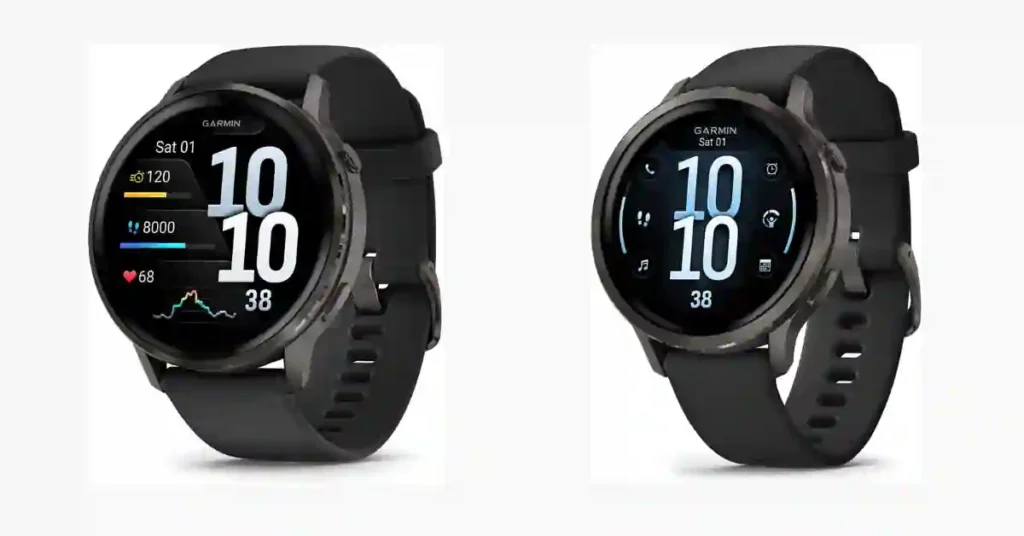
The Venu 4 comes in 41 mm and 45 mm, both smaller and slimmer than large multisport watches like the Fenix series. The 45 mm version shown in the video sits flat on the wrist and wears light.
The Venu line mixes sports watch features with smartwatch and fitness tracker convenience, so it feels at home in daily life rather than only on a trail run.
It returns to a classic round case after a recent rectangular Venu variant, and the result looks clean, simple, and modern. It is elegant, not rugged like the Fenix.
Both sizes are 12 mm thick, the same as Venu 3 and Venu 3S, which helps with comfort under sleeves and during sleep.
Weight and Comfort
At 33 g or 38 g, this is one of Garmin’s lightest full-featured watches. The strap and case contour well, so it stays put without needing to be tight.
- Slim profile for all-day wear
- Lighter than many sports watches
- Feels more premium than the plastic-heavy Venu 3
Materials and Durability
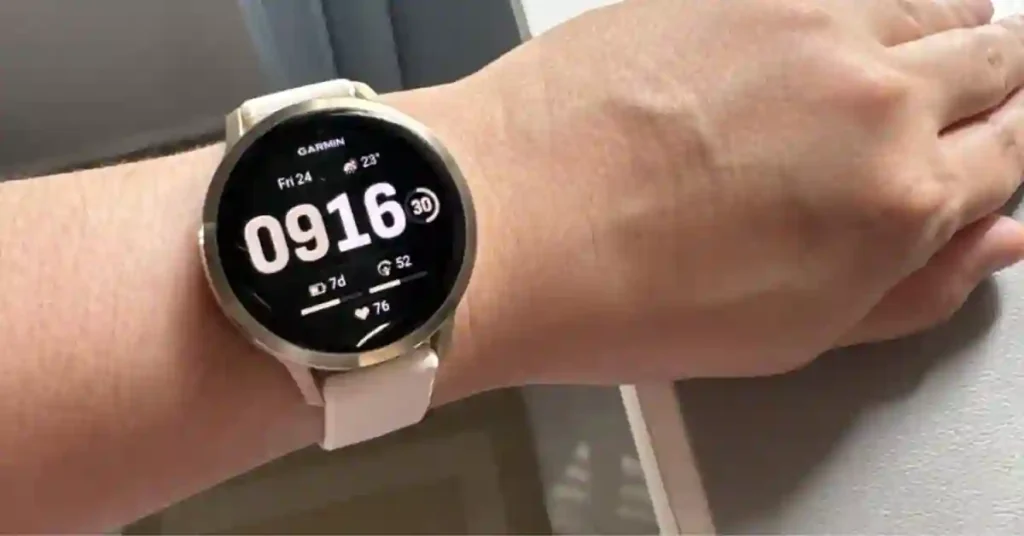
The move to a full stainless steel case is a big upgrade over the Venu 3, which used more plastic and only had steel on the bezel and buttons.
The Venu 4 skips titanium and sapphire glass found on pricier models, but the steel case helps it feel more robust without a weight penalty.
At $550, it sits well below some premium Garmin models, yet above basic fitness watches.
Display Features
Garmin keeps the sharp AMOLED displays from the Venu 3:
- 41 mm: 1.2 inch, 390 x 390 pixels
- 45 mm: 1.4 inch, 454 x 454 pixels
What is new is how you can tune the screen. There are color adjustments, a blue light filter for better night viewing, and color filters to improve visibility for different types of color blindness.
Brightness is improved too, even if Garmin does not list nit values.
The most practical hardware change is the integrated LED flashlight at the top edge. Press and hold the lower button to turn it on. It is great for late-night runs, finding keys, or lighting a dark hallway.
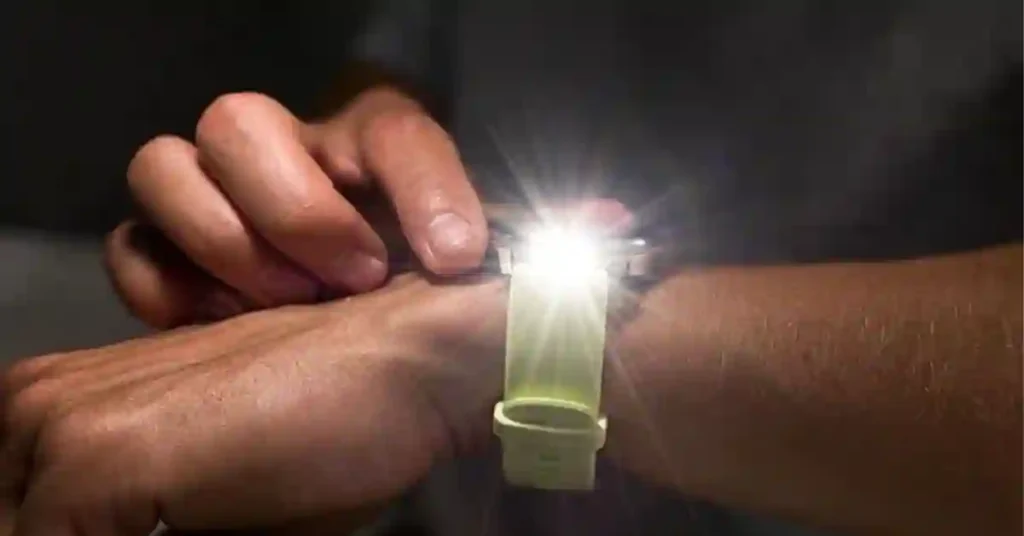
This feature existed on a more expensive recent Venu variant, but it is new for anyone coming from the Venu 3.
New display and hardware perks:
- Color adjustments for accessibility and comfort
- Brighter screen outdoors and indoors
- Built-in LED flashlight for everyday use
Health and Fitness Tracking
Garmin pushes the Venu 4 deeper into daily health, sleep, and recovery while also raising its training ceiling. 0
If you want a balanced Garmin watch that tracks more than workouts, this is where it gets interesting.
Lifestyle Logging Innovation
The headline feature is lifestyle logging. You can record things like caffeine or alcohol intake, or create your own lifestyle factors, then see how those choices affect stress, sleep, and health metrics.
You can log in the app or on the watch. Seeing how a late coffee or a glass of wine changes sleep quality is eye opening, and the trends are easy to grasp.
Sleep Tracking Upgrades
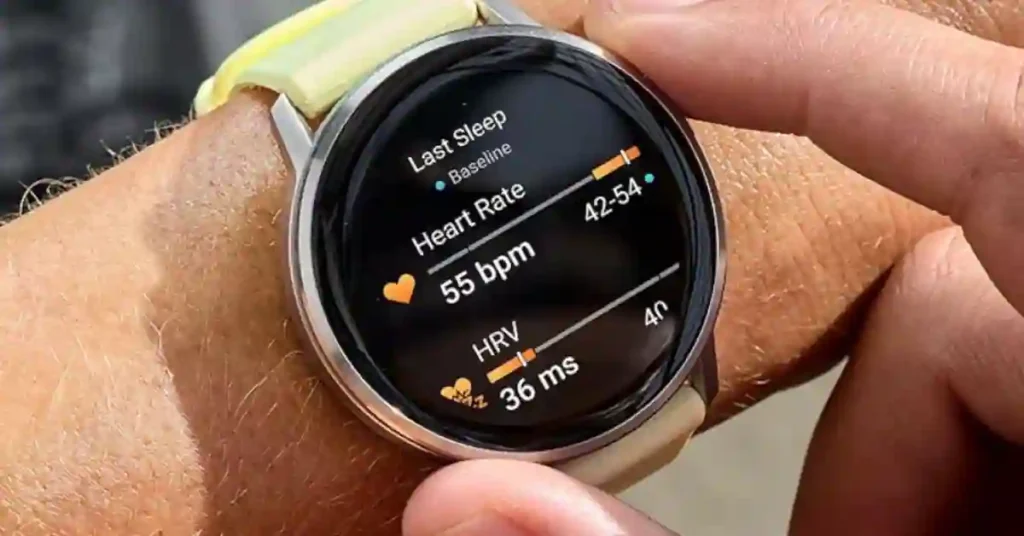
Sleep tracking gets a full refresh. A new circadian rhythm feature checks if your sleep timing matches your internal clock.
It needs about three weeks of your sleep data to build a baseline before it starts guiding you, even if you have history on other Garmin devices.
The smart alarm tries to wake you in a light sleep phase within a 30 minute window, which can make mornings smoother.
A new Health Status view analyzes overnight changes and flags anything out of range. It looks at:
- Resting heart rate
- Heart rate variability (HRV)
- Skin temperature
- Blood oxygen saturation
This can hint at early illness, elevated stress, or recovery needs. It is a simple morning check-in that saves time. The evening report is also new.
It delivers a quick summary of your day at night, while the morning report remains from past models.
ECG is now supported as well. You can take a wrist-based electrocardiogram and record events to share with your doctor if needed.
I have found that a regular sleep schedule pays off, and these tools make it easier to stick with it.
Training Readiness and Metrics
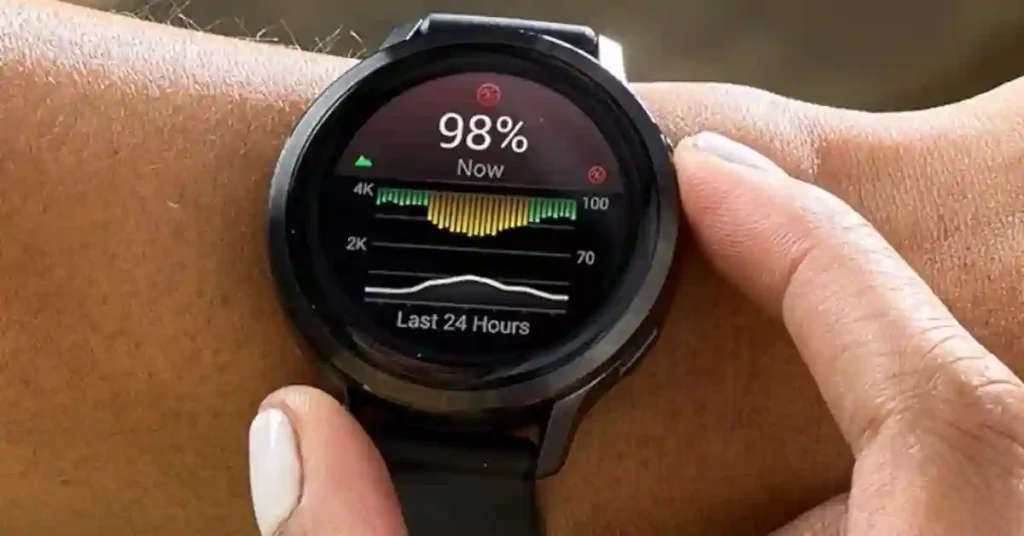
Garmin Venu 4 adds more advanced training context that athletes will appreciate.
Widgets show training readiness and training status, and you can review training load and load focus, split into aerobic and anaerobic buckets. You also get lactate threshold and VO2 max estimates.
After each session, you will see both aerobic and anaerobic training effects, which helps you balance hard and easy days.
The VO2 max estimator performed well in lab tests featured by the creator, which is encouraging if you track aerobic fitness over time.
Workout Suggestions and Coaches
You now get daily workout suggestions for running, cycling, and walking. As of the September 2026 update, these suggestions also factor in the time and intensity you choose, rather than just handing you a generic plan. Garmin Coach is included and has expanded to support strength training along with running and cycling.
There is a triathlon coach, plus a new Fitness Coach that builds personalized plans for more than 25 activities, such as rowing and HIIT.
These recommendations consider your training history, sleep, and recovery, not only your weekly mileage.
Coach options at a glance:
- Garmin Coach for running, cycling, strength
- Triathlon Coach for multi-sport guidance
- Fitness Coach with tailored plans for 25 plus activities
Sports Profiles and Tools
There are many sport profiles, and a helpful new one is mixed training. It lets you combine sports in one session, like a strength block followed by a run, which mirrors events such as Hyrox.
Triathlon is supported as well. As with past Venu models, there are adaptive features for wheelchair users that track pushes and weight shifts.
For racing, the new race widget pulls in your upcoming events from the app and shows weather and predicted finish times. Predictions adjust for distance, weather, and course profile.
Garmin’s PacePro helps you pace hills more wisely. During runs, you can display a recovery timer and grade-adjusted pace. Advanced running metrics include running power, cadence, vertical ratio, vertical oscillation, and ground contact time.
There are still gaps if you want full pro-level metrics. The Venu 4 does not include running tolerance, running economy, hill score, or ClimbPro, and its golf tools are leaner than Garmin’s higher-end watches.
One practical note. The Venu 4 is almost entirely touch controlled. There are only two buttons, and you cannot navigate workout screens with buttons, you must use touch. That can be awkward with sweat or rain.
Smart Features and Connectivity
Garmin kept the smartwatch staples and added a couple of helpful twists.
Core Smart Functions
You get notifications with images, music controls, and about 8 GB of onboard storage for songs and playlists.
The built-in microphone and speaker let you take calls and even listen to music without headphones if you like.
A new accessibility feature can read your watch face data aloud. Voice assistant support remains, and you can use offline voice commands for actions like changing brightness or starting a workout.
The September 2026 update added the “OK Garmin” wake phrase — you can now start activities, set timers, and trigger other voice commands hands-free, without touching the watch first.
There is no LTE or satellite connectivity. You still need your phone for data-heavy features.
Button and Control Changes
There are two buttons now. The Venu 3 had a third center button that many used for shortcuts or quick app access.
Losing that button removes a handy control option, and since most actions use the touchscreen, this change will not suit everyone.
GPS, Navigation, and Accuracy
The good news is strong GPS accuracy with new satellite options. The bad news is the same map limitation that held back the Venu 3.
Navigation Capabilities
The Venu 4 still does not support topographic maps. At this price, that feels like a miss, since many midrange fitness watches now include maps.
You can upload routes, follow breadcrumb navigation, use TrackBack, and get guided back to start. You cannot see a map view or explore nearby points of interest on the fly. If you rely on a map for hiking or travel runs, keep this in mind.
On the upside, the watch adds support for more GNSS constellations, including QZSS and BeiDou, plus full multiband GNSS. In practice, tracking is excellent.
City streets, forest paths, residential areas, and rural roads were recorded with high precision in testing. It matches Garmin’s more advanced watches for GPS accuracy.
Heart Rate Sensor Performance
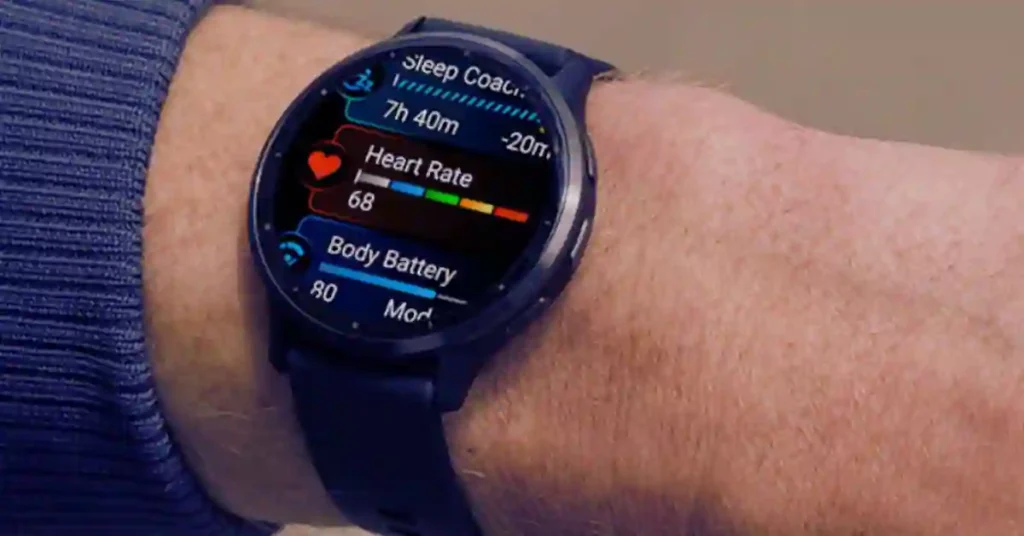
The optical heart rate sensor is the same one used on recent Garmin models. Performance follows the usual pattern:
- Running and cycling, very accurate and close to a chest strap
- Strength training, less accurate with clear deviations during sets
- Team sports like football, accuracy fluctuates but is better than strength work
- Kickboxing, good in large segments, with a few flat spots
For hard-to-track sports with wrist movement or impact, pair a chest strap for best results.
Battery Life and Performance
Battery life drops a little compared to the Venu 3, likely due to new features, but it still outlasts most traditional smartwatches.
Rated and Real-World Battery
Garmin’s estimates are conservative in some cases, and the results vary by size and features used.
- 41 mm: up to 10 days typical use
- 45 mm: up to 12 days typical use
- Always-on display: about 3 to 4 days
- Battery saver smartwatch mode: 18 to 25 days depending on size
- GPS activities: 15 to 20 hours in standard mode
- Multiband GNSS: 12 to 17 hours
Auto Select GNSS is the sweet spot. It switches between standard GPS and multiband as needed, stays nearly as accurate as multiband-only, and saves a lot of power.
The Venu 4 does not support custom activity power modes or an expedition mode.
In real use, the 45 mm model lasted about 7 to 8 days with heavy use, around 10 days with lighter use.
Always-on display cuts that to a few days. During activities, battery drain was better than expected in some sessions. A two hour football session used roughly 3.43 percent per hour in Auto Select, which points to around 30 hours of runtime in that scenario.
With multiband GPS during runs, drain was about 6 percent per hour, which aligns with the 17 hour claim.
Here is a quick comparison of rated figures against the Venu 3:
| Model | Typical Use | AOD Use | GPS Standard | GPS Multiband |
|---|---|---|---|---|
| Venu 3 | Up to 14 days | 4 – 5 days | Longer than Venu 4 in most modes | Not stated for all variants |
| Venu 4 (41 mm) | Up to 10 days | 3 – 4 days | Up to 15 hours | Up to 12 hours |
| Venu 4 (45 mm) | Up to 12 days | 3 – 4 days | Up to 20 hours | Up to 17 hours |
The Venu 4 handily beats an Apple Watch for battery life and sleep tracking. It falls short of Garmin’s big battery adventure watches.
Buy the Garmin Venu 4 If You Are…
✅ Venu 4 hits the sweet spot. It’s made for people who train a few times a week but don’t want to wear a watch that screams “fitness tracker” when they’re out for dinner.
✅ An Android user tired of charging Samsung Galaxy Watch every 36 hours — Venu 4 gives you 10–12 real days between charges
✅ A woman who wants cycle tracking, ovulation estimates, pregnancy tracking, and Body Battery without paying a monthly subscription
✅ Someone who takes sleep seriously — Venu 4’s sleep coaching gives specific advice, not just a score
✅ An iPhone or Android user — works equally well with both, unlike Apple Watch or Samsung
✅ Upgrading from Venu 2 or Venu 3 — ECG, built-in flashlight, and lifestyle logging are genuine additions worth the upgrade.
If you’re choosing between an Apple Watch or Samsung Galaxy Watch instead, our Galaxy Watch 9 vs Apple Watch Series 12 guide breaks down exactly which ecosystem suits you better.”
Don’t Buy the Venu 4 If You Are…
❌ A trail runner who needs offline maps — at $549 no maps is hard to accept. Look at Garmin Fenix 8 instead
❌ A triathlete needing automatic swim-bike-run transitions and deep training analytics — Forerunner 570 is the better choice
❌ An Apple Watch user who relies on third-party apps — the Garmin app ecosystem is not comparable to watchOS
❌ Someone who keeps Always-On Display active all day — AOD drops battery to 3–4 days on the Venu 4
❌ Upgrading from Venu 3 for minor reasons — if your Venu 3 works fine, the upgrades don’t justify $549
❌ Considering the 45mm model — we don’t recommend it due to its high return rate. The 41mm is the right choice at this price
Wondering if you should wait instead? We break down the release pattern and buying decision in our Garmin Venu 5 release date guide.

Our full Garmin Fenix 9 guide before spending on a trail watch in 2026.
Looking for something less running-focused? See why some casual runners choose the Venu 4 instead.
Garmin Venu 4 vs Venu 4S — What’s the Difference?
If you’ve been searching for a “Venu 4S,” here’s the thing: it doesn’t exist as a separate model. There’s no Venu 4S on Garmin’s site, no distinct SKU, no separate branding — that name comes from some early hands-on coverage back when the watch was first announced, which assumed Garmin would keep the old Venu 3/3S naming split. Garmin didn’t.
What Garmin actually sells is one watch, the Venu 4, in two case sizes: 41mm and 45mm. Same sensors, same software, same health tracking, same $549.99 price. The only thing that changes between them is size, weight, screen size, and battery life.
Here’s the full breakdown.
Venu 4 (41mm) vs Venu 4 (45mm) at a Glance
| Venu 4 — 41mm | Venu 4 — 45mm | |
|---|---|---|
| Display size | 1.2″ AMOLED | 1.4″ AMOLED |
| Weight | ~42g | ~51g |
| Battery (smartwatch mode) | Up to 10 days | Up to 12 days |
| Battery (always-on display) | ~3-4 days | ~4 days |
| Price | $549.99 | $549.99 |
| Sensors, GPS, ECG, health features | Identical | Identical |
Same price for both sizes. A lot of “small” versions of watches from other brands quietly strip a feature to justify the smaller case — Garmin doesn’t do that here. Buy whichever size fits your wrist; you’re not paying a premium or losing capability either way.
If you’re weighing a lighter recovery-only option instead, see Garmin Cirqa vs Fitbit Air for how a screenless band compares.
Final Verdict
The Garmin Venu 4 is a well balanced fitness smartwatch that feels more premium, tracks health more deeply, and adds useful tools like a flashlight and ECG. A September 2026 software update also added full-day fall detection and hands-free voice commands at no extra cost — a meaningful bump for a watch that was already strong on value.
GPS accuracy is excellent, coaching is smarter, and lifestyle logging connects your habits to your recovery in a clear way. The lack of maps limits it for outdoor navigation, and battery life steps down a bit from the Venu 3.
If you want a daily driver that blends style, health, and training in one device, this Venu 4 hits the mark. Think of it as a strong candidate for “Best Fitness Smartwatch” for most people who train often, sleep with their watch, and value practical smarts.
Have thoughts on this Garmin Venu 4 review? Drop a comment, and if you have hands-on experience, share what surprised you.
If you are shopping now, we recommend the 41mm only — check current pricing here: Garmin Venu 4 41mm on Amazon.
FAQs for the Garmin Venu 4 Review
How much will the Garmin Venu 4 Cost?
As of June 2026, the Garmin Venu 4 41mm is regularly available at $549 on Amazon — a $50 drop from its $549 launch price. We only recommend the 41mm version. The 45mm at $549 has a high return rate and we do not recommend it.
What is The Battery Life of The Garmin Venu 4?
It offers fantastic battery life compared to most smartwatches, though it’s slightly less than the older Venu 3 due to the brighter screen and more advanced GPS.
The larger 45mm Venu 4 gets up to 12 days in standard smartwatch mode.
The smaller 41mm Venu 4 gets up to 10 days in standard smartwatch mode.
In short, you can go a week or more between charges, which is a huge plus.
Can I make Calls with the Garmin Venu 4?
Yes, you absolutely can! The Venu 4 has a built-in microphone and speaker, so as long as your watch is connected via Bluetooth to your compatible smartphone (Android or iPhone), you can answer calls right from your wrist—perfect for when you’re working out or have your hands full.
Can You Text on Garmin Venu 4?
Yes, you can receive text notifications on the Venu 4. For replying, you have a few options:
Android Users: You can send pre-written quick replies or use the full on-screen keyboard to type a response directly.
iPhone Users: You can use the pre-set quick replies.
You can also use your phone’s voice assistant (like Siri or Google Assistant) through the watch to dictate longer messages.
Does Venu 4 Have ECG?
Yes, the Garmin Venu 4 does feature the ECG app. This allows you to record your heart rhythm to detect signs of Atrial Fibrillation (AFib). Just keep in mind that the availability of this feature can sometimes vary by region, depending on local regulatory approval.
Does New Garmin Venu 4 Have Navigation?
It has excellent GPS capabilities but lacks full, routable on-board maps like the higher-end Fenix or Epix models.
However, the Venu 4 does support course following (meaning you can load a route and follow a breadcrumb trail) and has the new Multi-Band (Dual-Frequency) GPS, which makes its location tracking incredibly accurate, especially in challenging environments like city centers.
What is the difference between Garmin Venu 4 and 4S?
The main difference between the Garmin Venu 4 and the Venu 4S is entirely related to size and battery capacity. The Venu 4S is the smaller, more compact version, featuring a 41mm case and a 1.2-inch display, which is ideal for users with smaller wrists. The standard Venu 4 is the larger model, featuring a 45mm case and a 1.4-inch display. Due to the physical size difference, the larger Venu 4 offers slightly better battery life, typically lasting up to 12 days in smartwatch mode compared to up to 10 days for the Venu 4S. Aside from these physical dimensions and the resulting battery endurance, both watches share the exact same set of features, including the bright AMOLED display, the advanced health and fitness metrics like Training Readiness, built-in flashlight, and Multi-Band GPS support.
Will the Garmin Venu 4 have an improved display?
Yes, the Venu 4 has an improved and brighter display compared to its predecessor, the Venu 3.
Key details about the Garmin Venu 4’s display:
Higher Brightness: The maximum brightness of the AMOLED display is reportedly doubled (e.g., from around 1000 nits on the Venu 3 to up to 2000 nits on the Venu 4), making it much clearer and more vivid, especially in bright, sunny conditions or during outdoor workouts.
Same Size and Resolution: The screen sizes and resolutions remain the same as the Venu 3:
45mm model: 1.4-inch, 454 x 454 pixels.
41mm model: 1.2-inch, 390 x 390 pixels.
Smoother Experience: The Venu 4 also benefits from running on a newer Garmin OS platform, which generally leads to smoother animations and a more fluid user interface.
While the screen itself is brighter, some user reports have noted that the new automatic dimming feature in low light can be slow to adjust, which can be an issue when transitioning quickly from a bright to a dark environment (e.g., running at night).
is Garmin venu 4 waterproof
The Garmin Venu 4 is water resistant up to 5 ATM (50 meters), making it safe for swimming, showers, rain, and sweat. However, it is not fully waterproof and should not be used for scuba diving, high-pressure water sports, or hot tubs. The rating reflects pressure resistance, not diving depth.
I currently use Samsung Galaxy Watch 8. Is switching to Venu 4 worth it?
If battery life is your main frustration — yes. Venu 4 lasts 10–12 days vs Galaxy Watch 8’s 36–40 hours. Health tracking depth is similar across both. If you prefer Samsung’s ecosystem, messaging integration, and app selection — stick with Galaxy Watch. One important note: Samsung Galaxy Watch 9 launches July 22, 2026. If you’re happy with Android, wait and see that first before switching ecosystems entirely.
Venu 4 vs Forerunner 570 — which one for someone who runs 4 times a week?
Depends what matters more to you. Forerunner 570 wins on training: better training readiness scoring, Gen 5 HR sensor, full offline maps, longer GPS battery. Venu 4 wins on lifestyle: better design, ECG, lifestyle logging, looks good at work and dinner. If you analyze training data seriously and care about GPS map navigation — Forerunner 570. If equal parts health tracking and daily wear — Venu 4.
Should I buy the 41mm or 45mm Venu 4?
Buy the 41mm. We do not recommend the 45mm — it has a significantly higher return rate on Amazon. Most buyers find 45mm too large for comfortable daily wear. The 41mm fits most wrists comfortably and is $50 cheaper. There is no meaningful feature difference between the two sizes.
Is Venu 4 good for someone with small wrists?
Yes — the 41mm at 33 grams is one of the most comfortable Garmins for smaller wrists. It is our top Garmin recommendation for women in our best smartwatches for women guide. The 45mm is too large for most smaller wrists and we don’t recommend it.
Is there a cheaper alternative to Venu 4?
Yes — the Garmin Forerunner 70 at $249 covers most of the same health tracking features including Body Battery, sleep coaching, and women’s health suite. It has a less polished design and no ECG. If budget matters and you’re a runner first — read our Garmin Forerunner 70 review to see if it’s enough for your needs.
does the garmin venu 4 have a built in compass?
Yes, the Venu 4 has a built-in 3-axis compass with automatic calibration, so you don’t need to set it up manually. It adjusts based on what you’re doing — walking, navigating to a point, or during a GPS activity — and you can access it from the Controls menu, as a Glance, or on a data screen during a workout. It’s handy for quick direction checks on hikes or rides without pulling out your phone.
Does the Venu 4 store music?
Yes — it has 8GB of onboard storage, enough for a solid chunk of your music library. You can either load your own MP3s onto it or download playlists from Spotify, Amazon Music, or Deezer for offline listening. You can also skip downloading altogether and just use the watch to control whatever’s playing on your paired phone. Either way, you’ll need Bluetooth headphones or a Bluetooth speaker to actually hear it — the watch’s built-in speaker is only for calls and the voice assistant, not music.
Does the Garmin Venu 4 sync with your calendar?
Yes, sort of — it pulls in upcoming events from your phone’s calendar and shows them right on the watch, so you can glance at what’s next without pulling your phone out. One thing worth knowing: it only shows events that are already reaching your phone’s notification center, so if a calendar app’s reminders aren’t set up to notify you on your phone, they won’t show up on the watch either. For most people using the default calendar app with notifications on, this just works out of the box.
Source: Garmin official Venu 4 product page