
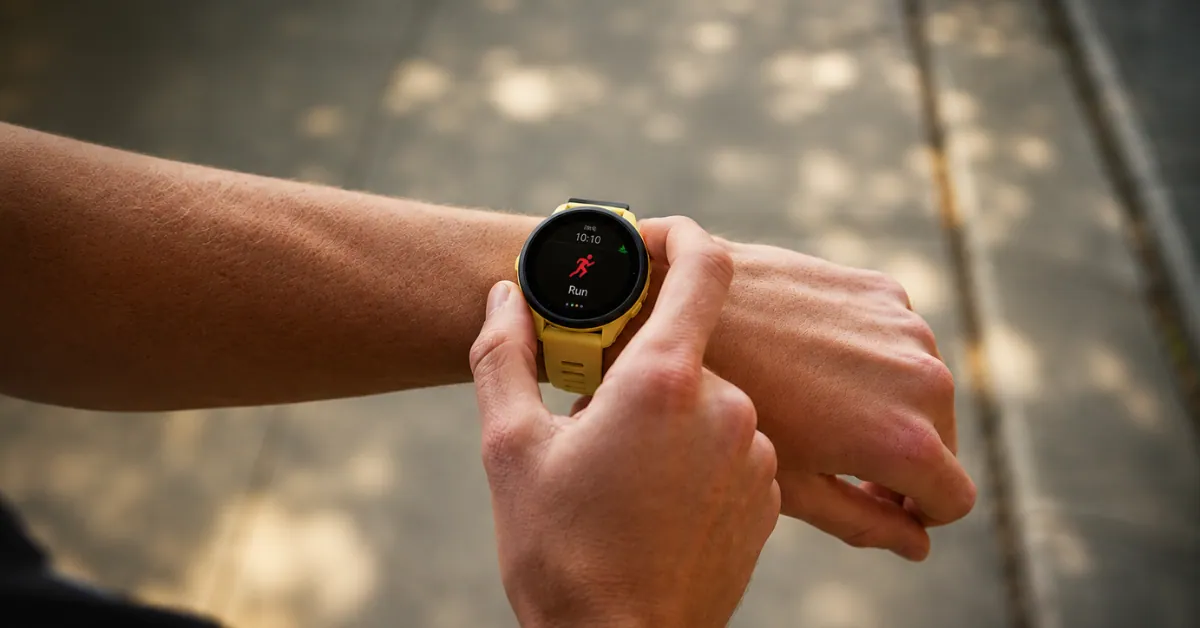
Last Updated: July 01, 2026 — Garmin Forerunner 70 launched May 15, 2026 at $249 — changes this answer significantly — Garmin Forerunner 265 price dropped since FR70 launch — better value now — Garmin Fenix 9 confirmed for fall 2026 — affects Fenix 8 buying advice — SmartWatchInsight tested FR70, FR265, FR570, and Venu 4 — real data used throughout
Someone asked me this exact question last week — and I’ve heard it dozens of times:
“I run three times a week. Usually a 5K on Tuesday, a longer run on Saturday. I’m not training for a marathon. Do I really need to spend $400 on a Garmin, or am I just paying for features I’ll never use?”
Honest answer: No — you do not need a $400 Garmin.
But the more useful answer is: it depends on one specific thing — and I’ll tell you exactly what that is.
⚡ SmartWatchInsight Quick Answer
Run 3x week, roads, always have phone: → Garmin Forerunner 70 at $249    Everything you need. Nothing you don't.

Run 3x week, trails, or phone-free runs: → Garmin Forerunner 265 at ~$349    Dual-band GPS makes a real difference

Run 3x week + gym + swimming: → Garmin Forerunner 570 at ~$549    Only if you actually use multisport

Just want health tracking + casual runs: → Garmin Vivoactive 6 at ~$299    Less running-focused, better daily watch

— Tested by Sunil Bhatt, SmartWatchInsight — 30 days per watch, real running data
Is Garmin Actually Overkill for Casual Running?
Short answer: depends entirely on which Garmin you’re looking at.
A Garmin Fenix 8 at $799 for someone who runs a casual 5K three times a week? Yes — genuinely overkill. You’re paying for satellite messaging, expedition-grade durability, and a 57-hour GPS battery that you will
never need on a Tuesday evening jog.
A Garmin Forerunner 70 at $249 for the same person? Not overkill at all. You get accurate GPS, 11-day battery, Body Battery energy tracking, and Garmin Coach training plans — features any runner actually uses, at a price that makes sense.
The “Garmin is overkill” argument almost always comes from comparing casual running to the wrong Garmin.
The Fenix 8 is overkill for casual runners. The Forerunner 70 isn’t.
What actually makes a watch overkill for casual runners:
- ❌ Paying for offline maps you’ll never navigate with
- ❌ Paying for satellite SOS you don’t need on park runs
- ❌ Paying for triathlon multisport you’ll never set up
- ❌ Paying for titanium and sapphire when polymer is fine
What is NOT overkill — even for someone running 3x a week:
- ✅ GPS accuracy — always useful, road or trail
- ✅ Heart rate zones — genuinely changes how you run easy days
- ✅ Body Battery — one of the most practical daily metrics Garmin makes
- ✅ Training plans — Garmin Coach works even at 5K level
- ✅ 11-day battery — stop thinking about charging forever
The right question was never “is Garmin overkill?” The right question is “which Garmin is right for me?”
For casual runners: Forerunner 70. Not overkill. Not underpowered. The right tool at the right price.
The One Thing That Actually Decides This
Before I walk you through every Garmin option, let me tell you the single question that determines your answer:
Do you run trails or in areas with lots of trees and buildings?
If yes — you need dual-band GPS. That means Forerunner 265 or above at ~$349+.
If no — you run on roads, paths, or a treadmill — the $249 Forerunner 70 does everything you need. The GPS accuracy difference between single-band and dual-band is meaningful on trails and in dense urban canyons. On open roads and parks, you will not notice it.
Everything else — the training plans, the health tracking, the sleep monitoring — is available on the $249 Forerunner 70. Spending more buys you incremental improvements, not fundamentally different capabilities.
What $249 Buys You — Garmin Forerunner 70
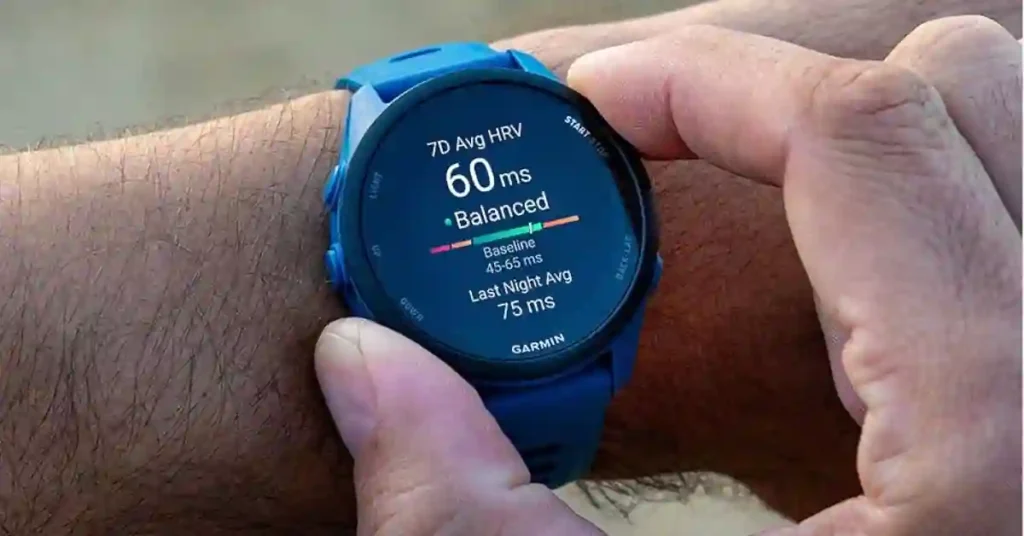
Let me be specific about what the cheapest serious Garmin running watch actually gives you.
The Garmin Forerunner 70 launched May 15, 2026 at $249.99. In SmartWatchInsight’s 30-day test running it alongside a Garmin Forerunner 965:
GPS accuracy on road routes: Within 0.03 miles over 10 miles. For a 5K runner, that gap is meaningless.
Heart rate accuracy: Within 2–3bpm of a Polar H10 chest strap during easy and moderate runs. Drifts 6–8bpm during max-effort sprints — typical for all optical sensors at this price.
Battery life: 11–12 days in real use with one GPS workout daily. You charge it once a week and forget about it the rest of the time.
Training tools you actually get:
- GPS distance and pace — accurate on roads
- Heart rate zones — works reliably at casual and moderate intensity
- VO2 max estimate — takes 2–3 weeks of running to calibrate, then reasonably accurate
- Training load — tells you if you’re building, maintaining, or overdoing it
- Recovery time — estimates hours until you’re ready to run hard again
- Garmin Coach training plans — adaptive 5K, 10K, half marathon plans that adjust to your progress
- Body Battery — daily energy score that combines sleep, stress, and activity
- Sleep tracking — stages, HRV, SpO2, smart alarm
For someone running 3 times a week, these tools cover everything you need. The 5K plan alone is worth the price for a lot of runners.
What it doesn’t have:
- Dual-band GPS — fine on roads, limiting on trails
- Maps — no navigation, breadcrumb only
- Music storage — no offline music
- Garmin Pay — no contactless payment
- Multisport profiles for triathlon

Garmin Forerunner® 70,GPS Running Smartwatch, with Advanced Training Metrics and Recovery Insights
What Extra $100 Buys — Forerunner 265 at ~$349
If you’ve decided you want Garmin and you’re wondering whether the extra $100 for the 265 is worth it — here’s what actually changes.
Dual-band GPS. This is the main upgrade. In SmartWatchInsight’s testing comparing the FR70 and FR265 on the same routes, the difference on open roads was minimal. On a 5-mile trail run with heavy tree cover, the FR265 tracked noticeably tighter. If you trail run or run through dense urban streets, this matters. If you run on paths and roads, it probably doesn’t.
Slightly larger display. The FR265 has a 1.3-inch screen versus the FR70’s 1.2-inch. In real use the difference is barely noticeable.
Barometric altimeter. The FR265 has one, the FR70 doesn’t. This means more accurate elevation data — relevant if you run hilly routes and care about elevation gain numbers. Irrelevant for flat road runners.
HRV4Training compatibility. A third-party app that serious athletes use to track heart rate variability trends over time. Only useful if you’re specifically interested in this methodology.
Advanced Training Readiness. More data points feeding the daily readiness score versus the FR70’s slightly simpler version. In practice, both tell you whether to train hard or rest — the difference is nuance.
The honest verdict on the FR265: If you run trails, it’s worth the extra $100 for dual-band GPS alone. If you run roads, the extra $100 buys you minor improvements you’ll notice occasionally but won’t transform your running.

Garmin Forerunner 265 Running Smartwatch, Colorful AMOLED Display, with Training Metrics and Recovery Insights
What the $400+ Watches Actually Add
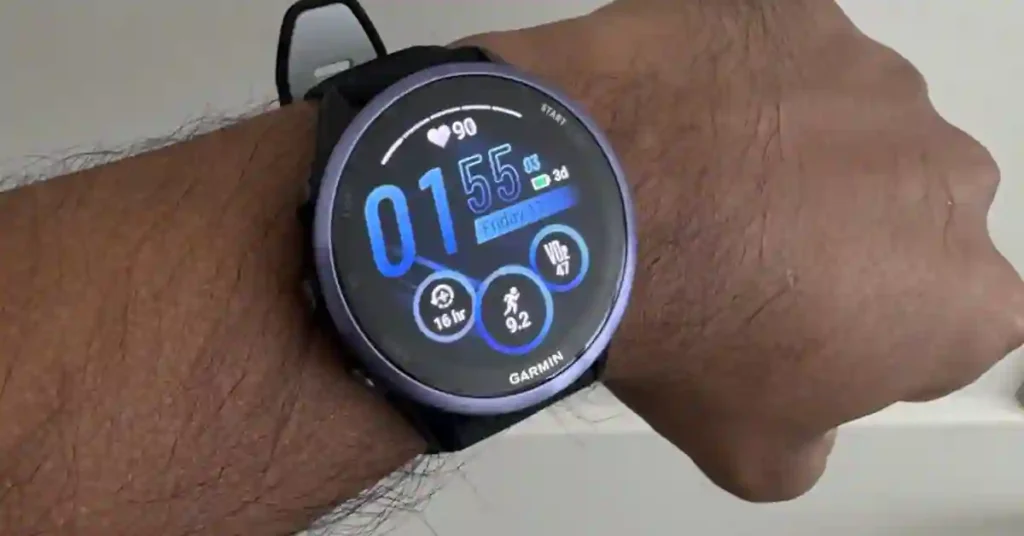
Now we get to the real question — what does spending $400, $500, or $600 actually buy a runner who goes out 3 times a week?
Garmin Forerunner 570 (~$549): Adds full-color offline maps, full multisport (swim-bike-run triathlon), better heart rate sensor (Gen 5 vs Gen 4), longer GPS battery (24 hours vs 20), and a slightly larger display.
For a casual runner: Maps and triathlon support you’re not using. The Gen 5 heart rate sensor is better — but the difference during easy and moderate running is minimal. At your running frequency, you won’t hit the GPS battery limit on either watch.
Garmin Fenix 8 (~$699–$799): Adds rugged titanium build, 10ATM water resistance, military-grade durability, built-in LED flashlight, satellite messaging (on some models), and 57+ hours GPS battery. Read review –Is the Garmin Fenix 8 Worth It?
For a casual runner: You’re essentially paying $400 extra for a watch built for expedition athletes. The features that justify the Fenix 8’s price — multi-week backcountry navigation, extreme durability, satellite SOS — don’t apply to someone running a Tuesday 5K.
The honest math for 3x-per-week runners:
| Watch | Price | Features you’ll use | Features you won’t |
|---|---|---|---|
| Forerunner 70 | $249 | 95% | 5% |
| Forerunner 265 | ~$349 | 90% | 10% |
| Forerunner 570 | ~$549 | 70% | 30% |
| Fenix 8 | ~$799 | 50% | 50% |
The more you spend, the larger the gap between features you have and features you actually use.
When Spending More IS Worth It
I want to be fair here — there are real situations where a more expensive Garmin makes sense even for someone who only runs 3 times a week.
You trail run regularly. Dual-band GPS and potentially maps make a real difference on technical terrain. Forerunner 265 minimum, Fenix 8 if you do serious mountain running.
You also swim and cycle seriously. If your 3 weekly runs are part of a broader triathlon training block, the Forerunner 570 with full multisport support earns its price.
You want the watch to last 5+ years. Higher-end Garmins have better build quality and longer software support. If you’re buying once and keeping it for years, spending more upfront makes financial sense.
You care deeply about data quality. The Gen 5 heart rate sensor in the Forerunner 570 and above is genuinely more accurate during high-intensity intervals than Gen 4. If you do regular hard sessions and want chest-strap-level accuracy from the wrist, the 570 is worth considering.
You run in cities with tall buildings or forests. Dual-band GPS — available from FR265 upward — makes a real accuracy difference in challenging GPS environments.
What About Non-Garmin Options?
Fair question — Garmin isn’t the only answer for casual runners.
Coros Pace 3 at $229: Better GPS battery (38 hours) and comparable accuracy to the Forerunner 265 at $120 less. The trade-off is a smaller app ecosystem, less mature health tracking platform, and a less polished daily-wear experience. For runners who care only about running metrics and nothing else — it’s worth considering.
Apple Watch Series 11 at $399 (iPhone users): If you’re on iPhone and mainly want a smartwatch that also handles running — Apple Watch makes sense. You lose Garmin’s training depth and multi-week battery but gain seamless iPhone integration, Apple Pay, and iMessage. For casual runners who primarily want a smartwatch that also tracks runs, Apple Watch is a legitimate alternative.
Samsung Galaxy Watch 9 at ~$349 (Android users): Launches July 22, 2026. Solid GPS accuracy, good health tracking, Wear OS app ecosystem. Not as deep on running analytics as Garmin, but a reasonable option for Samsung phone users who run casually.
The Garmin Features Casual Runners Actually Use — Ranked
After testing multiple Garmin watches with runners at different levels, here’s what actually gets used versus what just sits in the menu:
Used every run:
- Distance and pace — obviously
- Heart rate — most runners check this
- Body Battery — morning check before deciding how hard to push
- Workout summary — post-run review
Used occasionally: 5. Training load — weekly check 6. Recovery time — after hard sessions 7. VO2 max trend — monthly check to see fitness progress 8. Garmin Coach plan — if actively following a plan
Almost never used by casual runners: 9. Running dynamics (cadence, vertical oscillation) — needs accessory, requires analysis 10. Training readiness score breakdown — too detailed for most 11. ClimbPro — trail feature 12. Course navigation — road runners don’t need this
The first 4 features are available on the $249 Forerunner 70. That’s the honest answer.
What Is the Best Mid-Range Garmin Running Watch?
If you’ve outgrown entry-level but aren’t ready to spend $549 on a Forerunner 570 — the Garmin Forerunner 265 at ~$349 is the answer most runners land on.
Here’s what the extra $100 over the Forerunner 70 actually buys:
✅ Dual-band GPS — meaningfully more accurate in tree cover and urban canyons
✅ Barometric altimeter — accurate elevation data on hilly routes
✅ Slightly larger 1.3-inch display vs FR70’s 1.2-inch
✅ More advanced Training Readiness scoring
What it still doesn’t have vs FR570:
❌ Offline maps
❌ Multisport/triathlon support
❌ Gen 5 HR sensor
Pay the extra $100 for FR265 if you trail run or run in dense urban areas at least once a week. Stick with FR70 at $249 if you run roads and paths — the single-band GPS is more than good enough.
Garmin Forerunner 70 ($249) — buy this if:
- ✅ You run on roads, paths, or parks — not trails
- ✅ You always have your phone on runs (for music, podcasts, or safety)
- ✅ You run 2-4 times per week at comfortable to moderate effort
- ✅ You want training plans for a 5K, 10K, or your first half marathon
- ✅ Budget matters — $249 vs $349 is a real difference for you
- ✅ You’re buying your first GPS running watch and aren’t sure how serious you’ll get
Garmin Forerunner 570 (~$549) — only if:
- ✅ You also swim or cycle seriously — triathlon training
- ✅ You want full offline maps for navigation
- ✅ You run long enough (5+ hours) that GPS battery matters
- ✅ You want the best wrist HR accuracy available from Garmin

Garmin Forerunner 570 Advanced GPS Running and Triathlon Smartwatch, AMOLED Display, Training and Recovery Features
Garmin Fenix 8 (~$799) — wait for Fenix 9 OR only if:
- ✅ You do serious trail running, hiking, or outdoor adventures
- ✅ You need military-grade durability
- ✅ Satellite messaging for backcountry safety matters to you
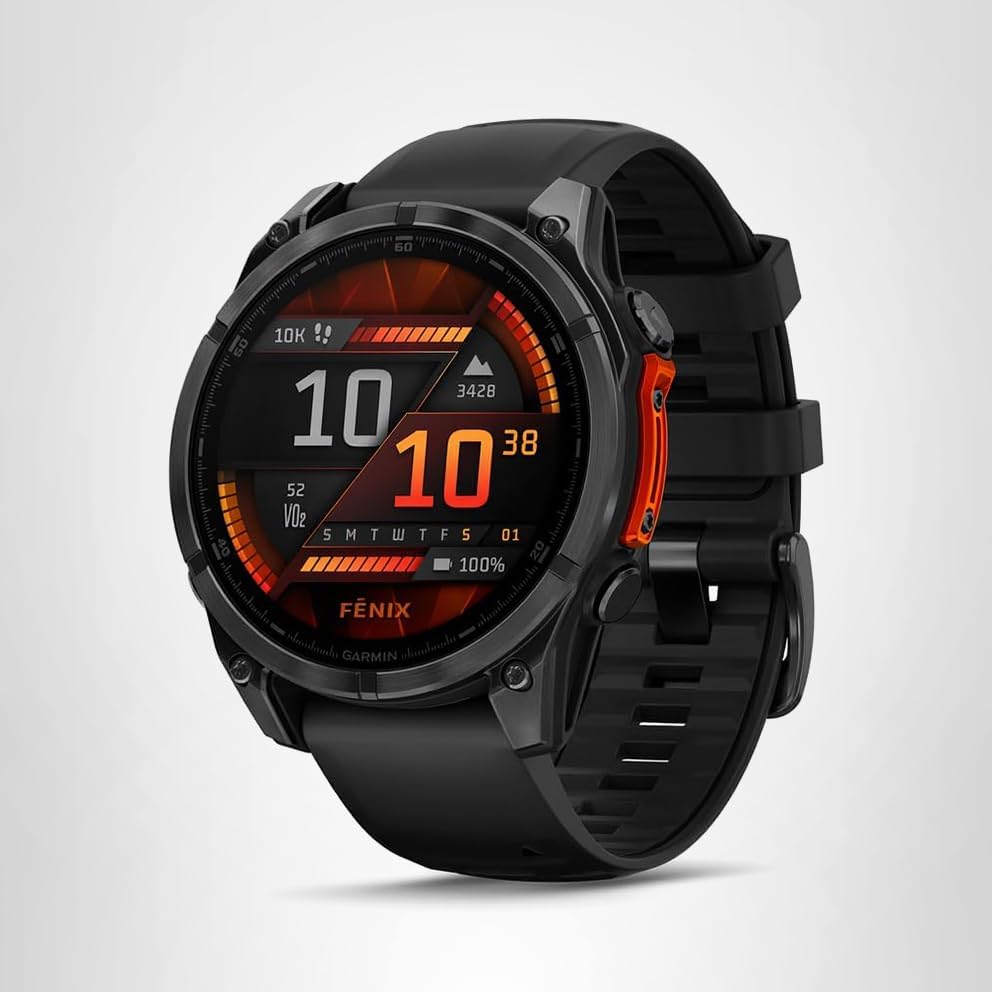
Garmin Fenix 8 Premium Multisport GPS Smartwatch, Long-Lasting Battery Life, with Built-in LED Flashlight
f you’re considering a premium outdoor watch instead of the Forerunner lineup, it’s also worth looking at what’s coming next. Read our Garmin Fenix 9 leaks, expected features, and release date before spending $700+ on a Fenix 8.
Smartwatch Insight Verdict
For casual runners (3x per week, roads):

Best pick: Garmin Forerunner 70 — $249 You use 95% of features, pay for 0% of waste Battery: 11-12 days tested GPS: Accurate on roads — tested vs FR965

If you trail run: Garmin Forerunner 265 — ~$349 Dual-band GPS worth the extra $100

Do NOT buy for casual running:

❌ Garmin Fenix 8 — paying for features you will never use
❌ Garmin Forerunner 970 — frequently returned on Amazon, skip it
❌ Garmin Enduro 3 — designed for 100-mile ultra athletes, not 5K runners

— Tested by Sunil Bhatt, SmartWatchInsight — 30 days per watch including GPS    accuracy and battery tests — June 30, 2026
Quick Decision Guide
I run roads 3x a week, always have my phone: → Garmin Forerunner 70 at $249. Done.
I run trails or city streets with tall buildings: → Garmin Forerunner 265 at ~$349. Dual-band GPS is worth it.
I run AND swim AND cycle: → Garmin Forerunner 570 at ~$549. Full multisport support.
I want a watch that also looks good off the wrist: → Garmin Venu 4 (41mm) at $499. Less running-focused but beautiful daily watch.
I’m completely new to running and not sure I’ll stick with it: → Garmin Forerunner 70 at $249. Lowest risk, still serious enough to grow with.
Someone told me I need a Garmin Fenix: → You probably don’t. Read this post again from the top.
Related Reading
- Full Forerunner 70 review: Is It Really the Best Budget Running Watch?
- All Garmin options compared: Best Garmin Running Watches 2026
- Every Garmin watch coming in 2026: Best Upcoming Smartwatches 2026
- Women runners specifically: Best Smartwatches for Women 2026
Sources
- Garmin official Forerunner 70 product page — confirmed specs and pricing
- Garmin official Forerunner 265 product page — confirmed specs for comparison
FAQ
Is Garmin Forerunner 70 good enough for someone who runs 3 times a week?
Yes — completely. GPS accuracy on roads is excellent, heart rate tracking is reliable at casual and moderate intensity, training plans are genuinely useful, and 11-12 days of battery means you never think about charging. For a runner doing 5Ks and comfortable 10K runs, the FR70 covers 95% of what any Garmin covers.
Do I need dual-band GPS as a casual runner?
Only if you trail run in tree cover or run in dense urban areas with tall buildings. On open roads and parks, single-band GPS accuracy is more than sufficient — within 0.03 miles over 10 miles in our testing.
Is the Garmin Fenix worth it for someone who only runs?
No — for a runner who doesn’t also do serious hiking, trail running, or backcountry adventures, the Fenix’s premium price buys features you’ll never use. The Forerunner 570 at ~$549 gives you everything a running-focused Fenix buyer actually needs at a significantly lower price.
Garmin Forerunner 70 vs Forerunner 265 — which for a beginner runner?
Forerunner 70 for road runners — saves $100 with no meaningful sacrifice on the features beginners actually use. Forerunner 265 only if you trail run or run in challenging GPS environments.
Is Garmin worth it over Apple Watch for casual runners?
Depends on your phone and priorities. If you’re on iPhone and want seamless iPhone integration, Apple Watch is simpler. If battery life frustrates you or you want deeper running analytics without a subscription, Garmin Forerunner 70 at $249 is the better running tool.
Can I train for a half marathon with the Garmin Forerunner 70?
Yes. The FR70 includes Garmin Coach half marathon plans that adapt week by week based on your fitness progression. GPS accuracy, heart rate monitoring, and training load tracking are all sufficient for half marathon training.
What Garmin watch do I need for my first 5K?
Garmin Forerunner 70 at $249 — it has everything you need including a 5K training plan, GPS, heart rate, and Body Battery. You do not need to spend more than this for your first 5K.
This post contains Amazon affiliate links. We earn a small commission if you buy through our links at no extra cost to you. This never influences our recommendations.
Last updated: June 30, 2026