
Quick answer: Get the 47mm if you’re not sure — it’s the safest, most balanced choice, without asking you to compromise much on weight or battery. Go 43mm if you have a smaller wrist or sleep with your watch on. Go 51mm if battery life is the whole reason you’re buying a Fenix in the first place. For tier — the base Fenix 9 is the value choice, and Pro is for buyers who specifically want the upgraded titanium case, brighter display, or inReach satellite messaging. Full pricing for every size and tier is just below.
I’ve already covered what’s new in the Fenix 9 and whether it’s worth upgrading from a Fenix 8. This post is different. It assumes you’ve already decided you want one — now you just need to pick which one, out of nine possible configurations, without overpaying for something you won’t use.
If You Are… Buy This
| If you are… | Buy | Why |
|---|---|---|
| Smaller wrist / sleep with the watch | 43mm base | Smaller and lighter |
| Most buyers, not sure what you need | 47mm base | Best all-around balance |
| Battery-obsessed, expedition trips | 51mm base | Maximum battery in the base lineup |
| Need satellite communication | Pro (any size) + inReach | Off-grid two-way messaging and SOS |
| Want the longest possible runtime | Pro Solar, 51mm | Longest battery life Garmin currently sells |
Fenix 9 Size & Tier Price, In One Place
This is the table I wish existed when I was figuring this out myself. Garmin splits pricing by size and tier, so it’s easy to lose track of what you’re actually paying for.
| Version | 43mm | 47mm | 51mm |
|---|---|---|---|
| Fenix 9 (base, AMOLED) | $999.99 | $999.99 | $1,099.99 |
| Fenix 9 Pro (AMOLED) | $1,099 | $1,099 | $1,199 |
| Fenix 9 Pro Solar | Not offered | $1,099 | $1,199 |
| Add inReach to any Pro | +$100 | +$100 | +$100 |
The $100 inReach upgrade covers the hardware only. An active inReach subscription is also required to use the satellite connectivity features, so keep that ongoing cost in mind when comparing the Pro models.
Which Fenix 9 Should You Buy — By Activity
Runner or gym-goer, wears the watch daily and overnight: 43mm base. You don’t need Pro brightness for a screen you’re glancing at mid-workout, and the smaller case bothers you less while sleeping.
Hiker who does day trips near cell coverage: 47mm base. Good battery margin, normal weight, no reason to pay for satellite you won’t use.
Backcountry hiker, hunter, or frequent remote traveler: 47mm or 51mm Pro, with the inReach add-on. This is the one case where Pro clearly earns its price.
Ultra runner or expedition traveler who resents charging: 51mm Pro Solar. Nothing else in the lineup touches its battery life.
Small wrist, or you want the newer color options: 43mm, base tier unless you specifically need satellite.
You want the best possible screen and don’t mind the size: 51mm Pro AMOLED, at 3,000 nits — the brightest, biggest display Garmin has put on a Fenix.
What Actually Counts as a “Small Wrist”?
Garmin doesn’t publish an official wrist-size chart for this, so here’s the practical guideline I’d use, based on how these case sizes typically sit:
- Under about 150mm (5.9″) wrist circumference: the 43mm will feel proportionate; the 47mm and especially the 51mm will likely overhang the edge of your wrist.
- 150mm to 180mm (5.9″–7.1″): the 47mm is the comfortable default here, and most people in this range can wear any of the three without real trouble.
- Over 180mm (7.1″): the 51mm will look proportionate rather than oversized, and you’ll have the wrist presence to carry the weight comfortably.
If you’re near a boundary and can try one on at a Garmin retailer or REI before buying, do that — the numbers above are a starting point, not a substitute for actually seeing it on your wrist.
Size First: 43mm vs 47mm vs 51mm
This is the decision most people get wrong, usually by picking based on the number alone instead of what that number actually costs them.
| 43mm | 47mm | 51mm | |
|---|---|---|---|
| Case dimensions | 43×43×13.8mm | Reference size Garmin builds around | 51×51×14.7mm |
| Weight (with band / case only) | 61g / 44g | Between the other two | 91g / 65g |
| Display | 1.3″ AMOLED | 1.4″ AMOLED | 1.4–1.5″ AMOLED (1.5″ on Pro) |
| Battery, smartwatch mode | 10 days | 16 days | 29 days |
| QuickFit band width | 20mm | 22mm | 26mm |
| Best for | Small wrists, overnight wear | Most buyers | Maximum battery, biggest screen |
43mm — the one for smaller wrists and overnight wear
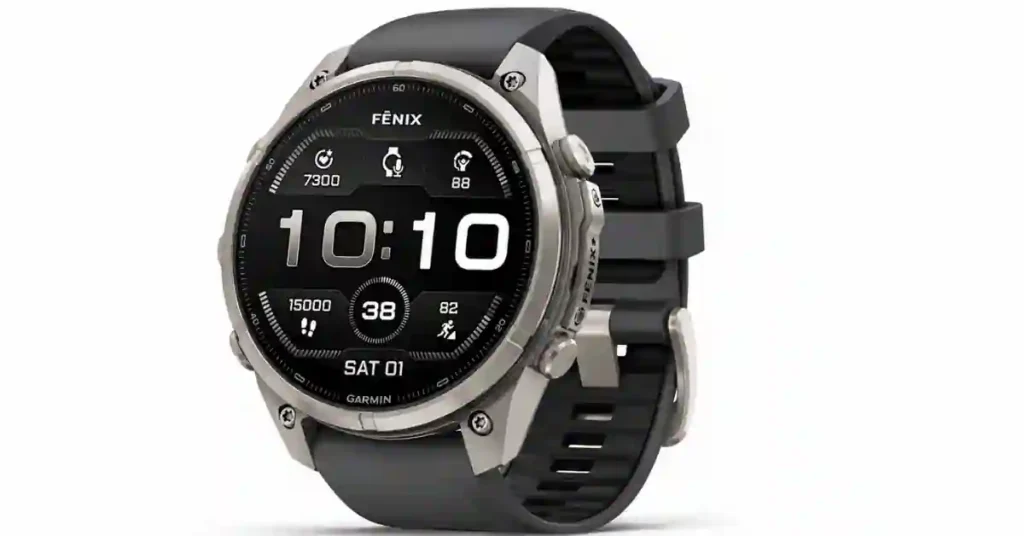
Case is 43×43×13.8mm, weighing 61 grams with the band. It takes a 20mm QuickFit band, the narrowest of the three.
The trade-off is battery, and it’s a real one: 10 days in smartwatch mode, dropping fast once GPS is running continuously. If you’re doing anything longer than a day of activity tracking, you’ll be charging more often than the other two sizes.
Where the 43mm actually wins: color choice. Garmin’s base lineup comes in Titanium or Carbon Gray DLC Titanium finishes across all sizes, but the 43mm gets extra options not available elsewhere in the range — including brighter finishes aimed at buyers who don’t want the standard black or gray look. If the finish matters to you as much as the specs, that alone might settle the size question.
47mm — the safest choice for most people
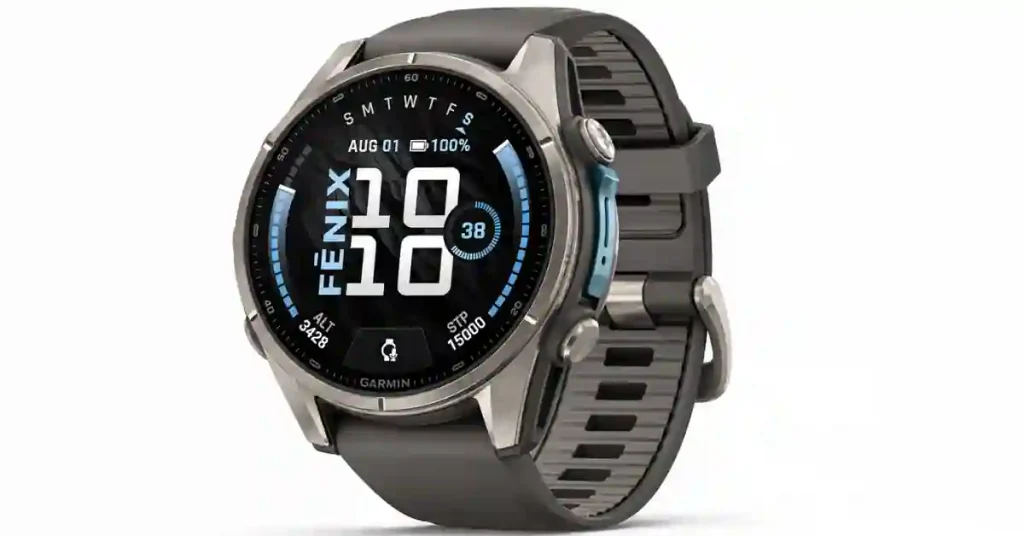
This is the size Garmin’s own materials treat as the default — the one every spec sheet lists first before noting how the others differ.
It gets a good display, a solid 16 days of smartwatch battery, and sits in the middle on bulk — less watch than the 51mm, more wrist presence than the 43mm. If you can’t decide, this is genuinely the size to default to: it’s the broadest fit for everyday wear and outdoor use without the compromises either extreme asks you to make.
51mm — the one for battery over everything
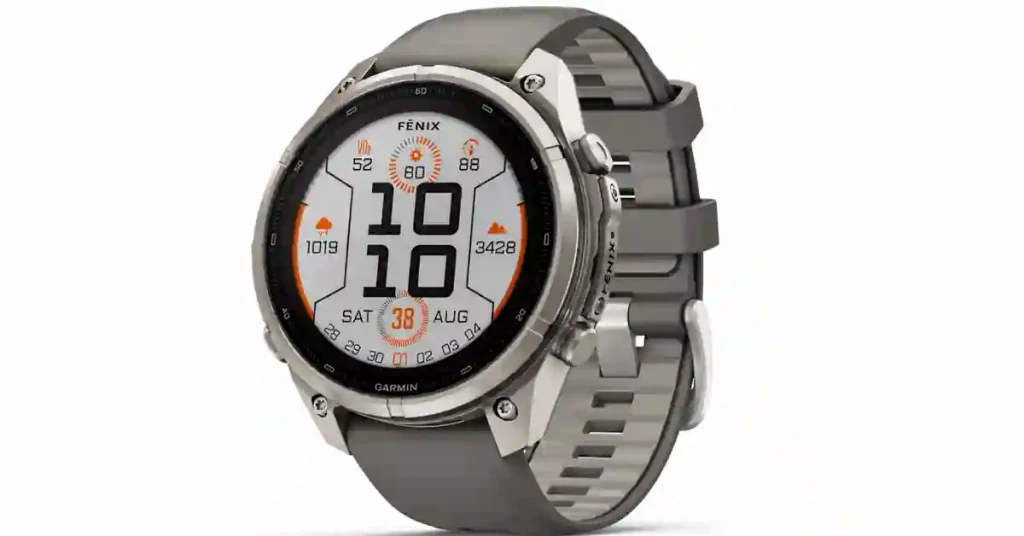
Case is 51×51×14.7mm, weighing 91 grams with the band — meaningfully heavier and larger than the 43mm, and you’ll feel that difference on your wrist immediately, especially coming from a smaller watch.
What you get for that size: 29 days smartwatch mode, according to Garmin’s official rating — close to three times the 43mm’s battery life on the same metric. If you’re doing multi-day hikes or you just hate charging cables, this gap is a big part of the reason to buy a Fenix instead of something smaller.
It also gets the biggest screen — up to 1.5″ on the Pro version — which matters if you’re someone who actually reads maps on your wrist rather than glancing at a step count.
The honest trade-off nobody puts in a spec table
Battery life and wrist comfort move in opposite directions here. The 43mm is the one you forget you’re wearing. The 51mm is the one you forget to charge.
You can’t have both, and no amount of reading spec sheets changes that — try one on if you can, because dimensions on paper don’t tell you how a 91-gram watch actually feels after eight hours at a desk.
Base vs Pro vs Pro Solar
Garmin’s current lineup actually splits two ways at once — by size, and separately by display type. It helps to see the whole structure before deciding:
| Version | Sizes available | Display | Best for |
|---|---|---|---|
| Fenix 9 | 43mm / 47mm / 51mm | AMOLED, titanium bezel + sapphire lens | Best value |
| Fenix 9 Pro | 43mm / 47mm / 51mm | AMOLED, up to 3,000 nits, full titanium case | Premium hardware, or inReach |
| Fenix 9 Pro Solar | 47mm / 51mm only | Solar-assisted display | Maximum battery |
(Full pricing for every version and size is in the table near the top of this guide.)
Notice the Pro Solar isn’t available at 43mm at all — if you want solar charging, you’re choosing a bigger watch by default, no way around it.
On materials: Garmin describes the base Fenix 9 as having a titanium bezel and sapphire lens. The Pro steps up to a full titanium case. That’s the actual distinction Garmin draws, rather than a difference in overall build quality — the base model isn’t a lesser watch, it’s built with titanium in different places.
The base Fenix 9 is the value choice here. Pro is for buyers who specifically want the upgraded case material, the brighter screen, or inReach connectivity — not a strictly “better” watch across the board, just a different one aimed at a different buyer.
Do You Need Satellite Messaging (inReach)?
inReach connectivity is available on Pro models and ties to an active plan — it’s not just a one-time hardware purchase. Depending on the plan, it can include LTE and satellite two-way messaging, voice calling, LiveTrack location sharing, and interactive SOS.
That’s the hardware ($100 more than the equivalent non-inReach Pro) and the ongoing service billed separately, and it’s worth pricing out the subscription before you decide, not just the watch itself.
Buy it if you’re actually going somewhere without cell signal — real backcountry, not “spotty coverage in the suburbs.” If your hiking is mostly on marked trails within a few hours of your car, you’re paying for a safety net you’re unlikely to need, and your phone probably covers the gap anyway.
Band Width — Confirm Before You Order
This trips people up more than it should. The three case sizes use three different QuickFit widths — 20mm for the 43mm, 22mm for the 47mm, and 26mm for the 51mm — and they’re not interchangeable.
If you’re planning to buy extra bands, confirm the width against your specific case size, not the watch name alone, since a “Fenix 9 band” listing online doesn’t tell you which width you’re getting.
Who Should NOT Buy Each Option
Don’t buy the 51mm if you have a small wrist or mainly want a comfortable watch for overnight sleep tracking. The weight and size will bother you daily, even if the battery life looks great on paper.
Don’t buy Pro if you stay within normal cell coverage and don’t care about the titanium case or the brighter screen. You’re paying a real premium for things you may never notice day to day.
Don’t buy Solar if you mostly use the watch indoors, charge it every night anyway, or don’t do trips long enough to need extreme battery life. The extra runtime goes unused.
Don’t buy the 43mm if you regularly do multi-day GPS-heavy activities and don’t want to think about charging. The smaller battery is the one real limitation of this size.
Where to Buy
Garmin’s Fenix 9 order pages are now live for all configurations covered in this guide:
Amazon listings for the Fenix 9 are still rolling out, so Garmin’s official store is the best place to order right now. We’ll add Amazon links as soon as the listings are available.
Still deciding, or looking to save some money? The Fenix 8 is now discounted following the Fenix 9 launch, and it remains an excellent option for anyone who doesn’t need the latest hardware:
Fenix 9, 47mm, Titanium — Amazon → Check current price
Fenix 9, 51mm, Titanium — Amazon → Check current price
Fenix 9 Pro, 47mm, Sapphire — Amazon → Check current price
As an Amazon Associate, this site earns from qualifying purchases.
Frequently Asked Questions
Is the 43mm Fenix 9 too small for serious outdoor use?
No, but you’re trading battery life for comfort. It runs the same GPS and training features as the bigger sizes — you’ll just be charging it more often, especially with GPS running for multi-hour activities.
Do I need the Pro tier, or is the base Fenix 9 enough?
For most buyers, I’d go with the base Fenix 9. It covers the stuff you’ll use every day, including training, GPS, maps, and the usual smartwatch features.
The Pro is worth considering if you want the brighter 3,000-nit display, titanium build, solar charging, or inReach connectivity. Otherwise, there’s little reason to spend extra on the Pro.
How much more does Pro actually cost?
$100 at 43mm and 47mm ($999.99 → $1,099), and also $100 at 51mm ($1,099.99 → $1,199). Adding inReach on top of Pro is another $100, plus a separate ongoing subscription.
Can I get solar charging on the 43mm?
No. Solar is only offered on the 47mm and 51mm Pro models. If solar charging matters to you, the 43mm isn’t an option, regardless of tier.
Do Fenix 8 bands fit the Fenix 9?
Match the QuickFit width to your specific case size — 20mm, 22mm, or 26mm depending on whether you have the 43mm, 47mm, or 51mm. The watch name alone won’t tell you the width, so check before ordering extra bands.
Is the battery difference between sizes really that big?
Yes. The 43mm is rated for 10 days in smartwatch mode; the 51mm for 29 days, per Garmin’s own figures — close to three times the difference on that single metric, before even factoring in the Solar version.
Is inReach worth the extra cost?
Only if you’re actually going somewhere without cell signal on a regular basis. It also requires an active subscription plan on top of the $100 hardware add-on, so price out both before deciding — the subscription is the bigger long-term cost, not the upfront $100.
Final Recommendation
If you’re still unsure after all of this: 47mm, base tier, no inReach, $999.99. It’s the size Garmin builds around, the price doesn’t change from the 43mm, and you can always decide you need satellite messaging later — you can’t easily decide you want a smaller watch after buying the 51mm.
For everything else about the launch — full specs, what changed from the Fenix 8, and how it stacks up against the Apple Watch Ultra 4 and Galaxy Watch Ultra 2 — here’s where to go next:
- Garmin Fenix 9: Official Price, Specs & Every Confirmed Feature
- Fenix 9 vs Fenix 8: Is the Upgrade Worth It?
- Fenix 9 vs Apple Watch Ultra 4
- Garmin Enduro 4 Leaked: Release Date, Features & The Big Display Question (2026)
- Fenix 9 vs Galaxy Watch Ultra 2: 291 Days vs 5,000 Nits
- Every Smartwatch Launching in 2026
Sources: Garmin’s official Fenix 9 and Fenix 9 Pro product pages; case dimensions and QuickFit band widths cross-checked against independent specification listings; battery figures per Garmin’s official smartwatch-mode ratings.