
Samsung’s next fitness band just cleared FCC testing, and the filing confirms one spec nobody actually shops for: Bluetooth version number. What it doesn’t confirm are the things you’d actually decide with — battery life, GPS, price. That gap is the real story here, more than the filing itself.
Samsung’s Galaxy Fit 4 is no longer just a rumor. The SM-R391 has cleared FCC testing, and Samsung’s documentation confirms Bluetooth 5.4.
But the specifications that matter most to buyers are still missing: battery capacity, standalone GPS, price, and an official release date.
What’s confirmed, and what isn’t
It’s worth being precise about this, because a lot of the coverage this week has blurred the two.
| Claim | Status |
|---|---|
| Model number SM-R391 | Confirmed |
| Samsung calls it “FIT4” internally | Confirmed |
| Bluetooth 5.4 | Confirmed |
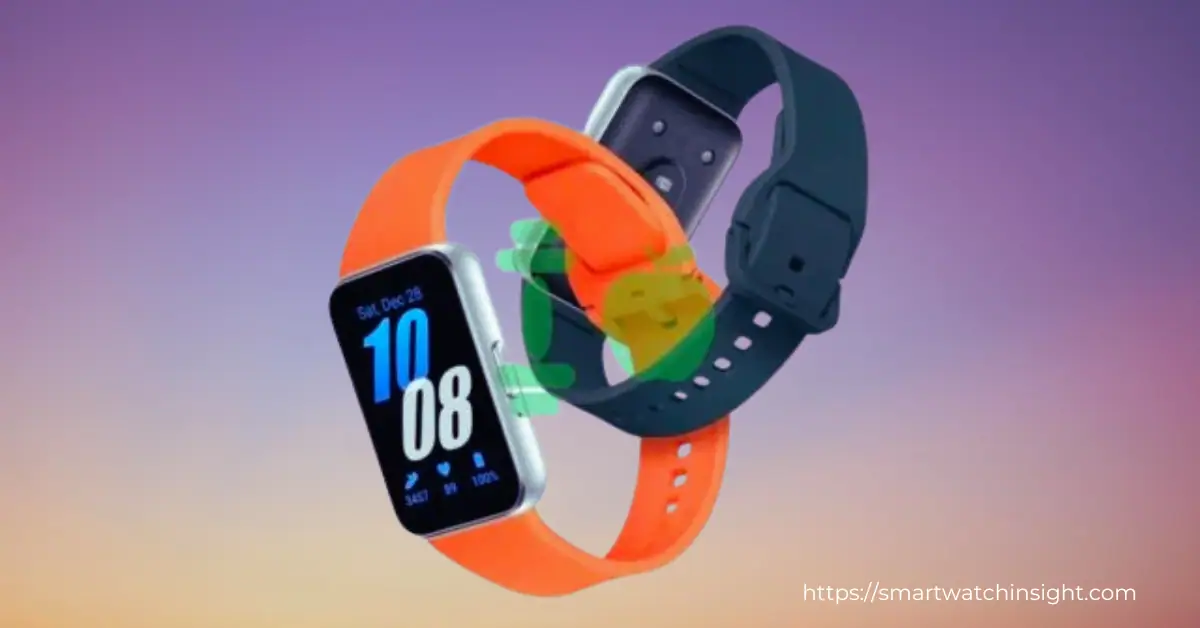
| Design closely matches the Fit3 | Confirmed |
| Goodix GH3036 sensor | Reported by Android Authority from the documentation, not Samsung-confirmed |
| Battery capacity | Unknown |
| GPS | Unknown |
| Price | Unknown |
| Launch in 2026 | Reported, not confirmed |
| September launch | Reported, not confirmed |
| Launch alongside Galaxy S26 FE | Reported possibility |
The device is real. Model SM-R391, tested with hardware revision 2.0 on a mid-July software build, appeared in the FCC database on August 4. Samsung’s own paperwork names it “FIT4” repeatedly. That much isn’t in question.
Bluetooth 5.4 is the one hard spec confirmed in the filing, up from 5.3 on the Fit3. It can bring efficiency and connection-stability improvements, but that doesn’t necessarily translate into anything you’d notice wearing the thing day to day.
The design drawings show the same button, same charging contacts, and a very similar sensor housing to the Fit3. Android Authority also spotted a Goodix GH3036 sensor in the documentation from a separate leak, worth flagging as something the paperwork points to rather than something Samsung has confirmed as final.
What’s still missing, and why it matters more than Bluetooth
Nobody buys a fitness band because of its Bluetooth version. They buy it because of what it tracks, how long it lasts, and what it costs. Right now, the FCC filing is silent on all three.
Battery: the filing names a supplier, EVE, model HQ-8339EV, but not a capacity. The Fit3 uses a 208mAh cell rated for 13 days, closer to 10 in daily use. Whether the Fit 4 matches, beats, or falls short of that is completely unknown.
GPS: still open. The FCC filing does not establish whether the Fit 4 has standalone GPS. The absence of a listed satellite transmitter cannot, by itself, be treated as proof that GPS is absent. This is a real unknown, not a quiet no.
Price and date: also unknown. A June leak pointed to a launch before the end of 2026, possibly alongside the Galaxy S26 FE, but that’s a rumor, not a confirmed timeline.
The FCC database lists January 2027 as when certain documents become public — that’s a confidentiality deadline on paperwork, not a release date, and the two get mixed up constantly in coverage like this.
How it lines up against what you can already buy
Against the Fit3. If you own one, there’s no case to upgrade yet. A Bluetooth version bump isn’t a reason to replace a working device. Wait until battery and GPS are actually known – our Galaxy Fit3 review covers what it still does well if you need a refresher.
![SAMSUNG Galaxy FIT 3 [2025, 40MM] 1.6" AMOLED Display | IP68 Wate...](https://m.media-amazon.com/images/I/418RlYE+wfL._AC_.jpg "Samsung Galaxy Fit 4: Bluetooth 5.4 Is Confirmed, But GPS Is the Real Question 1")
Against Fitbit Air. Fitbit Air takes the opposite approach: no screen, everything routed through the phone and app. The Fit 4 is expected to keep its display. Whether that split actually matters to you comes down to a few things: if you want to check steps or workout data without touching your phone, a screen wins.
If you don’t want another thing pulling your attention throughout the day, screenless has an edge. If outdoor tracking without your phone matters, GPS becomes the deciding factor — that’s precisely the question Samsung hasn’t answered yet.
And if raw battery life is the priority, screenless designs generally have the advantage, since there’s no display drawing power.
If you’re weighing screenless options more broadly, our screenless fitness tracker comparison covers eight of them side by side.

Against Xiaomi and Amazfit. These two have run the sub-$50 category for years on SpO2, stress tracking, and multi-day battery at aggressive prices. Bluetooth 5.4 doesn’t compete with any of that. GPS would, since neither brand typically builds it into their cheapest bands either.

Against Honor Band 11 Pro. This is the comparison that actually has teeth, and it’s worth being specific about which model. Honor’s lineup includes a standard Band 11 Pro and a Band 11 Pro GPS Edition, and it’s the GPS Edition that carries standalone positioning, priced at 349 yuan in China, roughly $52. International pricing for that model isn’t established.
Either way, it shows why GPS matters in this price category: competitors are already putting features like standalone positioning and long battery life, rated up to 26 days, into inexpensive bands.
If the Fit 4 arrives without GPS or NFC, and with a battery rating well short of that, it could look weak against Honor’s GPS Edition on the spec sheet. None of those omissions are confirmed yet, so this is a real possibility, not a settled outcome.
One naming note worth being careful about: this is the Honor Band 11 Pro, not the Huawei Band 11 Pro, a separate product from a separate company that also happens to include GNSS positioning. Easy to mix up, worth double-checking before you buy either one.
Pricing: still unconfirmed, but here’s the context
There’s no confirmed Fit 4 price. That’s the headline fact. For context, the Fit3 has historically sold for $45 to $59 in the US and around £59 in the UK, though check current listings rather than treating those as live prices.
If Samsung holds anything close to that range for the Fit 4, it stays in the same bracket as Xiaomi and Amazfit rather than moving toward Fitbit Air’s $99. Nothing here is locked in.
f you want to see where that price range actually lands you across brands, our best budget fitness trackers under $100 guide breaks down what each one gets you at that price.
Buy now, or wait?
If your Fit3 works, keep using it. Nothing confirmed so far makes the Fit 4 a clear upgrade.
If you need a tracker this week and don’t own one, the Fit3, or a current Xiaomi or Amazfit band, is a known quantity. The Fit 4 has no confirmed price, no confirmed date, and no confirmed spec beyond Bluetooth.
Standalone GPS is the one confirmed feature that could materially change the buying decision. If Samsung actually puts standalone location tracking into a Fit band for the first time, that’s worth waiting for.
Until it’s confirmed one way or the other, that’s speculation, not a reason to delay a purchase. Battery capacity, sensor improvements, or a substantially lower price than expected could also shift the calculation, but none of those are confirmed either.
FAQ
Is the Samsung Galaxy Fit 4 real?
Yes. It cleared FCC testing under model SM-R391 on August 4, 2026, and Samsung’s filing names it “FIT4” throughout.
When is the Galaxy Fit 4 coming out?
No official date. A June leak pointed to sometime before the end of 2026, possibly alongside the Galaxy S26 FE, but that’s unconfirmed. The January 2027 date in the FCC database is a document-confidentiality deadline, not a launch date.
Does the Galaxy Fit 4 have GPS?
Unknown. A missing satellite transmitter listing doesn’t confirm the absence of GPS, since GPS requires a receiver rather than a transmitter. Treat this as genuinely open.
How is the Galaxy Fit 4 different from Fitbit Air?
The Fit 4 is expected to keep a screen; Fitbit Air doesn’t. That decides which one suits you better depending on whether you want on-wrist data or a simpler, phone-centered experience.
Should I buy a Galaxy Fit3 now or wait for the Fit 4?
Buy the Fit3 if you need something now. Nothing confirmed about the Fit 4 yet makes it a clear upgrade.
How much will the Galaxy Fit 4 cost?
Unconfirmed. The Fit3 has historically sold for $45 to $59 in the US and around £59 in the UK. Check current listings for live pricing.
Sources: Gadgets & Wearables, FCC equipment authorization database, Android Authority, Notebookcheck, Tom’s Guide, Tech Advisor