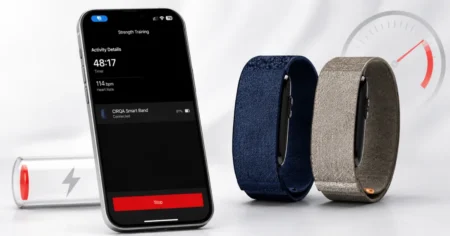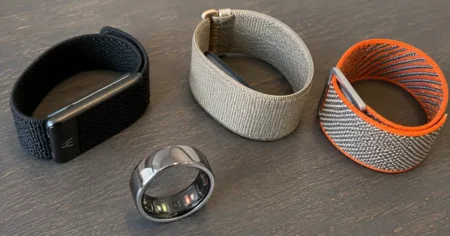

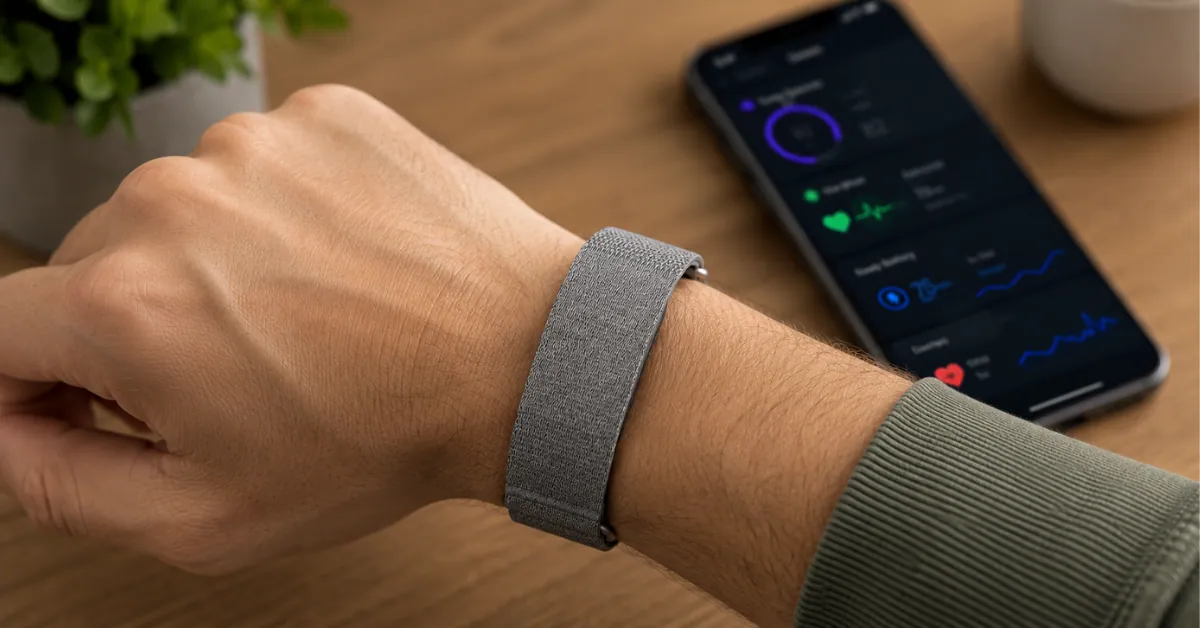
Garmin has spent two decades building watches for runners, cyclists, and triathletes. The Cirqa is different — it doesn’t track a single workout, doesn’t have a screen for pace or splits, and isn’t really aimed at athletes at all. It’s built around one question: how well are you actually recovering?
That makes it an unusual product for Garmin to release, and an unusual one for this site to cover — most of what we write about is training gear.
But the Cirqa’s actual target audience is much broader than that: people who don’t run marathons, don’t follow a training plan, and just want to understand their sleep, stress, and energy levels better.
If that’s you, here’s whether it’s actually worth the $199.99. For the full hands-on breakdown of every feature, see our complete Garmin Cirqa review.
What the Cirqa Actually Does
Unlike Garmin’s traditional watches, the Cirqa isn’t designed around workout screens or live training metrics. It can log activities through Garmin Connect and confirms support for more than 80 activity types via the single side button, plus Connected GPS through your phone for outdoor routes — but its primary focus is recovery, sleep, and daily health rather than being a training watch.
There’s nothing to check mid-day, no notifications, no screen to glance at during a workout. It sits on your wrist — or under a longer sleeve if you’d rather not think about it — and quietly tracks:
- Sleep stages and sleep score
- Overnight HRV (heart rate variability)
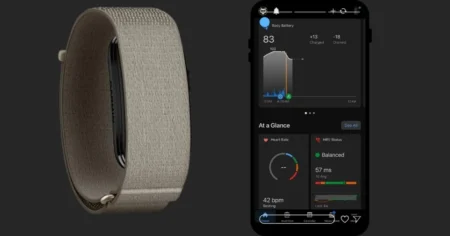
- Body Battery — Garmin’s energy-level score, updated throughout the day
- Skin temperature and SpO2, contributing to overall recovery data
- VO2 Max, Training Readiness, and Training Status for the 80+ activities it can log
All of that feeds into Garmin Connect, the same app Garmin’s running watches use. You don’t need to own a Garmin watch to use it, but if you already do, the data lines up in one place instead of two.
Why “For Non-Athletes” Is the Right Question
Most recovery wearables — the Cirqa included — are marketed with athletic language: training load, recovery time, readiness scores. If you don’t train for anything, that framing can make the whole category feel irrelevant. It isn’t.
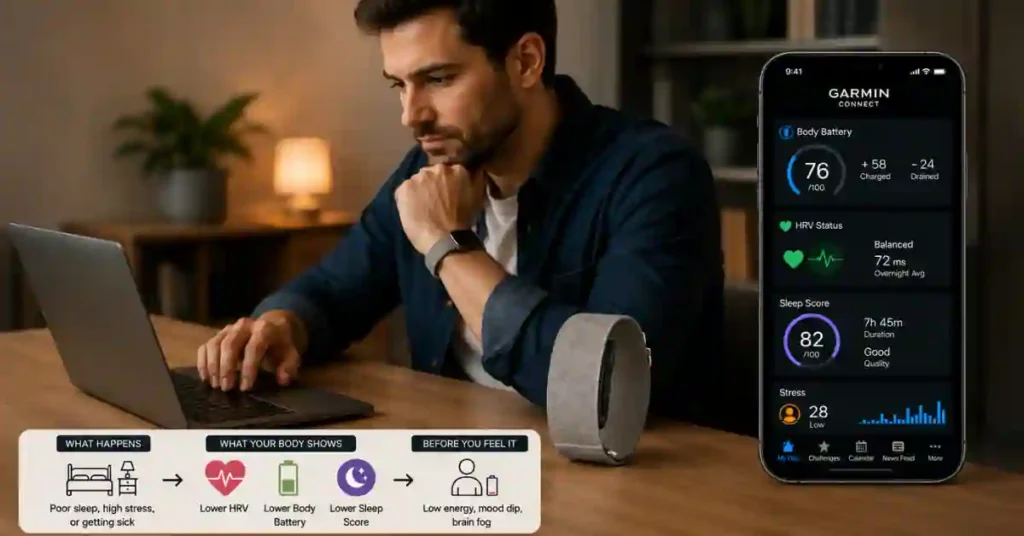
Body Battery, HRV, and sleep score aren’t really about athletic performance — they’re about a much more ordinary question: why do some days feel harder than others, and is that showing up in your body before you notice it yourself? A bad night’s sleep, an unusually stressful week, or getting sick often shows up in HRV and Body Battery before it shows up as low energy you can feel.
For someone managing a demanding job, irregular sleep, or general burnout, that’s arguably more useful than a VO2 max estimate would ever be.
What You Actually Get for $199.99
Garmin confirmed the Cirqa’s pricing at launch: $199.99 in the US, £179.99 in the UK, €199.99 in the EU.
That’s exactly double the $99 Fitbit Air, which covers similar ground — sleep, stress, and basic health tracking — at a lower price.
The Cirqa’s case for the extra cost, for a non-athlete specifically, comes down to a few things:
No mandatory subscription for core features. Sleep, Body Battery, HRV Status, and stress tracking work without a Garmin Connect+ subscription. Some advanced features do sit behind Connect+, but the daily-use basics don’t require an ongoing fee — which matters if you’ve been burned by subscription fatigue from other wearables.
Battery life that matches how you’d actually wear it. A confirmed 10-day battery means you’re not taking it off every night to charge, which is the whole point of a device meant to track sleep. Compare that to a smartwatch you have to charge daily — the entire value proposition of overnight tracking breaks down if the battery doesn’t cooperate.
Real-world battery life varies more than the “up to 10 days” claim suggests — see our full battery breakdown before deciding.
It’s genuinely built to be forgotten. No screen means no temptation to check it mid-conversation, no notifications buzzing your wrist, nothing to charge because you were scrolling through stats. For someone who specifically doesn’t want a “smartwatch experience,” that’s a feature, not a limitation.
If you’re specifically deciding between the Cirqa and a subscription-based option, the monthly-fee math matters more than the spec sheet — our Garmin Cirqa vs Whoop breakdown walks through exactly how the costs compare over a year.
Where It Doesn’t Make Sense
If you already own a Fitbit, an Oura Ring 5, or a Whoop and you’re happy with it, the Cirqa isn’t offering enough of a step up to justify switching, especially outside the Garmin ecosystem — its biggest advantage (unified data with a Garmin watch) disappears if you don’t have one.
Oura in particular has the edge for anyone who specifically wants a ring over a band, since that’s a form-factor preference the Cirqa can’t match no matter what it does on the data side.
If you want any kind of workout tracking at all — even casual walks or gym sessions — a low-cost fitness tracker like the Fitbit Air or a basic Garmin watch will serve you better.
Using the Cirqa as your only wearable means giving up the on-device workout experience and live training metrics you’d get from a smartwatch, even though it still tracks daily steps and can log activities.
And if you’re the kind of person who won’t actually open the Garmin Connect app and look at the data, none of this matters. A recovery band only helps if you engage with what it’s telling you — otherwise it’s an expensive way to track sleep you were already getting.
The Polar Loop is worth a look too if a slightly cheaper, no-subscription band is the priority and you don’t need Garmin-specific integration.
Coming from a cheaper tracker instead? Our Garmin Cirqa vs Fitbit Air comparison covers where the extra $100 does and doesn’t pay off.
Who Should Buy It
Buy the Garmin Cirqa if:
- You care more about sleep than workouts
- You dislike smartwatch screens and notifications
- You already use Garmin Connect
- You want recovery insights without a subscription
Skip it if:
- You want GPS built into the device itself, not phone-dependent
- You mainly buy wearables for workouts and live training data
- You already own an Oura or Whoop and are happy with it
Ready to try it? Garmin Cirqa → Check Price on Amazon
One thing worth knowing before you buy: some early users have run into sync and sensor issues after charging. It’s an easy fix — see our CIRQA troubleshooting guide for the exact steps.
Thinking about waiting for something better? A CIRQA Smart Band Pro appears to be in development, though nothing is confirmed yet.
The Honest Verdict
For a non-athlete specifically curious about sleep quality, stress patterns, and daily energy — without wanting a smartwatch’s screen, notifications, or workout-tracking bulk — the Cirqa is a genuinely reasonable option at $199.99, particularly because the core recovery features don’t require a subscription.
It’s not a fitness tracker replacement, and it’s most valuable if you’re already in or open to the Garmin ecosystem.
The Garmin Cirqa isn’t a smartwatch replacement — and it isn’t trying to be. If your goal is better sleep, lower stress, and a clearer picture of your daily recovery without another screen demanding your attention, it’s one of the most compelling options available at this price.
Worth watching: Garmin may be expanding CIRQA to a ring, based on a leaked (and quickly deleted) regulatory filing — which could matter for anyone weighing whether to buy the band now or wait.
For a fuller picture of the screen-free category right now, see how Apple Watch Ultra 4 compares to WHOOP as well.
FAQ
Do I need a Garmin watch to use the Cirqa?
No — it works as a standalone device through Garmin Connect. Owning a Garmin watch means your data appears in one combined view, but it isn’t required.
Does the Cirqa track steps or workouts?
Yes — daily steps and calories are tracked automatically, and it supports manual logging for 80+ activity types via the side button or app, plus automatic detection for a smaller set of common sports. That said, its main focus is recovery metrics — sleep, HRV, Body Battery, stress — rather than being a training-first device the way a running watch is.
Is a subscription required?
No — core features including sleep tracking, Body Battery, HRV Status, and stress monitoring work without Garmin Connect+. Some advanced features are subscription-gated, but daily use doesn’t require ongoing payment.
How does it compare to Fitbit Air?
See our full Garmin Cirqa vs Fitbit Air comparison — short version: Fitbit costs less and covers similar ground, while Cirqa adds ANT+ and deeper Garmin ecosystem integration.
Is this just for athletes?
No — despite Garmin’s athletic reputation, the Cirqa’s actual use case (sleep quality, stress, daily energy) is arguably more relevant to people managing general life stress and sleep than to competitive athletes, who typically already get this data from their training watch.