
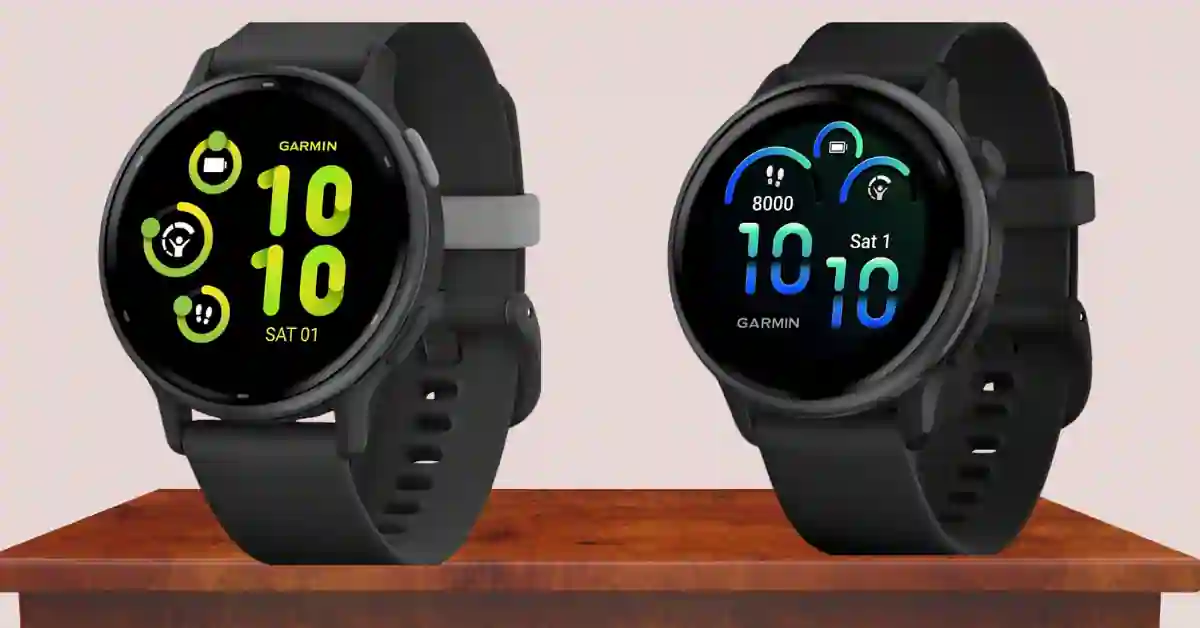
The Vivoactive 6 and Vivoactive 5 look almost identical on the wrist, and Garmin doesn’t make it easy to tell them apart from the spec page. I’ve worn both, and the honest answer is that most of what changed is under the hood, not on the surface – a few of the “upgrades” are more marketing footnote than real difference. Here’s what actually matters, what doesn’t, and which one to buy.
Quick Verdict: Get the Vivoactive 6 if you run regularly, want more storage, or value the wider sports and training feature set – it’s typically not much more than the 5 when both are on sale. Get the Vivoactive 5 if you mainly want everyday health and fitness tracking and can find it for noticeably less. Neither has ECG, a flashlight, or multi-band GPS – for those, look at the Venu 4 instead.
At a Glance
| Vivoactive 6 | Vivoactive 5 | |
|---|---|---|
| Price (current sale) | $229.99 | $189.99 |
| Storage | 8GB | 4GB |
| Display brightness | ~1,500 nits (widely cited, unconfirmed by Garmin) | ~1,000 nits |
| Sport profiles | 80+ | 30+ |
| Charging | Garmin proprietary – unchanged | Garmin proprietary |
| Gyroscope | Yes | No |
| Advanced running tools | Yes | No |
| Weight | 23g / 36g with band | 23g / 36g with band — unchanged |
| ECG | No | No |
✅ Buy the 6 for: doubled storage, running tools, wider sport library, brighter screen
❌ Skip the 6 if: you don’t run and don’t care about the extras – save the $40
⚠️ Watch out for: the Vivoactive 6 drops GameOn gaming support that the 5 has


Design: Same Weight, Thinner Case, More Storage
Both watches share the same 42.2 x 42.2mm case and 1.2″ AMOLED display, and – despite what a few early spec comparisons got wrong – the same weight: 23g bare, about 36g with the included silicone band. The only real dimensional change is thickness, and it’s small: 10.9mm vs 11.1mm.
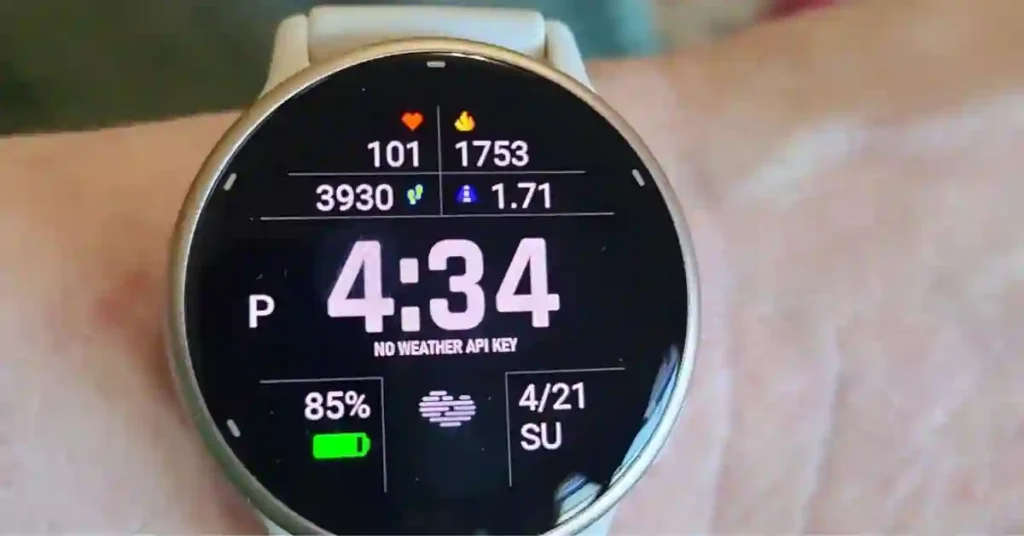
You will not feel that 0.2mm difference on your wrist. We cover how it actually feels on the wrist day to day in our full Vivoactive 6 hands-on review, if you want more than spec numbers.
If you’re upgrading from a Vivoactive 5, your old bands still work – both watches use the same 20mm quick-release strap standard, so nothing in your current strap collection goes to waste.
What does change, and matters more than the numbers suggest:
- Storage doubles, 4GB to 8GB. If you’ve ever had to delete songs mid-week to fit a new playlist on your 5, this alone might be worth the upgrade.
- The display runs brighter – commonly cited at around 1,500 nits on the 6 versus 1,000 nits on the 5, though Garmin itself has never officially confirmed exact nit values for either watch. Whatever the precise number, it’s a genuine difference in direct sun, not just a spec-sheet claim.
- The button has a better, more defined click. Small, but noticeable if you fumble for it mid-run.
- More colors — five case colors across seven color/band combos on the 6, versus four colorways on the 5.
Water resistance is identical on both: 5 ATM, fine for swimming.
Sleep, Health & Wellness: A Handful of Real Additions
Both watches run Garmin’s Elevate Gen 4 optical sensor – no ECG, no skin temperature, on either one. If that matters to you, this comparison isn’t really the one you need; go look at the Venu 4 instead, which adds both plus a flashlight.
What the Vivoactive 6 does add over the 5 is a set of smaller wellness tools:
- Smart Alarm, which wakes you during your lightest sleep phase within a 30-minute window. In my experience, it’s a nice touch on mornings when it lines up right, but I wouldn’t call it a reason to upgrade on its own – it’s a small quality-of-life feature, not a dealbreaker.
- Customizable Morning Report – pick what data greets you first thing.
- Sleep Alignment, aimed at travel and shift-work schedule changes. If sleep tracking specifically is your priority over everything else, Garmin also sells a dedicated sleep-only band worth knowing about.
- Relaxation reminders and a breathing timer.
- Health Status, which flags when your data drifts from your normal baseline – a nudge, not a diagnosis. Worth knowing: this is still a beta feature on Garmin’s side, and Garmin has been rolling it out to the Vivoactive 5 too via the Connect app – the Vivoactive 6 just gets it as an on-device widget as well, not only in the app.
This kind of always-on recovery tracking is also the whole premise behind Garmin’s CIRQA smart band, if that’s what you’re actually shopping for rather than a full GPS watch.
None of these are dramatic on their own. Together, they make the 6 feel like a slightly more attentive daily watch, but none of them are why you’d upgrade — the running features are.
Running & Sports: Where the Vivoactive 6 Actually Pulls Ahead
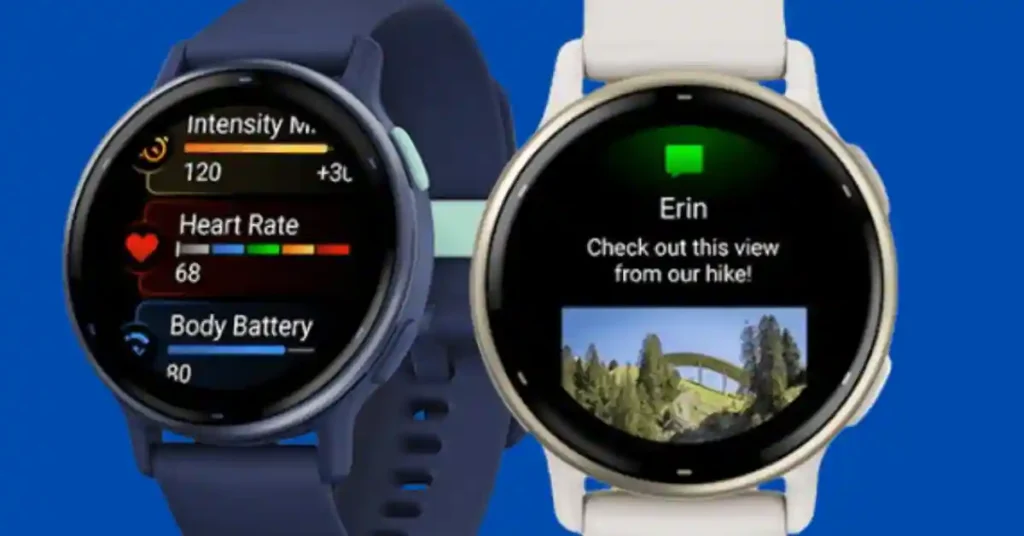
This is the real gap, and it’s the reason I’d point most runners toward the 6 over the 5. If running is your main use case, though, it’s worth comparing the Vivoactive 6 against Garmin’s dedicated running lineup too – our Best Garmin Watches for Runners 2026 guide breaks down every option by budget and training goal.
The Vivoactive 5 gives you one generic “Running” profile with basic pace and distance. The Vivoactive 6 adds:
- Running Dynamics – stride length, cadence, ground contact time, balance — metrics that used to be Forerunner-exclusive.
- PacePro – GPS-based pacing strategy for a specific course or distance.
- Race Predictor – estimates your finish time from recent training data. This one’s confirmed directly on Garmin’s official spec sheet for the 6 under “Running Features”; the same section on the Vivoactive 5’s spec sheet doesn’t list it at all.
- Dedicated Track, Trail, and Obstacle Running profiles, instead of one catch-all mode.
- A gyroscope – the 5 doesn’t have one at all, which is a real part of why the 6’s running data is more precise, not just marketing language.
- Rucking and Mobility as standalone activity profiles.
- 80+ total sport profiles, up from 30+ – closing a lot of the gap with Garmin’s dedicated Forerunner line.
For many recreational runners, the Vivoactive 6 now covers enough training features that a more expensive Forerunner may not be necessary – you’re mainly giving up multi-band GPS accuracy, which most casual runners won’t notice day to day.
What you’d lose going from a 5 to a 6: GameOn, Garmin’s gaming-integration feature, is on the Vivoactive 5’s spec sheet and absent from the 6’s. It’s niche – most people have never used it – but if you have, it’s worth knowing before you switch.
Battery Life: Essentially Identical
Battery life hasn’t moved at all between generations:
| Mode | Vivoactive 6 | Vivoactive 5 |
|---|---|---|
| Smartwatch mode | 11 days | 11 days |
| Always-on display | 5 days | 5 days |
| Battery saver mode | 21 days | 21 days |
| GPS-only mode | 21 hours | 21 hours |
| All-systems GNSS mode | 17 hours | 17 hours |
| All-systems GNSS mode with music | up to 8 hours | up to 8 hours |
Both watches use Garmin’s proprietary charging cable instead of USB-C or USB-A, so the charging method hasn’t changed between generations.
Curious how these numbers hold up two or three years in, rather than out of the box? Our Garmin watch lifespan guide has real battery-degradation data by model.
GPS & Navigation
The 6 adds BeiDou and QZSS to its satellite list, on top of the GPS, GLONASS, and Galileo both watches already support. In practice, this mostly helps lock speed in dense cities or valleys with limited sky view – particularly in Asia-Pacific, where BeiDou and QZSS have stronger coverage.
Neither watch has multi-band GPS or SatIQ, so for most everyday runs, accuracy will feel about the same on both.
Music
The 6 adds YouTube Music alongside the Spotify, Amazon Music, and Deezer offline support both watches already have – useful only if you’ve already switched streaming services.
Price: The Gap Is Smaller Than It Looks
- Vivoactive 6: $299.99 list, $229.99 on sale at Amazon.com
- Vivoactive 5: $269.99 list, $189.99 on sale at Amazon.com
Garmin’s sale prices change often – these were accurate at the time of writing.
With both discounted, the real difference is $40 – not the “budget vs premium” gap older comparisons imply. At that gap, the doubled storage and running features alone make the 6 the easier pick for most people.
The 5 only wins on pure value if you find it discounted further, or genuinely don’t care about any of the running upgrades.
For bigger discounts on either watch, our Garmin GPS Watch Deals tracker covers when Garmin actually runs sales, since it’s rarer than most brands.
Which One Should You Buy?
If you’re still deciding after all that: the Vivoactive 6 is the better watch, full stop – but the Vivoactive 5 isn’t a bad consolation prize, and for a lot of people it’s honestly enough.
- Runner, music-storage user, or just want the newer hardware? Get the 6. At $40 more, there’s little reason not to.
- Already own a 5 and don’t run seriously? Nothing here is a must-upgrade. Keep it.
- Buying new on a tight budget, no interest in running metrics? The 5 at $189.99 is still a genuinely good everyday fitness watch – you’re not settling for something broken, just something simpler.
- Want ECG, a flashlight, or multi-band GPS? Neither watch has them – see the Venu 4, or our Vivoactive 6 vs Venu 3 comparison if you’re torn between the lifestyle and sport tiers.
FAQ
Is the Garmin Vivoactive 6 heavier than the Vivoactive 5?
No. Both weigh the same – 23g without the band, about 36g with the included silicone band – despite some early reports suggesting otherwise.
Does the Vivoactive 6 have ECG?
No. Neither the Vivoactive 6 nor the Vivoactive 5 has ECG; both use the Elevate Gen 4 sensor, which doesn’t support it. You’d need the Venu 4 for that.
Is the Vivoactive 6 worth upgrading from the Vivoactive 5?
If you run regularly, yes – Running Dynamics, PacePro, and Race Predictor are real upgrades the 5 doesn’t have. If you’re a casual, non-running user, the day-to-day experience is very similar, and the 5 remains a solid, cheaper watch.
Do Vivoactive 5 bands fit the Vivoactive 6?
Yes. Both use the same 20mm quick-release band standard, so existing straps carry over.
What’s new in Vivoactive 6 battery life?
Nothing – every battery figure is identical to the Vivoactive 5, and both charge the same way, using Garmin’s proprietary plug cable. Neither watch uses USB-C or USB-A directly.
Does the Vivoactive 6 have multi-band GPS?
No. It adds BeiDou and QZSS satellite support over the 5, but neither watch has multi-band (dual-frequency) GPS or SatIQ.
Related reading: Best Budget Garmin Watches 2026