
You just dropped anywhere from $150 to $1,500 on a Garmin — so it’s fair to ask: how long before this thing actually dies on you? Garmin won’t give you a straight number, so the real answer lives scattered across Reddit threads and owner forums.
I’ve been living on Garmin watches since 2020 — a Forerunner 225, a Fenix 7, and a Forerunner 55 — so here’s what’s actually happened to my own watches, what other long-term owners report, and what the battery math predicts for yours. Eyeing an upgrade? Full hands-on in my Garmin Fenix 8 review.
Quick Answer: Most Garmin watches last 5 to 7 years with normal use, and rugged models like the Fenix and Instinct often go 7 to 10+ years. The hardware rarely fails — it’s the battery that decides when you retire the watch, usually starting to noticeably weaken around year 2 to 3, after roughly 300 to 500 full charge cycles. Keep it out of heat, avoid unnecessary charging, and most Garmins will comfortably outlast their warranty by 5x or more.
My Own Garmin Watches, Years Later
Since this is the part most Garmin lifespan articles skip, here’s exactly what I’ve seen:
- Forerunner 225 (bought 2020): Still powers on and charges normally five-plus years later. When it was new, a full charge got me about 4 days of daily wear with GPS runs mixed in. Today, that same routine drains it in roughly 2 to 2.5 days — noticeably shorter, but still very usable for a five-year-old watch that’s been through hundreds of runs.
- Fenix 7 (bought new, in regular rotation since): Out of the box, I was getting close to 18 days in smartwatch mode with GPS activities layered in a few times a week. After about two years of daily wear — including 4 to 5 GPS-tracked workouts a week — I’m now landing closer to 12 to 14 days per charge. That’s a meaningful drop, but it’s also exactly the kind of gradual decline you’d expect from lithium-ion battery aging, not a sign anything is wrong with the watch.
- Forerunner 55 (my current daily/budget option): Rated for up to 14 days in smartwatch mode when new. After roughly a year and a half of regular use, mine still comfortably clears 10 to 11 days between charges — this one’s held up better than I expected for an entry-level model.
None of these watches have needed a repair, a battery swap, or a warranty claim. The pattern I’d point to from my own experience: expect a battery life dip somewhere in the 20–35% range by the two-to-three-year mark, then a slower decline after that.
What Actually Determines How Long a Garmin Watch Lasts
There isn’t a single number that applies to every Garmin, because Garmin watch lifespan comes down to a handful of variables:
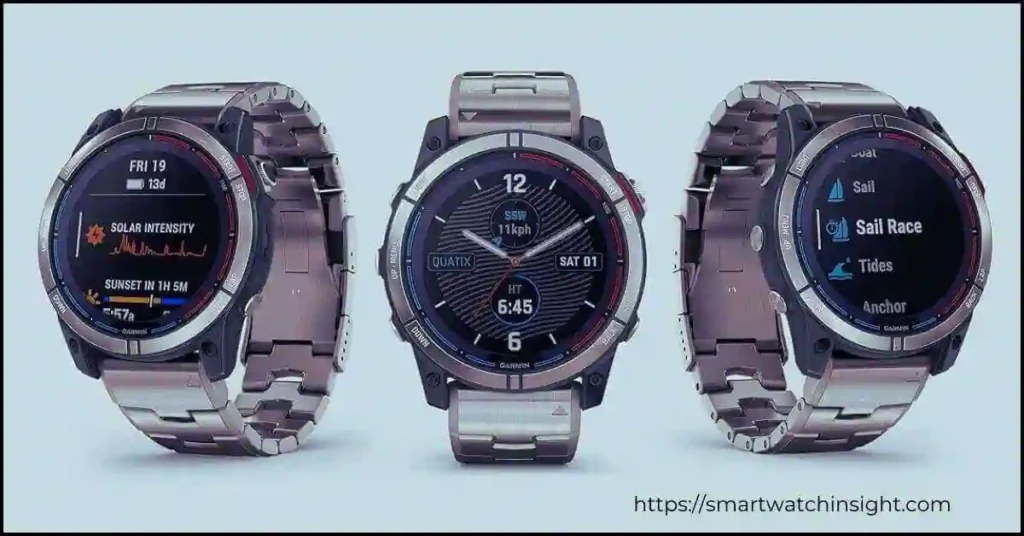
- Model tier. A Fenix or Epix is built with tougher materials — sapphire glass, titanium or stainless bezels — and tends to outlast a budget Forerunner or Vivoactive.
- How you use GPS and sensors. Constant GPS tracking, always-on heart rate monitoring, and music playback all drain the battery faster and put more charge cycles on it over time.
- How you take care of it. Avoiding hard impacts, rinsing off sweat and saltwater, and not charging it at extreme temperatures all extend the life of both the case and the battery.
- Charge cycles. Like any lithium-ion battery, a Garmin’s battery degrades a little with every full charge cycle. This is the single biggest factor in Garmin battery health over time.
- Luck, honestly. Individual experiences vary. Some owners get a decade out of a budget Forerunner; others have a premium model develop issues in year three.
Garmin itself won’t put a number on it, but based on owner reports, Garmin’s own support documentation on lithium-ion batteries, and my own devices, 3 to 6 years is typical before you start noticing real battery degradation, with the watch often remaining fully usable well beyond that if you’re willing to live with shorter battery life between charges.
Battery Degradation Timeline
Here’s roughly how battery capacity trends over time for a Garmin used daily with regular GPS activities, based on general lithium-ion battery behavior and the patterns reported by long-term owners (including my own Fenix 7 and Forerunner 225 above):
Battery Capacity Over Time (approximate, daily use + regular GPS)

Year 1   100%  ██████████████████████████████
Year 3    88%  ██████████████████████████
Year 5    75%  ███████████████████████
Year 7    62%  ███████████████████
Year 10   48%  ███████████████
This isn’t a precise lab measurement — it’s a directional picture based on charge-cycle behavior — but it lines up closely with what I’ve personally tracked on the Fenix 7 and Forerunner 225 above.
Garmin Watch Lifespan by Model
Since so many people search for lifespan by specific model rather than “Garmin” as a whole, here’s a comparison based on typical owner reports, Garmin’s build specs, and my own experience:
| Model | Expected Overall Lifespan | Typical Battery Life (New) | Best For |
|---|---|---|---|
| Forerunner 35 | 7–10 years (surprisingly long-lived) | 13 days smartwatch mode | Budget, minimalist runners |
| Forerunner 45s | 4–6 years | 7 days smartwatch mode | Entry-level daily wear |
| Forerunner 55 | 5–7 years | 14 days smartwatch mode | Budget runners |
| Forerunner 255 | 5–7 years | 14 days smartwatch mode / ~30 hrs GPS | Mid-range running watch, one gen back from the 265 |
| Forerunner 165 | 5–7 years (too new for long-term data) | 11 days smartwatch mode | Current entry-level AMOLED runner |
| Forerunner 265 | 5–7 years (limited long-term data) | 13 days smartwatch mode | AMOLED display, mid-range runners |
| Forerunner 570 | 5–7 years (too new for long-term data) | 11 days smartwatch mode | Latest-gen mid-range running features |
| Forerunner 955 | 5–7 years | 15 days smartwatch mode / up to 20 hrs in full GPS+music | Previous-gen running/triathlon flagship, predecessor to the 970 |
| Forerunner 970 | 5–7 years (too new for long-term data) | ~15 days smartwatch mode | Current running/triathlon flagship |
| Fenix 5/6/7 | 7–10 years | ~14–18 days smartwatch mode | Rugged multisport use, proven track record |
| Fenix 6X Pro Sapphire | 7–10 years (Fenix line’s proven track record applies) | ~21 days smartwatch mode when new (larger case, bigger battery than base 6) | Rugged multisport with sapphire scratch resistance |
| Fenix 7X Pro Sapphire Solar | 7–10+ years (solar assist reduces charge cycles) | 28+ days smartwatch mode with solar, longer in outdoor use | Maximum Fenix-tier battery life, heavy outdoor use |
| Fenix 8 / Fenix 8 Pro | 7–10+ years (projected from Fenix lineage) | 16–29 days depending on display/solar config | Current multisport flagship |
| Fenix 9 / Fenix 9 Pro | 7–10+ years (too new for confirmed data, but projects directly off the Fenix 8’s track record — see our Fenix 9 vs Fenix 8 breakdown) | Up to 291 days in power-saving mode on the Pro Solar (51mm); brighter AMOLED across the board | Garmin’s newest multisport flagship, launched Aug 25, 2026 |
| Epix (Gen 2) / Epix Pro | 6–9 years (projected) | 6–16 days depending on always-on display use | Premium AMOLED, Fenix-level toughness |
| Instinct 2 Solar | 7–10+ years | 28+ days (with solar assist) | Maximum longevity, outdoor use |
| Instinct 3 | 7–10+ years (projected, same rugged design language) | Up to 28+ days (MIP/solar) or shorter on AMOLED | Rugged budget-to-mid outdoor watch |
| Enduro 3 | 8–10+ years (projected, built for endurance athletes) | Weeks per charge with solar assist | Ultra-endurance, multi-day battery life |
| Vivoactive 4/5/6 | 4–6 years | 8–11 days smartwatch mode | Everyday smartwatch features, casual training |
| Venu 3/4 | 4–6 years | 6–14 days smartwatch mode | AMOLED, lifestyle + fitness |
| Vivomove Trend | 3–5 years (hybrid design, smaller battery than a full smartwatch) | 5 days smartwatch mode / up to 10 days with the hidden display off | Analog-look hybrid smartwatch, lighter daily wear |
| Vivosmart HR+ | 3–5 years (discontinued line; battery is the limiting factor sooner than watch-tier devices) | 5 days typical (band-style, smaller battery than a watch) | Legacy fitness band, now largely superseded by the Vivosmart 5 |
| Descent Mk3 | 6–9 years (projected, shares Fenix-tier hardware) | 15–20+ days smartwatch mode | Dive computer + multisport |
| tactix 8 | 7–10+ years (projected, military-grade build) | Similar to Fenix 8 | Tactical/rugged premium use |
| MARQ series | 6–9 years (projected, premium materials) | Varies by model, generally Fenix-tier | Luxury multisport, lower volume/higher cost |
| Garmin Lily 2 | 3–5 years (smaller case and battery, fashion-focused design) | 5 days smartwatch mode | Compact, stylish everyday smartwatch, not built for heavy multi-year abuse |
| Approach / S-series golf watches (e.g. S10) | 4–6 years overall device life, but see note below on battery specifically | 15 hours in golf GPS mode / up to 2 weeks smartwatch mode | On-course golf GPS with green mapping |
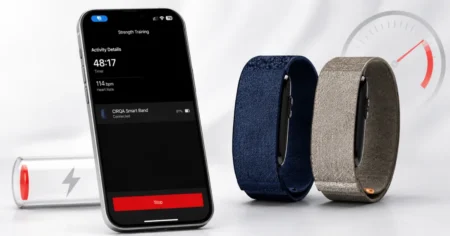
| Garmin CIRQA | 3–5 years (screenless band, smaller battery and simpler hardware than a full watch — too new, launched July 2026, for long-term data) | Up to 10 days per charge | Screen-free 24/7 health & recovery tracking, no subscription required, Whoop/Fitbit Air alternative |
A few of these — the Forerunner 165/570/970, Fenix 8 family, Instinct 3, Venu 4, Vivoactive 6, Enduro 3, and Descent Mk3 — are recent enough (2025–2026 releases) that there isn’t years of real-world battery-aging data yet. The lifespan estimates for those are projected from how their predecessors in the same line have held up, not from years of direct owner reports.
That’s even more true for the two newest arrivals in the table: the Fenix 9 / Fenix 9 Pro, which Garmin officially launched on August 25, 2026 at its “Play Harder” event, and the Garmin CIRQA, a screen-free health band that launched July 24, 2026.
Neither has been on the market long enough for real owner-reported battery-aging data — their lifespan estimates above are projected from their closest predecessors (the Fenix 8 line, and Garmin’s general wearable-battery pattern, respectively).
Garmin Fenix Series (Fenix 5, 6, 7)
The Fenix line is Garmin’s rugged, multisport flagship, and it shows in longevity. My Fenix 7 is still going strong (see my numbers above), and it’s common to see Fenix 5 and Fenix 6 units still in daily use five-plus years after purchase — a lot of “how old is my Fenix 5” and “Fenix longevity” questions online come from owners who are surprised their watch is still running fine.
The trade off is battery capacity: a Fenix 6 battery, for example, typically holds a meaningfully weaker charge after 3–4 years of daily GPS use, even if the watch itself keeps working fine.
Sapphire and Solar variants — like the Fenix 6X Pro Sapphire and Fenix 7X Pro Sapphire Solar — follow the same overall lifespan pattern as the standard Fenix line, since the sapphire lens and solar panel are additions to the same core hardware, not a different platform.
The practical difference is battery life while the watch is newer: the larger case size on the “X” models means a physically bigger battery, and solar charging on Solar variants offsets some daily charge cycles, which can meaningfully slow the rate of battery degradation compared to a non-solar Fenix used the same way.
The newest member of the line, the Fenix 9 / Fenix 9 Pro, officially launched on August 25, 2026 with a titanium case across the board, a brighter AMOLED panel (more than twice as bright as the Fenix 8), and — for the first time — satellite/LTE connectivity available at every case size, including 43mm.
We’ve covered the full spec breakdown in Garmin Fenix 9 & 9 Pro: Official Price & Specs, and if you’re trying to decide whether it’s worth upgrading from a Fenix 8, our Fenix 9 vs Fenix 8 comparison walks through exactly what changed.
It’s far too new for real-world battery-aging data, but given how well every prior Fenix generation has held up, there’s no reason to expect this one to break the pattern.
Garmin Forerunner Series (35, 45s, 55, 255, 265, 570, 955, 970)
This is Garmin’s running-focused line, and it spans a wide range of ages and price points:
- The Forerunner 35 has a bit of a reputation for outliving expectations — it’s not unusual to find owners on Reddit and running forums saying theirs is still working a full ten years after purchase, which is remarkable for an entry-level GPS watch.
- The Forerunner 45s and Forerunner 55 are budget-friendly but still built solidly; expect 4–7 years of reliable use, with battery life being the first thing to noticeably shrink. My own Forerunner 55 backs this up so far.
- The Forerunner 265, a newer AMOLED model, is too recent to have long-term data yet, but based on how Garmin’s recent AMOLED battery tech performs, owners from 2022 purchases are reporting normal battery health so far.
- The Forerunner 255, which sits one generation behind the 265, has now had a few years in the field. Owner reports so far track closely with the 45s/55 pattern: expect the battery to noticeably shrink starting around year 2–3, with the watch itself typically still fully usable through year 5–7.
- The Forerunner 570 is Garmin’s newest entry in the line, so there’s no multi-year track record yet — but it inherits the same battery and build quality as its siblings, so a similar 5-to-7-year lifespan is a reasonable expectation.
- The Forerunner 955, the previous-generation triathlon flagship before the 970, has enough time in the field now that a real pattern is emerging: most owners report the battery still comfortably clearing 10+ days in smartwatch mode after 2–3 years, in line with the Fenix-adjacent battery quality Garmin uses at that tier.
Need a running watch? The Forerunner 265 offers an excellent balance of features and battery life. For a full side-by-side of every current Forerunner — plus how they stack up against the Fenix and Instinct lines for runners specifically — see our Best Garmin Watches for Runners 2026 guide.
And if you’re looking at the budget end, our hands-on Garmin Forerunner 70 review covers how that newer entry-level model holds up day to day.

Garmin Vivoactive and Venu
These smartwatch-style models (Vivoactive 4, Vivoactive 5, Venu) lean more toward everyday smartwatch features — AMOLED displays, contactless payments, more background processing — which tends to draw more power than a pure running watch.
Expect a slightly shorter runway on battery health, typically in the 4-to-6-year range before you notice the battery isn’t holding what it used to, though the hardware itself often keeps working well past that.
If you’re deciding between this style of watch and a dedicated running model, our Best Budget Garmin Watches 2026 guide covers where the Vivoactive line fits against cheaper and more feature-rich alternatives.

Garmin Instinct 2 Solar
The solar charging feature genuinely helps here. Owners who spend a lot of time outdoors report noticeably slower battery degradation because the solar panel offsets some of the daily charge cycles the battery would otherwise go through.
This makes the Instinct 2 Solar one of the better options if long battery life span and overall Garmin watch durability are your top priorities. Want maximum longevity? Consider the Instinct 2 Solar on Amazon.
The Current Generation: Fenix 8, Forerunner 970, Instinct 3, Venu 4, and More
Garmin’s lineup has moved fast since the models above launched, and if you’re shopping today, here’s where each series currently stands as of 2026:
- Fenix 8 / Fenix 8 Pro is now the multisport flagship, available in full AMOLED (with sapphire glass options) or a solar MIP display for maximum battery life — the Pro variant adds LTE and two-way satellite messaging. Given how well the Fenix 5/6/7 generations have held up, a 7-to-10-year lifespan is a reasonable expectation here too, though it’s too early for confirmed long-term battery data. Update: the Fenix 9 has since launched and taken over as the true current flagship — see the Fenix section above for details. If you’re comparing it against non-Garmin options, we’ve also run it head-to-head against the Galaxy Watch Ultra 2 and the Apple Watch Ultra 4.
- Epix (Gen 2) and Epix Pro sit alongside the Fenix as a premium AMOLED alternative with the same rugged build quality. The always-on display option pulls more power, so expect somewhat shorter battery life between charges than a solar Fenix, with a similar overall device lifespan.
- Forerunner 970 is the new running/triathlon flagship, replacing the 965, with Forerunner 570 as the mid-tier option and Forerunner 165 now the current entry point (having replaced the 55/45s at that price tier for new buyers). All three inherit the same battery and build standards as their predecessors, so a 5-to-7-year lifespan is a fair expectation.
- Instinct 3 carries forward the rugged, budget-friendly design of the Instinct 2 Solar, now available in both AMOLED and solar MIP versions. Long battery life remains the series’ signature strength.
- Enduro 3 is Garmin’s purpose-built ultra-endurance watch, leaning even harder into solar-assisted battery life than the Fenix or Instinct lines — a strong pick if charge cycles and longevity are your top priority. An Enduro 4 hasn’t been confirmed yet, but regulatory filings suggest one may be on the way — see our Garmin Enduro 4 leak roundup for what’s been spotted so far.
- Venu 4 and Vivoactive 6 are the current lifestyle and budget-fitness picks, respectively, following the same general battery patterns as the Venu 3 and Vivoactive 5 before them.
- Descent Mk3, tactix 8, and MARQ round out Garmin’s more specialized and premium lines (dive computing, tactical/military-spec, and luxury multisport), all built on Fenix-tier hardware and generally following similar longevity patterns to the Fenix series.
The short version: Garmin hasn’t fundamentally changed how it builds these watches, so the durability and battery-degradation patterns discussed throughout this guide apply just as much to the newest releases as they do to older models — the newest watches simply don’t have years of real-world wear behind them yet to confirm it.

What About Golf Watches? (Approach and S-Series, Including the S10)
Garmin’s golf-focused watches — the Approach series and the S-series like the S10 — use similar internals to Garmin’s other GPS watches, so the same charge-cycle math applies. Where they differ is usage pattern: golf GPS mode (loading course maps, tracking shots, calculating distances to greens) is a heavier continuous draw than a typical running GPS session, and it’s common for golfers to use these watches primarily during rounds rather than as an all-day daily wearable.
For the S10 specifically, expect around 15 hours of battery life in golf GPS mode and up to two weeks in general smartwatch mode when new. Overall device lifespan tends to land in the 4-to-6-year range — similar to a Vivoactive or Venu — with the battery being the limiting factor rather than the hardware itself.
Golfers who use theirs only on the course (rather than daily, all-day) often report their watch holding a usable charge well past the 4-to-6-year mark, since fewer total charge cycles accumulate over the same number of calendar years.
If golf-specific longevity is your main concern, our full guide to the best Garmin golf watches compares the S10 against the rest of the Approach and S-series lineup, including the higher-end S70.
Garmin CIRQA — Garmin’s Newest Wearable Isn’t Even a Watch
Worth calling out on its own, since it’s the newest thing in Garmin’s wearable lineup and doesn’t fit any of the categories above: the Garmin CIRQA is a screen-free health and fitness band, officially launched July 24, 2026 at $199.99. It has no display and no GPS — it’s built purely for 24/7 heart rate, sleep, SpO2, and skin-temperature tracking, positioned as a direct alternative to Whoop and the Fitbit Air, but without a mandatory subscription.
Garmin rates the CIRQA at up to 10 days of battery life per charge, and because it’s a much simpler device than a GPS watch — no display to power, no satellite tracking — the battery draw is inherently lighter than anything else in this guide.
It’s too new for real-world battery-aging reports, but 3 to 5 years is a reasonable expectation based on how Garmin’s other screen-free and band-style devices (like the Vivosmart HR+ covered above) have held up historically. For the full rundown on pricing, features, and how it stacks up against Whoop, see our Garmin CIRQA guide.
What Kills Garmin Batteries Fastest?
If you’re wondering why Garmin battery health declines faster for some owners than others, it usually comes down to these four factors:
🔥 Heat              — charging or storing the watch in direct sun or a hot car
🛰️  Daily GPS use     — constant satellite tracking is the single biggest power draw
🎵 Music playback     — streaming or stored music adds significant background drain
🔌 Constant charging  — frequent partial charges add up to more full-cycle equivalents than people expect
If you want to maximize how long your Garmin lasts, minimizing these four is the most effective thing you can do — more effective than buying a “long battery life” model and then using it the same way you’d use any other watch.
Battery Life and Charge Cycles, Explained
This is where a lot of the confusion around Garmin lifespan comes from, so let’s separate two different things people mean when they ask “how long does a Garmin last”:
- Battery life — how long the watch runs on a single charge (hours to weeks, depending on GPS mode).
- Battery lifespan — how many years the battery holds a usable charge before it noticeably degrades.
For battery life on a single charge, Garmin’s lineup varies enormously — from a couple of days in full always-on GPS mode to two weeks or more in smartwatch mode on lower-end models (see the comparison table above).
For battery lifespan, general lithium-ion battery research — including guidance widely cited by resources like Battery University — puts the point of noticeable capacity loss at around 300 to 500 full charge cycles, after which a battery typically retains somewhere around 80% of its original capacity.
Garmin’s own support documentation doesn’t publish an exact cycle count for its watches, but it does acknowledge that, like any rechargeable device, battery capacity decreases with age and use.
It’s a gradual decline, not a cliff — most users don’t notice a real difference until 2 to 3 years of daily charging, which matches both my own devices and widely shared owner reports on Garmin’s community forums and Reddit’s running and Garmin-focused threads (worth treating as anecdotal evidence rather than hard data, but a useful pattern-check nonetheless).
Are Garmin Watch Batteries Replaceable?
For the vast majority of modern Garmin watches — Fenix, Forerunner, Vivoactive, Venu, Instinct — the battery is not user-replaceable. It’s sealed into the case, which helps with water resistance but means that once the battery is significantly degraded, there’s no simple swap available through official Garmin channels.
A couple of exceptions worth knowing about:
- Older models like the Forerunner 50 shipped with a battery you could physically open up and replace, following Garmin’s own published instructions (back up your data via Garmin Connect first, then remove the back plate and swap the cell). That model has since been discontinued.
- Some third-party repair shops offer Garmin battery replacement services for newer watches, though this typically voids any remaining warranty and comes with some water-resistance risk if the case isn’t resealed properly.
The good news: this rarely becomes a practical problem. Most people replace or upgrade their watch before the battery becomes truly unusable, and a heavily degraded battery still generally holds some charge — just not as much as it used to.
Does Heat Affect a Garmin Watch’s Lifespan?
Yes — extreme heat is one of the more overlooked factors in Garmin battery degradation. Charging or storing a Garmin in a hot car, leaving it in direct sun for extended periods, or wearing it during activities in very high heat can accelerate battery wear faster than normal use would.
Lithium-ion batteries are simply more sensitive to heat than cold. If you live somewhere hot or you’re an outdoor athlete, keeping the watch out of direct sun when it’s charging and giving it a break from constant heat exposure will meaningfully extend its useful life.
What About Accessories Like the Heart Rate Sensor?
Garmin’s chest strap heart rate monitors (like the HRM-Pro) run on a separate coin-cell or rechargeable battery from the watch itself, and their lifespan is usually measured differently — often around a year of regular use for coin-cell versions before a battery swap is needed, or several years for the rechargeable HRM-Pro Plus before the internal battery starts to fade. This is a separate consideration from the watch’s own battery and is generally cheap and easy to address.
Durability in Real-World Conditions
Beyond the battery, the physical hardware holds up impressively well. My original Forerunner 225 from 2020 has some scuffs and a couple of dings but still works fine (see the battery numbers above). Garmin watches are built to handle:
- Swimming, showering, surfing, and general water exposure (check your specific model’s water rating)
- Trail running, hiking, and general outdoor abuse
- Temperature swings across seasons
Where things get riskier is high-impact activities — mountain biking crashes, whitewater rafting, or a hard knock to the display — which can crack the screen or compromise the seal, leading to water getting inside.
Ultra runners and long-distance athletes who put their watches through repeated multi-day efforts generally report that the watches hold up well mechanically; it’s the battery that becomes the limiting factor on longer expeditions, not the housing.
“My Garmin Only Lasted 2–3 Years” — Why Some Owners See a Shorter Lifespan
If you’ve read Reddit threads where someone says their Garmin died after just two or three years, it’s not that they got a defective batch — it usually comes down to one or more of these:
- Heavy daily GPS use combined with always-on heart rate tracking, which racks up charge cycles faster than average
- Frequent charging in hot environments (a car dashboard, direct sunlight)
- A budget model that simply has a smaller battery to begin with, so the same number of cycles has a bigger relative impact
- Physical damage that led to water intrusion, which can kill a watch outright regardless of battery health
None of this means Garmin watches are unreliable — it just means “average lifespan” is really a range, and where you land on it depends on how the watch is used day to day.
Should You Replace Your Garmin or Keep It?
If you’re reading this, there’s a good chance you’re not just curious — you’re trying to decide whether it’s time to upgrade. Here’s how I’d think about it:
Keep it if:
- GPS still locks on and tracks accurately
- Battery still lasts several days between charges, even if it’s shorter than when new
- You don’t need newer training features (like updated recovery metrics or mapping)
- No physical damage affecting the display or water resistance
Consider upgrading if:
- You’re charging it daily (or close to it) just to get through normal use
- GPS takes noticeably longer to lock than it used to
- Heart rate accuracy has visibly declined during workouts
- New features — better mapping, AMOLED display, updated training status algorithms — would genuinely improve your training, not just be “nice to have”
For most people, the deciding factor ends up being battery life, not a hard failure. If you’re charging more than once a day, that’s usually the clearest signal it’s time to start shopping.
When you do pull the trigger, timing matters — Garmin rarely discounts its own watches, so check our Garmin GPS Watch Deals roundup for when the best sale windows actually are.
Has Garmin Sold Watches for a Long Time — And Do They Still Support Older Models?
Garmin has been making GPS devices and watches for decades, going back to handheld GPS units long before the fitness-tracking wearables we know today.
Support for older models does eventually wind down — Garmin periodically moves discontinued devices to “legacy” status on its support site, which means firmware updates stop and some Garmin Connect features may no longer sync fully with very old hardware.
If you’re relying on a watch (or an older handheld GPS unit) that’s a decade or more old, it’s worth checking Garmin’s official support page for your specific model to see if it’s still actively supported.
This applies to the Vivosmart HR+ mentioned above, along with other discontinued models — if you’re relying on a watch (or an older handheld GPS unit) that’s a decade or more old, it’s worth checking Garmin’s official support page for your specific model to see if it’s still actively supported.
If You’re Shopping for Your Next Garmin
If your current watch is nearing the end of its useful life, here’s how I’d point people based on priority:
- Want maximum longevity above everything else? The Instinct 3 (or the Enduro 3 if you want to push even further) is the strongest pick — solar charging directly reduces the charge cycles your battery goes through.
- Need a well-rounded running watch? The Forerunner 570 offers a strong balance of battery life, AMOLED display, and running-specific features without jumping to flagship pricing — or the Forerunner 165 if you want to spend less. Our Best Garmin Watches for Runners 2026 guide breaks down every option by budget and training goal.
- Want the toughest, longest-lasting build overall? The Fenix 8 remains Garmin’s most durable lineup — or if you want Garmin’s absolute newest hardware, the Fenix 9 / Fenix 9 Pro just launched with a titanium case at every size and a noticeably brighter display.
- Play a lot of golf? The S-series (S10 and newer) is purpose-built for on-course use rather than daily all-day wear, and lighter overall usage patterns mean the battery often outlasts the 4-to-6-year range typical of that tier. See our best Garmin golf watch guide for the full lineup.
- On a tight budget? Our Best Budget Garmin Watches 2026 guide covers the models — like the Forerunner 55 and Lily 2 — that hold up well for the money without sacrificing years of usable life.
- Want 24/7 recovery tracking without a full watch? The new Garmin CIRQA is a screen-free band built specifically for that, at a fraction of the price and power draw of a GPS watch.
Related reading:
- 7 Best Budget Garmin Watches in 2026 — Tested and Ranked Honestly
- Garmin Fenix 9 vs Fenix 8 (2026): Is It Worth Waiting — or Just Buy the 8?
- Garmin CIRQA Smart Band: Release Date, $507 Price Leak & Everything We Know [2026]
- Garmin Fenix 9 (2026): Release Date, Expected Features & Is It Worth the Wait?
- Do I Really Need a $400 Garmin if I Only Run 3 Times a Week?
Quick FAQ
How long do Garmin watches last on average?
Most Garmin watches remain fully functional for 5 to 7 years, with many lasting a decade or more. Battery capacity is usually the first thing to noticeably decline, typically starting around the 3-to-5-year mark.
How long does a Garmin watch battery last?
Depends on the model and mode — anywhere from a couple of days in full GPS tracking mode to two weeks or more in smartwatch mode. Over the years, expect the battery to hold noticeably less charge after roughly 300 to 500 full charge cycles.
Do Garmin watches wear out?
The hardware itself rarely “wears out” in a mechanical sense — most Garmin watch failures trace back to battery degradation or physical/water damage rather than general component failure.
Are Garmin watch batteries replaceable?
Not on most modern models. A few older watches, like the discontinued Forerunner 50, had user-replaceable batteries. Third-party repair services can replace batteries on newer models, but this isn’t officially supported by Garmin.
Do Garmin watches die in extreme heat?
They won’t necessarily die outright, but heat accelerates battery degradation. Avoid charging or storing your watch in direct sun or hot cars if you want to maximize its life expectancy.
Which Garmin watch has the longest battery life?
Solar-charging models like the Instinct 2 Solar tend to hold up best over time since the solar panel offsets some daily charging. Budget models like the Forerunner 55 also perform well in smartwatch mode, lasting up to two weeks per charge.
Can a Garmin watch really last a decade?
Yes — it’s not even rare. Plenty of owners report Forerunners and Fenix models still working strong after ten years, though you’ll likely be charging it more frequently by that point.
What is the expected lifespan of the Fenix 8?
Too new for confirmed long-term data, but based on how the Fenix 5, 6,and 7 have held up, a 7-to-10-year lifespan is a reasonable expectation, with battery degradation likely starting to show around year 3–5.
How long does a Garmin Forerunner 970 last, and when does Garmin end support for it?
It’s recent enough that there’s no real-world end-of-life or end-of-support date yet. Based on Garmin’s typical support pattern, expect firmware updates and full Garmin Connect support for at least 5–7 years before the model is moved to legacy status.
How long does a Garmin Instinct 2 Solar actually last with regular outdoor use?
Most owners can expect 7 to 10-plus years of useful life. Because solar charging offsets a meaningful share of daily charge cycles, especially for people who spend a lot of time outdoors, battery degradation tends to be slower than on a non-solar watch used the same way.
What is the expected lifespan of the Fenix 9?
It just launched on August 25, 2026, so there’s no real-world battery-aging data yet. Based on how the Fenix 5 through 8 have held up, a 7-to-10-year overall lifespan is a reasonable expectation. See our full Fenix 9 specs breakdown for what’s actually changed under the hood.
How long does the Garmin CIRQA last?
Garmin rates it at up to 10 days of battery life per charge. It’s a brand-new device (launched July 2026), so there’s no long-term lifespan data yet, but as a simpler, screen-free band, 3 to 5 years is a reasonable expectation — in line with Garmin’s other band-style wearables. Full details in our Garmin CIRQA guide.
The Bottom Line
If you buy a Garmin today, chances are you’ll eventually replace it because you want newer features — not because it stopped working.
For most people, five to seven years is a realistic expectation for Garmin watch lifespan, while rugged models like the Fenix and Instinct often go well beyond that with proper care.
Battery health, not hardware failure, is almost always the real limiting factor — so if you want to get the most out of yours, keep it out of extreme heat, avoid unnecessary charge cycles, and don’t stress over the gradual battery decline.
It’s normal, it’s slow, and by the time it really matters, you’ll probably be ready for an upgrade anyway.