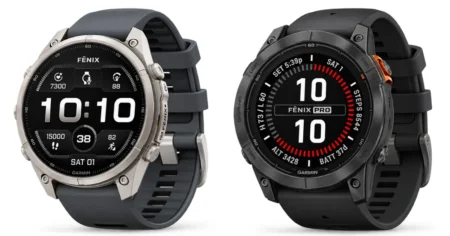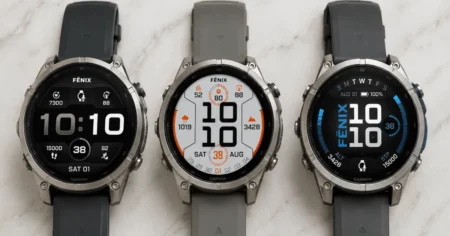

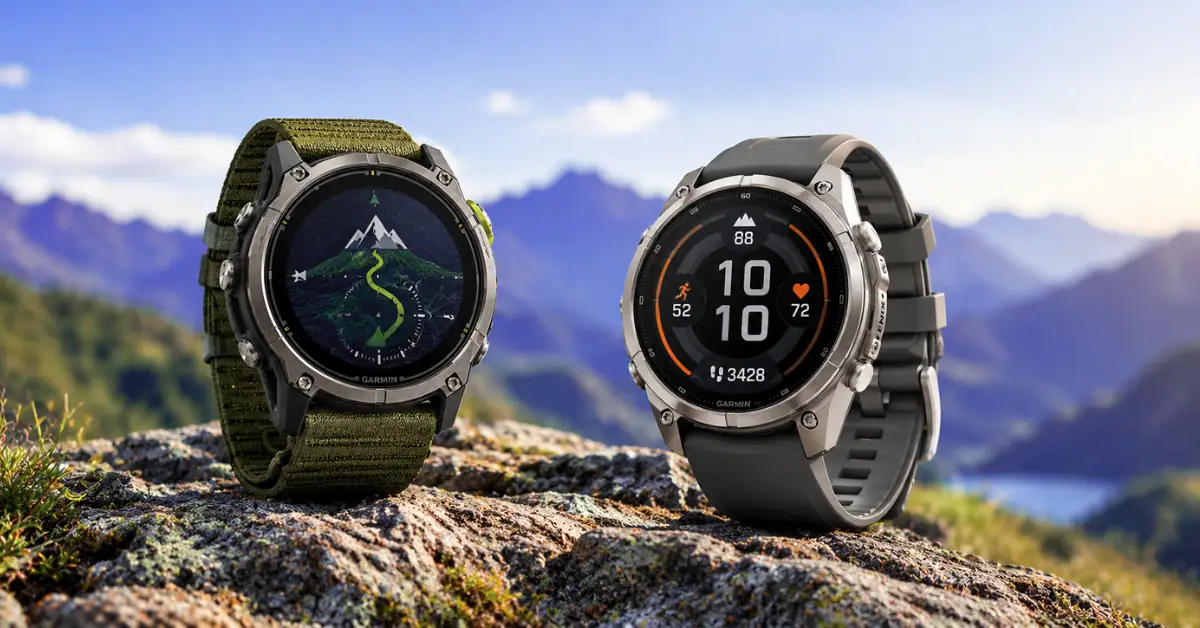
Garmin just gave outdoor athletes two very different answers to the same question. The Fenix 9 wants to be the one watch you wear everywhere. The Enduro 4, announced on October 6, wants to be the watch you forget to charge.
They cost about the same, they share the same 64GB of storage, and that is exactly why the choice is harder than it looks. The full launch details are in my Enduro 4 launch breakdown.
A quick note on testing: The Enduro 4 is brand new, so this comparison rests on Garmin’s published specs and launch details, not weeks on my wrist. I will add my own battery and GPS results as I log them, the way I describe in how I test smartwatches.
The short answer
Pick the Enduro 4 if battery and weight decide everything. It is rated for up to 36 days between charges, 90 with solar, it weighs 66 grams, and it is the cheaper watch at $899.99. Check the Enduro 4 on Amazon.
Pick the Fenix 9 if you want one watch for everything. You get a brighter AMOLED screen, three sizes, phone calls from your wrist, dive features and optional satellite messaging. See the Fenix 9 Pro Solar on Amazon.
The fairest rival to the Enduro 4 is the Fenix 9 Pro Solar 51mm. Both are large solar watches with the same type of screen, so most of this post compares those two.
Display: AMOLED or MIP
This is the difference you will notice every day.
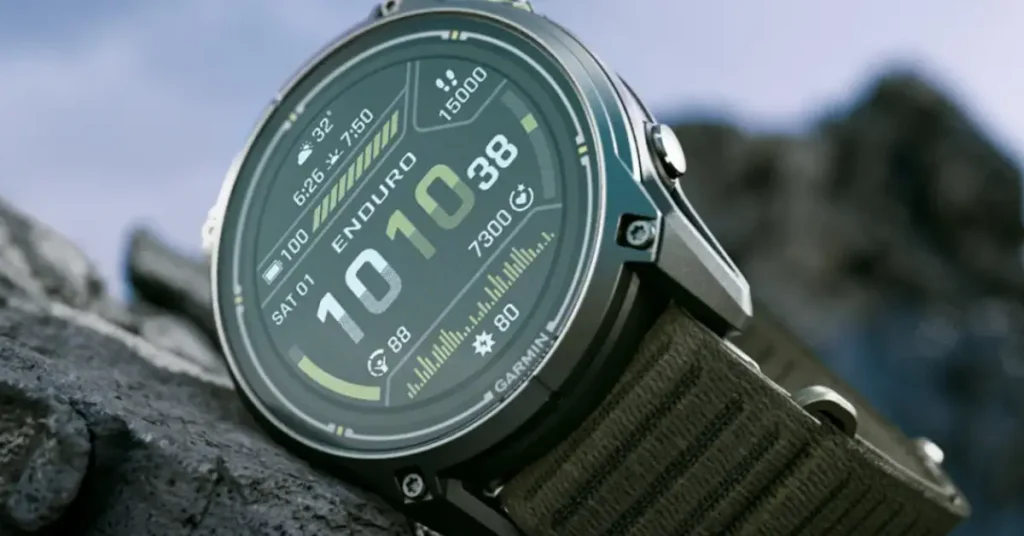
The Fenix 9 family has AMOLED screens that Garmin says are twice as bright as the Fenix 8, and the Fenix 9 Pro reaches up to 3,000 nits of brightness.
That is a peak figure, but it matters in bright midday sun and glare. The Fenix 9 Pro AMOLED is the one to look at if you want the best screen.
The Enduro 4 goes the other way. Its 1.4-inch MIP display is not flashy, but it is easy to read in sunlight and it sips power. That is why the battery numbers are so big.
One catch: not every Fenix has AMOLED. The Fenix 9 Pro Solar uses a MIP screen like the Enduro, and solar charging is only available on those Pro models (47mm and 51mm). A standard Fenix 9 or Pro AMOLED has no solar at all.
Head to head: Enduro 4 vs Fenix 9 Pro Solar 51mm
| Enduro 4 | Fenix 9 Pro Solar 51mm | |
|---|---|---|
| US price | $899.99 | $1,199.99 |
| Thickness | 15.7mm | 16.6mm |
| Display | 1.4″ MIP | 1.4″ MIP |
| Lens | Power Sapphire | Power Sapphire |
| Case | Polymer, titanium bezel | Full titanium |
| Weight with band | 66g | 102g |
| Case only | 57g | 77g |
| Water rating | 10 ATM | 10 ATM + 40m dive |
| Speaker and mic | No | Yes |
The screen, lens and storage are the same. Everything that separates them is weight, price, battery and a few extra features on the Fenix.
The 36g weight gap includes different straps, a light fabric band on the Enduro and silicone on the Fenix. Case only, the gap is 20g. That is still real, just less dramatic.
Battery life
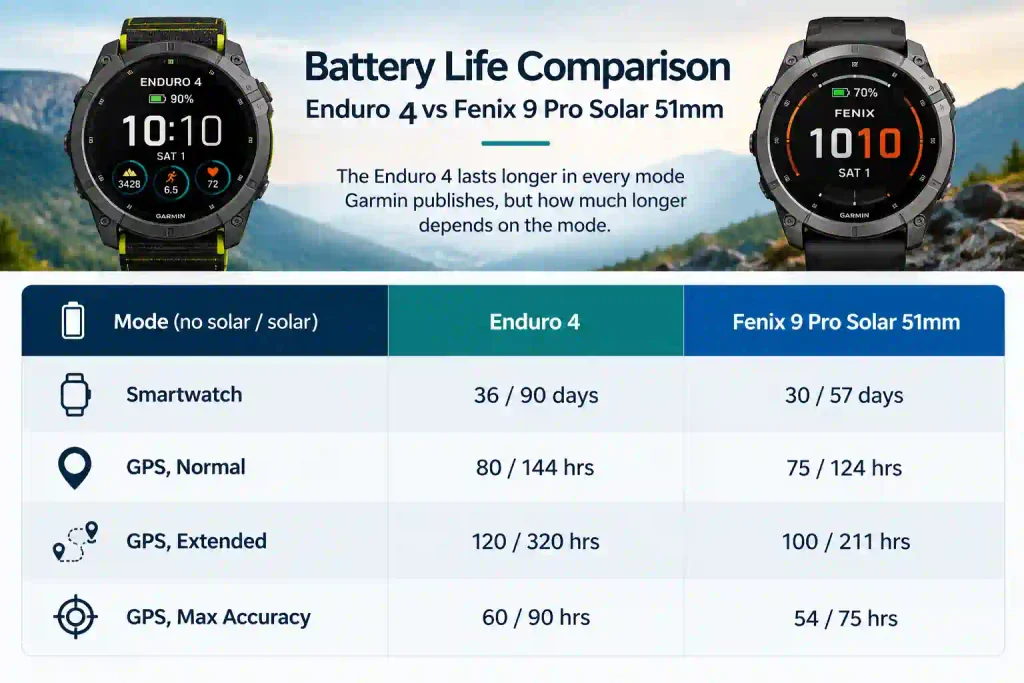
The Enduro 4 lasts longer in every mode Garmin publishes, but how much longer depends on the mode.
| Mode (no solar / solar) | Enduro 4 | Fenix 9 Pro Solar 51mm |
|---|---|---|
| Smartwatch | 36 / 90 days | 30 / 57 days |
| GPS, Normal | 80 / 144 hrs | 75 / 124 hrs |
| GPS, Extended | 120 / 320 hrs | 100 / 211 hrs |
| GPS, Max Accuracy | 60 / 90 hrs | 54 / 75 hrs |
Without solar, the gap is small: 80 vs 75 hours in normal GPS mode. The big gap shows up with solar in Extended mode, 320 vs 211 hours.
Garmin’s footnotes say the 90-day figure assumes about 3 hours a day outside in 50,000 lux, and the 320-hour figure assumes 50,000 lux for the whole activity. A week of cloud and tree cover will not give you those numbers, so treat them as best case.
The other Fenix 9 models are lower. The 51mm Fenix 9 is rated for up to 29 days in smartwatch mode, and the 47mm Pro Solar for 21 days, or 34 with solar.
Size and fit
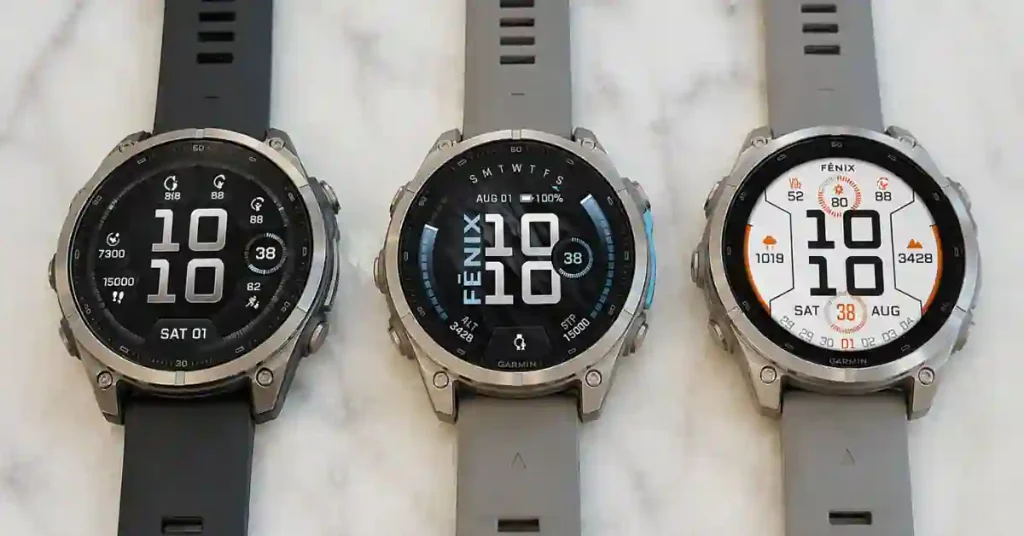
The Enduro 4 comes in one size, 51mm. It is a big watch, even at 66 grams. If a 51mm case overhangs your wrist, no spec will fix that, so try one on under the sleeve you actually wear.
The Fenix 9 comes in 43mm, 47mm and 51mm, which makes it the safer choice for smaller wrists and for anyone who wears a watch to the office. A 51mm Fenix 9 Pro weighs 99g in AMOLED and 102g in Solar, while the 47mm models are 78g and 84g.
Not sure which size or tier to get? My Fenix 9 size and tier buying guide breaks it down.
What the Fenix adds
Both watches have an LED flashlight, the ECG app, Garmin Pay and music storage. You do not need a Fenix for any of those.
What the Fenix Pro Solar adds is a speaker and microphone for calls and voice commands, a dive computer to 40 meters, and a green flashlight mode on top of white and red. The Enduro 4 has white and red only.
The Fenix 9 Pro also offers inReach, now in all three sizes and on the Solar models. It adds LTE and satellite messaging, weather and SOS through Garmin Messenger. That is a separate version with its own subscription, so check the exact model before you buy.
If you are cross-shopping smart features against an Apple watch, I compared the Fenix 9 with the Apple Watch Ultra 4.
The Enduro 4 leans the other way, with ultra-running tools: Garmin Epic for multi-day activities, a course planner with aid stations and cut-off times, ClimbPro, grade-adjusted pace and pack weight.
If you want a more tactical-style Garmin, the tactix 9 is the one to watch.
Maps and navigation
Both have 64GB, preloaded TopoActive maps and the updated map engine with panning up to 30% faster. I would not claim either navigates better.
What matters on a real trail is how fast you can read a junction with wet hands, and I will report on that after testing.
Price
The Enduro 4 launched at $899.99 and went on sale on October 9. The Fenix 9 starts at $999.99, the Pro at $1,099.99, and the 51mm Pro Solar is $1,199.99.
So against its closest rival the Enduro 4 is $300 cheaper. That extra $300 buys the titanium case, dive tools and voice hardware. If you will not use them, the same money pays for shoes, a race entry or a spare charger.
Prices move quickly in the first weeks, so check today’s Garmin watch deals before you buy.
Should you upgrade?
From the Enduro 3: probably not yet. The battery claims are the same. You gain double the storage (64GB), 50% more RAM, faster map panning and a perspective view. The new Epic and race-planning tools are covered in my Enduro 4 launch article.
From the Fenix 8: it depends on how much you value the brighter screen and the lighter titanium case. My Fenix 9 vs Fenix 8 comparison goes through it.
Which one should you buy?
Ask yourself three questions.
How long is your longest outing without a charger? If it is a weekend or less, either watch is fine. If it is several days, or a 100-miler, buy the Enduro 4.
Do you need a smaller case, a brighter screen, or features like calls and dive tools? If yes, buy a Fenix 9. If you only run and hike, the Enduro 4 gives you the same training tools for less.
Do you need satellite messaging? Only the Fenix 9 Pro inReach models have it.
If you mostly run and do not need ultra-level battery, my guide to the best sports watches for runners may suit you better.
If rugged build is the priority, see the best rugged smartwatches of 2026.
Questions people ask
Is the Enduro 4 better than the Fenix 9?
It is better for battery and weight, and cheaper. The Fenix 9 has the brighter screen, more sizes and extra features. Neither wins everything.
How bright is the Fenix 9 display?
The Fenix 9 AMOLED displays are twice as bright as the Fenix 8, and the Fenix 9 Pro reaches up to 3,000 nits.
Does the Enduro 4 have an AMOLED screen?
No. It uses a 1.4-inch MIP display, which is why the battery lasts so long.
Is the Fenix worth $300 more for an ultrarunner?
Only if you will use the extra functions. For weight and battery, the Enduro 4 is the more focused buy.
Where to buy
The Enduro 4 on Amazon is the pick for ultra-distance and multi-day use.
The Fenix 9 Pro Solar on Amazon is the pick if you want one watch that does everything.
If you have a wrist size and a longest typical outing in mind, tell me in the comments and I will help you choose.