
We’ve all been there. You glance at your wrist and — nothing. Your Fitbit is gone.
Maybe it slipped off at the gym. Maybe it’s buried under a pile of laundry. Or maybe you genuinely have no idea when you last wore it. Whatever the situation, losing a Fitbit feels weirdly personal — it’s been tracking your steps, your sleep, your heart rate. You want it back.
The good news? In most cases, you can find it. And this guide walks you through exactly how, step by step — from the obvious checks to the tech-powered tricks most people don’t know about.
Let’s get your Fitbit back.
What to Do When You Lose Your Fitbit — Step by Step
Step 1: Stop, Think, and Retrace Your Day
Before you start tearing the house apart, take two minutes to think. Where did you last know you had it? Were you at the gym? Did you take it off before a shower and set it somewhere weird?
Retracing your routine — even mentally — often points you straight to it. I once lost my Fitbit Charge 5 for two days before finding it tucked inside my running shoe. No idea how it got there.
Start by checking:
- The nightstand and bathroom counter
- Couch cushions and under the couch
- Laundry baskets and inside folded clothes
- Gym bags and jacket pockets
These spots catch the majority of lost Fitbits. Simple, but worth doing methodically before anything else.
Step 2: Check the Fitbit App for Last Sync Time
This is one of the fastest ways to get a clue. Open the Fitbit app on your phone and tap your device under the Today tab. Look at the last sync timestamp.
- Synced in the last few minutes? Your Fitbit is within Bluetooth range — probably in the same room. Walk slowly through your home with the app open. When it syncs again, you’re close.
- Synced hours ago? Think about where you were at that time. That’s likely where you lost it.
This trick works on all current models — Fitbit Sense 2, Versa 3, Inspire 2, Charge 6, and more.
Step 3: Use the “Find My Fitbit” Feature
The official Fitbit app has a built-in locator for some models. Here’s how to access it:
- Open the Fitbit app
- Tap your profile photo > your device name
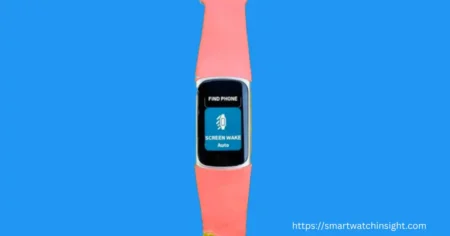
- Look for “Find My Fitbit” or “Ping Device”
When activated, your Fitbit will vibrate. If you can hear or feel the buzz, just follow it.
Not all models support this feature, but it’s worth checking first. The Fitbit Versa 4, Sense 2, and Charge 6 all support some version of device pinging through the app.
Step 4: Use the Find My Fitbit App (Bluetooth Signal Strength)
If the built-in ping doesn’t help, download the Find My Fitbit app (available on both Android and iOS). It uses Bluetooth signal strength to guide you — essentially a hot/cold game that gets more accurate as you move around.
How to use it:
- Download “Find My Fitbit” from the App Store or Google Play
- Open the app and select your device
- Walk slowly through different rooms
- Watch the signal strength bar — stronger signal means you’re getting closer
This works best in smaller spaces like apartments or homes. It’s less reliable outdoors or in large buildings where Bluetooth signals scatter.
Step 5: Use Tile If You Have It Set Up (Fitbit Inspire 2)
If you own a Fitbit Inspire 2 and previously set up the Tile integration, you’re in luck. Tile lets you ring your Fitbit remotely and even shows its last known location on a map.
To find your Inspire 2 with Tile:
- Open the Tile app on your phone
- Tap on your Fitbit Inspire 2
- Tap “Find”
- Your Fitbit will vibrate if it’s in range
Still no luck? Tap “Notify When Found” — if anyone with the Tile app comes within range of your device, you’ll get a location alert automatically.
How to set up Tile on Inspire 2 (for next time):
- In the Fitbit app: Today tab > device image > Apps > Tile > Install
- Download the Tile app from your app store
- Sign in and activate your Fitbit under “Tile Enabled Devices”
Step 6: Try a Bluetooth Scanner App
No Tile? No problem. Generic Bluetooth scanner apps can still detect your Fitbit as a nearby Bluetooth device.
Recommended apps:
- LightBlue (iOS) — shows all nearby Bluetooth devices with signal strength
- nRF Connect (Android/iOS) — more technical but very accurate
- Bluetooth Finder (Android) — simple interface, good for beginners
Open one of these apps and slowly walk around your space. Your Fitbit will appear as a Bluetooth device in the list. The stronger the RSSI signal number, the closer you are.
Step 7: Search the Unexpected Places
By now you’ve checked the obvious spots. It’s time to get creative.
Seriously overlooked hiding spots:
- Inside shoes (they fall in when you undress)
- Under car seats and in seat pockets
- Between the mattress and the wall
- In the refrigerator (this sounds crazy, but it happens when you’re distracted)
- Inside pillowcases
- In pants pockets that went through the wash
Don’t rush this part. Slow, systematic searching beats a frantic sweep every time.
Step 8: Ask the People Around You
This one feels obvious, but people skip it. If you were at a friend’s place, the gym, the office, or anywhere other than home recently — reach out and ask.
Someone may have spotted it and set it aside without knowing whose it is. A quick text like “Hey, did you happen to see a black fitness tracker at your place?” takes 10 seconds and might save you hours of searching.
Step 9: Check Your Car Thoroughly
Cars are notorious Fitbit traps. The gap between the seat and the center console is practically designed to swallow small devices. If you commute regularly, check:
- Under both front seats
- The gap beside and behind the center console
- In the glove box (you might have put it there without thinking)
- Cup holders
- The trunk if you recently moved anything
Bring a flashlight — car interiors are dark even in daylight.
Step 10: Contact Fitbit Support
If you’ve exhausted everything above, Fitbit’s customer support can actually help more than most people realize. They can:
- Check your account’s sync history to see the last known location data
- Confirm your model details and serial number (useful if you need to file an insurance claim)
- Walk you through advanced reset options if you’re planning to replace and re-register
Reach them at fitbit.com/support or through the Fitbit app’s help section.
What If My Fitbit Has a Dead Battery?
This is the hard truth: once the battery dies, Bluetooth-based tracking stops working entirely. No app, no Tile ping, no Bluetooth scanner will detect it.
At this point, finding it comes down to memory and physical searching:
- Think about the last time you remember charging it — it’s probably near an outlet
- Check every charging cable you own
- Ask family or roommates to keep an eye out
- Do a slow, room-by-room search of your home
The silver lining is that a dead Fitbit is almost certainly at home or somewhere you spent time regularly. It didn’t get up and walk away — it just needs to be found the old-fashioned way.
How to Use Your Fitbit to Find Your Phone (Reverse Search)
If your Fitbit Inspire 2 is in hand but your phone is lost, you can flip the search around. Through the Tile app on your Fitbit:
- Open the Tile app on your Inspire 2
- Tap “Find My Phone”
- Your phone will ring — even on silent
This is one of those features most Fitbit users don’t know exists until they need it.
How to Stop Losing Your Fitbit (Simple Prevention Tips)
Once you’ve found it, let’s make sure it doesn’t happen again.
1. Pick a dedicated charging spot. Every single time you take it off, put it in the same place — a small dish on your nightstand, a hook by your bathroom mirror, whatever works. This one habit eliminates most lost Fitbit scenarios.
2. Check your band clasp regularly. Worn clasps let Fitbits slip off silently. If your band feels loose, replace it. Aftermarket bands are inexpensive and often more secure than the originals.
3. Set up Tile before you lose it. If you have an Inspire 2, take five minutes to set up the Tile integration now. It’s free and gives you instant tracking the next time something goes wrong.
4. Do a quick pocket check. Before you toss clothes in the laundry or leave a location, pat your wrist. If nothing’s there, do a 30-second scan of the area.
5. Join the Fitbit community. If you’ve truly lost it in a public space, post on Reddit’s r/Fitbit or the official Fitbit forums. People are genuinely helpful, and crowdsourced tips sometimes turn up creative solutions.
Frequently Asked Questions
How do I find my Fitbit if it’s not syncing?
If your Fitbit isn’t syncing, it may be out of Bluetooth range, have a dead battery, or need a restart. Try a Bluetooth scanner app like LightBlue or nRF Connect to detect its signal even without a successful sync. If the battery is dead, tracking apps won’t work — focus on a physical room-by-room search instead.
Can I track my Fitbit’s location on a map?
Standard Fitbit models don’t have GPS built in for remote location tracking. The Tile app on the Fitbit Inspire 2 can show a last known location, and the “Notify When Found” feature uses the Tile network to alert you when your device is detected. But real-time GPS map tracking is not available on most Fitbit models.
Does Fitbit have a Find My Device feature like Apple?
Some models support a basic “ping” feature through the Fitbit app that makes the device vibrate. It’s more limited than Apple’s Find My — there’s no network-based location tracking unless you’re using Tile on an Inspire 2. Fitbit has been gradually improving this with newer models.
What if I lost my Fitbit outside my home?
Check the last sync time in the Fitbit app to estimate when and where you had it. Retrace that route. Contact any locations you visited — gyms, restaurants, and offices often hold found items for several days. File a report on Tile’s Lost & Found network if you have Tile set up.
How do I know which Fitbit model I have?
Open the Fitbit app, tap your profile photo, then tap your device. The model name appears at the top. You can also check the model number printed on the back of the device or on the original packaging.
Can I find my Fitbit Versa 4 if it’s lost?
Yes. The Fitbit Versa 4 supports the in-app ping feature. You can also use Bluetooth scanner apps like LightBlue or nRF Connect if you’re within range. For the Versa 4 specifically, look for “Find My Fitbit” options in the Play Store as third-party apps continue to add model support.
What should I do if I can’t find my Fitbit at all?
If all steps fail, contact Fitbit Support to verify your account and device details. Check your homeowner’s or renter’s insurance — small electronics are sometimes covered. If you need a replacement, check for current deals on the Fitbit Versa 4 and Charge 6, which frequently go on sale.
Final Thoughts
Losing a Fitbit is frustrating, but it’s rarely permanent. Between the Fitbit app’s sync history, the Find My Fitbit feature, Tile integration, Bluetooth scanner apps, and good old-fashioned searching, most people find their device within a day.
The key is working through the steps methodically instead of panicking. Start with the app, narrow down the location, and search systematically. In the majority of cases, your Fitbit is closer than you think.
And once you find it — set up Tile if you haven’t already, and pick a permanent charging spot. Future you will be grateful.
Related reads:
- Which Fitbit Do I Have? Identify Any Model in 30 Seconds (2026 Guide)
- Fitbit Battery Draining Fast? 10 Proven Fixes for Longer Life
- 11 Signs Your Fitbit is Dying: Is it Time to buy a new Fitbit?
- Best Fitbit Deals: Versa 4 & Charge 6 Discounts