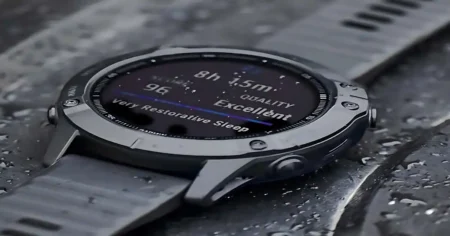


The 2025 smartwatch wave is mainly over, making this the perfect time to look ahead and make informed predictions about what is coming in 2026.
If you care about running, training, outdoor adventures, or just keeping an eye on your health from your wrist, the following year could be exciting.
In this guide, we will walk through brand‑by‑brand 2026 Smartwatch Predictions for the biggest names in fitness and health tech: Apple, Google, Garmin, COROS, Suunto, Polar, Amazfit, and Samsung.
The focus here is on training, performance, sleep, and wellness, with a bit of general smartwatch stuff mixed in.
If you want to play along, comment your predictions below on which features you think will actually show up and which ones are still a few years away.
Quick overview of 2026 smartwatch trends
Looking across all the brands, a few themes keep popping up:
- More satellite communication, not just for SOS
- Bigger pushes into health metrics like blood pressure and glucose
- Better battery life, especially on rugged outdoor watches
- A rise in screenless bands that compete with Whoop
- More AI‑powered insights in the companion apps
Here are the brands covered in this breakdown:
- Apple
- Garmin
- COROS
- Suunto
- Polar
- Amazfit
- Samsung
Let’s dig into each brand and what 2026 might look like if these predictions hold up.
Apple: Predictable launch window, bigger health swings
Apple is one of the easiest brands to time. Every September, like clockwork, they roll out the next round of watches alongside the iPhone.
Likely 2026 Apple Watch models
Barring something wild, it is almost a lock that we will see:
- Apple Watch Series 12
- Apple Watch Ultra 4
- Apple Watch SE 4
Today’s lineup includes the Apple Watch Series 11 (current model on Amazon), the Apple Watch Ultra 3 with satellite support (listed on Amazon), and the Apple Watch SE 3 (Amazon product page).
It is reasonable to expect all three to receive a refresh in 2026.
Apple Watch design in 2026
Apple typically retains a design for an extended period. The rounded rectangular shape has been around for years with only minor tweaks.
The bet here:
- No huge design change in 2026
- The familiar rounded case sticks around
- A significant redesign probably waits until closer to 2027 or 2028
If you are hoping for a completely new form factor next year, it may not be the right time yet.
Top feature bets for Apple in 2026
Here are the big swings that feel at least somewhat realistic, starting from most likely to more wish‑list level.
Touch ID on Apple Watch
Imagine you go for a run, your watch is locked, and instead of tapping a tiny PIN on the screen, you just rest your finger on the side button. The watch reads your fingerprint and unlocks.
A Touch ID side button could also confirm Apple Pay purchases and other secure actions. It aligns with Apple’s history of adding biometric unlock options to more products and would make daily use smoother.
Satellite messaging for more models
The Apple Watch Ultra 3 already offers non‑emergency satellite features, such as basic location sharing and messaging in certain situations. Right now, that is limited to the Ultra line.
The prediction for 2026: Apple will extend satellite messaging to the Apple Watch Series 12, not just the Ultra models.
It might be trimmed down compared with the Ultra, but having at least basic non‑emergency satellite messaging on the standard series feels like a natural move.
Better blood pressure features
Apple added hypertension alerts in 2025, which is a good first step. Right now, the watch can warn you that something looks off and suggest checking with a proper cuff.
The next jump would be:
- Estimates of systolic and diastolic blood pressure values
- Some level of regulatory clearance to use those estimates in a more official way
Other companies, like the Whoop band, have already tried to offer blood pressure insights and even run into legal trouble because of how they framed the data.
The technology exists, but it is not perfect. Apple has the resources and scale to polish this in a safer, more regulated way. 4. Non‑invasive blood glucose tracking
This is the most ambitious item. There are already prototypes and early products that measure blood glucose using optical sensors, without needles.
A watch that can track glucose without piercing the skin is a significant advance, especially for people managing diabetes, but also for athletes monitoring fueling and recovery.
It might be early for a full, polished rollout in 2026, yet it feels like something Apple is at least pushing toward.
What feels most realistic for Apple in 2026
When you balance hype with reality, the safer bets look like this:
- The design stays the same or is very close
- We get new health metrics, especially around blood pressure
- There is a bump in battery life, especially on the Ultra 4
- Satellite features expand down the lineup, even if in a lighter form
Glucose tracking and complete Touch ID are less specific, but they do not seem impossible.
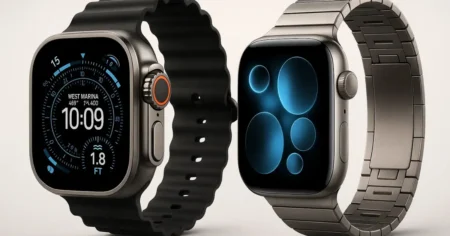
While Apple Watch Series 12 leaks dominate headlines, fresh rumors also point to an Apple Watch Ultra 4 launch in 2026.
Google: Pixel Watch 5 and the “Ultra” idea
The Google Pixel Watch 4 has quietly become one of the most interesting watches in this space. You can check the current model on Amazon.
A few things make it stand out already:
- First major smartwatch in the US with satellite SOS support
- User‑repairable design so that you can replace parts like the display or battery yourself
- Much better battery life than the earlier Pixel Watch models, thanks to a new chipset and software work
Google sometimes takes big swings with features while keeping the watch’s exterior mostly the same. That is what makes predictions tricky here.
Dream pick: a rugged Pixel Watch “Ultra.”
The most oversized wish list item is simple: a tougher Pixel Watch Ultra‑style model. That would mean:
- Larger case with room for a bigger battery
- More durable build, like a chunky bezel and sapphire glass
- Possibly one or two extra buttons for workouts and outdoor use
- A built‑in flashlight for night runs and hikes
Battery life is the main reason this idea is so attractive. With the gains Google already got on the Pixel Watch 4 at the same size, moving to a larger case could open the door to:
- Multi‑day wear without stress
- Several days of mixed GPS use for training or backpacking
The creator even said a watch like that might be enough to wear a Pixel Watch every day.
Is Google actually going to do it? Hard to say, but the hole in their lineup is obvious.
More likely: better satellite features
The Pixel Watch 4 already supports satellite SOS. Right now, that is emergency only. You can reach help even when you are off‑grid, which is critical for safety.
Apple already showed that non‑emergency satellite messaging and sharing can work on a watch. So a reasonable 2026 prediction is:
- Google extends satellite features to the next Pixel Watch
- You can share your location or send short messages even when you are outside cell coverage
That alone would be a significant win for trail runners, hikers, and anyone who trains in areas with patchy service.
Garmin: Forerunner and Fenix tweaks, plus a Whoop rival
Garmin has a massive lineup, so it is easy to get lost in model numbers. To keep this focused, let us stick to the most likely action in 2026.
Fenix 8 today, Fenix 9 later
Right now, you have the Garmin Fenix 8 family, including the Fenix 8 Pro, which offers satellite support. You can check the series on Amazon.
The Fenix 8 line is still very new, only a bit over a year old. Garmin usually runs on about a two-to-two-and-a-half-year cycle for major Fenix updates.
Prediction for 2026:
- No Fenix 9 yet
- Maybe a new variant in the Fenix 8 family, similar to how the Fenix 8 Pro with satellite arrived later
A full Fenix 9 launch feels more like a 2027 event.
Forerunner 570: late feature catch‑up
The Forerunner 570 landed in a strange spot. It is not cheap, but it lacks some of the features that other Garmin watches at that price offer.
One clear example: compared with the Garmin Venu 4 the creator referenced, the 570 lacks a flashlight. Although the Venu is more lifestyle-focused, it received the extra utility first.
So the bet for 2026 is:
- A minor refresh to something like a Forerunner 575 or 580
- Add the flashlight
- Carry over a few of the more polished quality‑of‑life features from Garmin’s lifestyle line.
To see where the Venu series is today, check the Garmin Venu X1 on Amazon.
Forerunner 970: high‑end features from Fenix
The Forerunner 970 is Garmin’s flagship running watch. It sells for about $ 800 in the US and sits just below the Fenix in price.
Garmin often moves features from Fenix into Forerunner once the tech is proven. For the 970, that could mean:
- A satellite‑enabled variant, similar to the Fenix 8 Pro
- Possibly a take on microLED if that display tech survives long term
On that last point, the microLED version of the Fenix 8 Pro is around $ 2,000 and has clear battery trade-offs.
It is incredibly bright, reaching around 5,000 nits, but battery life is lower than on Garmin’s AMOLED models.
If that experiment sells well, we might see microLED in other lines, maybe a higher‑end Forerunner 970 spin. If it flops, Garmin may quietly step back from it until the tech and cost look better.
Even though the Venu is more lifestyle focused, it got the extra utility first. (For a full comparison, check out: What are the Key Differences Between the Garmin Venu 4 and Forerunner 570?..
A big move: Garmin’s answer to Whoop
One of the more exciting predictions is not a watch at all.
There have been rumors and even a small, leaked image of what appears to be a screenless Garmin band, similar to a Whoop strap.
Companies like Amazfit, with the Helio Strap, and Polar, with the Polar Loop, are already active in that space.
The interesting thing is that Garmin already has the core features in Garmin Connect:
- Body Battery
- Stress tracking
- Detailed sleep data and recovery metrics
Right now, you have to wear a full watch or use something like Garmin’s Index sleep device, which is not built for all‑day wear.
A small, comfortable Garmin band that tracks 24/7 without a screen could hit:
- People who hate sleeping with a watch
- Whoop fans who want a one‑time purchase instead of a subscription
- Athletes who wish to main workouts on a Fenix or Forerunner, but a lighter band the rest of the day
A Garmin Whoop‑style band in 2026 feels very possible and would shake up that category.
COROS: Vertix 4, MIP fans, and better tools for power users
COROS has become a favorite among runners and mountain athletes who prioritize battery life and training tools. They are also easy to read when it comes to naming.
We already have the COROS Pace 4 (see it on Amazon) and the COROS Apex 4, so it makes sense that the next Vertix is called Vertix 4 rather than Vertix 3.
COROS Vertix 4 predictions
The Vertix 2S already offers excellent battery life and features an MIP display. COROS seems committed to serving people who still prefer MIP over AMOLED for extended outdoor use.
So for Vertix 4, the prediction list looks like this:
- Still an MIP display, tuned for sunlight and endurance
- Even longer battery life than Vertix 2S
- A built‑in speaker and microphone, like the Apex 4, for voice notes and quick location marking
- A flashlight, matching what we now see on Garmin, Amazfit, and Suunto
That would put the Vertix line right up against watches like the Suunto Vertical 2 as an ultra‑endurance, outdoor‑first option.
COROS Pace Pro 2
The original Pace Pro sat above the regular Pace series as a more full‑featured option, with AMOLED and maps. Then Pace 4 arrived and, oddly, included features the higher‑priced model did not, such as a built‑in microphone.
So a COROS Pace Pro 2 in 2026 would likely:
- Stay AMOLED with full maps
- Use a larger display than Pace 4
- Add the speaker and microphone, matching the rest of the modern COROS lineup
That would clean up the lineup and give people a clear choice between the light, simple Pace 4 and the larger Pace Pro 2, with richer mapping and navigation.
Suunto: strong flagships, room in the middle
Suunto had a big year with the Suunto Vertical 2 and Suunto Race 2, both of which are very fresh. You can check the Vertical 2 on Amazon, and see the Race 2 through Suunto’s product page or on Amazon.
Because those flagships just launched, the prediction is simple:
- No Vertical 3 or Race 3 in 2026
- Maybe some new color options, band styles, or a raw titanium finish
The real action for Suunto should be at the lower and mid price points.
A missing mid‑tier Suunto
Right now, Suunto’s pricing roughly looks like:
- Suunto Run costs around 200 dollars in the US
- Suunto Race 2 is closer to 500 to 600 dollars
That gap leaves room for a $350 mid‑tier watch that could offer substantial value.
Imagine something like:
- The basic, light build of the Suunto Run
- Better battery life and a nicer display
- A flashlight borrowed from the Suunto Vertical 2
- Solid GPS and core training tools, without going full flagship
A watch like that would appeal to runners and trail users who want more than entry-level, but do not want to jump straight to the Race 2 price.
Suunto app improvements
The Suunto app is clean and good-looking, but it has a strange limitation: you cannot pair more than one watch at the same time.
That is a significant pain for product reviewers, but it also affects regular users who might own a Suunto Run and a Vertical, for example. Every other central platform lets you keep several devices paired and merges the data.
A likely 2026 move is:
- Update the Suunto app so multiple watches can be paired and synced at once
- Clean up some of the data views to make training and recovery easier to see at a glance
If Suunto nails that, their hardware and software will feel more balanced.
Polar: price pressure and a focus on Polar Loop
Polar is in a tough spot, especially in the US. The Polar Grit X2 Pro has climbed to around $ 1,000 on Amazon, and even the Grit X2 Non‑Pro version is above $ 700.
Those prices get you nice materials, sapphire glass, and even a leather band, but when you compare features and performance to watches from Garmin, Suunto, and COROS at that price, it is a hard sell.
Polar doubles down on Polar Loop.
As a result, the smart prediction for Polar, at least in the US, is that it will focus more on Polar Loop.
The Polar Loop is a screenless band that works a lot like a Whoop or an Amazfit Helio Strap. In its initial form, it had some issues, but the core idea is strong.
For 2026, the likely moves are:
- Improve accuracy for heart rate, sleep, and recovery
- Polish the app experience so it feels more modern and easier to read
- Position Polar Loop as a serious Whoop competitor that does not require a subscription
Big Polar Flow app update
During the launch of Polar Loop, Polar shared early previews of a new Polar Flow app design.
The plan was to:
- Modernize the user interface
- Put more data on fewer screens
- Reduce the amount of tapping needed to reach key stats
It looked clean and much easier to use than the current layout. Given the preview, a complete Polar Flow redesign in 2026 is one of the safer predictions on this list.
Amazfit: fast releases, budget power, and an NFC wish list
Amazfit has grown fast in the US. You can now find watches such as the T‑Rex line in stores like Best Buy and Target, as well as online. Their strategy is usually lots of frequent updates at aggressive price points.
Some of the current lineup includes:
- Amazfit T‑Rex 3 Pro (see it on Amazon)
- Amazfit Bip 6 (Amazon listing)
- Amazfit Balance 2 (Amazon page)
- Amazfit Helio Strap (Amazon)
T‑Rex, Active, and Bip updates
Given their pattern, 2026 will almost certainly bring:
- A new Amazfit T‑Rex 4 or T‑Rex 3 Ultra
- An Amazfit Active 3 to follow the strong Active 2
- An Amazfit Bip 7 update is the next budget king
The guesses on feature sets:
- The T‑Rex successor keeps the flashlight, speaker, and mic from the T‑Rex 3 Pro, but moves to a refined design, possibly more round and less chunky, with more premium materials to justify a small price bump.
- The Active 3 builds on the Active 2, which already delivers substantial value, so that upgrades may be moderate, such as improved sensors or more innovative software features.
- The Bip 7 stays under about $ 80, but you can also grab a simple flashlight, which would put pressure on more expensive brands that still skip it.
Amazfit Helio Strap growth
The Amazfit Helio Strap is one of the more talked‑about screenless bands of 2025. It goes up against Whoop and Polar Loop, but with a one‑time cost.
In 2026, it would not be surprising to see:
- New features added through firmware and app updates
- Extra accessories, like more armband options or clothing with built‑in pockets for the sensor, similar to what Whoop has done
That would allow Amazfit to lean more heavily into the wellness subscription space without charging a subscription fee.
The big Amazfit wish: NFC payments and music
One of the strangest gaps for Amazfit is NFC payments. The hardware is present in many watches, but in the US, it cannot yet be used for contactless payments, likely due to regional and partner limitations.
A strong hope for 2026:
- Unlock NFC payments in more markets
- Strike deals so users can tap to pay from an Amazfit watch
Additionally, adding support for offline music from services like Spotify would make Amazfit far more attractive to runners.
Right now, if you want deep streaming integration, your realistic options are Apple, Google, or Garmin.
If Amazfit can check those two boxes, they would be punching far above their price points.
Samsung: fresh look for Galaxy Watch Ultra and more AI
Samsung did not release a major Galaxy Watch update in 2025, but this is likely to change if the company makes a few key moves in 2026.
Galaxy Watch Ultra redesign
The Galaxy Watch Ultra has received feature updates, but the core design remains familiar. For 2026, the prediction is a significant redesign, potentially with:
- A different case shape
- Tweaked materials and finish
- A rotating bezel similar to what we have seen on the Galaxy Watch Classic line
That would give Samsung a stronger answer to devices such as the Apple Watch Ultra and Garmin’s top models in the rugged premium segment.
Standard and Classic models
For the standard and Classic Galaxy Watch models, 2026 will probably be more of a tuning year:
- New chipset
- Better battery efficiency
- Small quality‑of‑life upgrades
On the software side, expect Samsung to push even harder on AI in Samsung Health, with more automatic insights, summaries, and suggestions based on your data.
Final thoughts on these 2026 Smartwatch Predictions
Looking across all these brands, a few threads are clear. More satellite features, richer health tracking, more innovative apps and AI, and a bigger push into screenless bands are all on the table for 2026. Some ideas, such as non‑invasive glucose tracking, may still be early, but the direction is clear.
If you want to see where the current generation stands, you can check out the latest prices and deals on devices like the Garmin Fenix 8 series, the Garmin Instinct 3 line, and the Apple Watch Ultra 3.


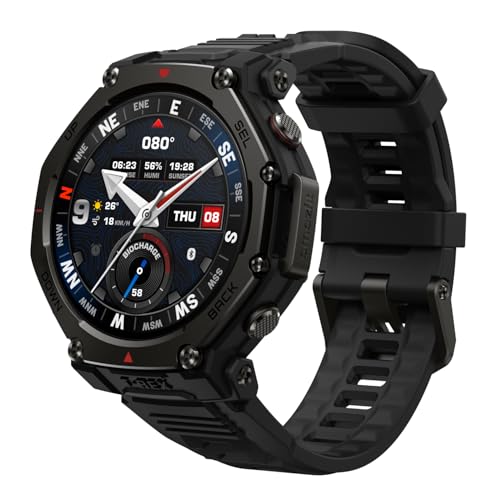


![Apple Watch Ultra 3 [GPS + Cellular 49mm] Running & Multisport Sm...](https://m.media-amazon.com/images/I/412vVDB7SSL._SL500_.jpg "2026 Smartwatch Predictions: What’s Next for Apple, Garmin, Google, and More? 10")
Now it is your turn. Which brand are you most interested in, and which 2026 Smartwatch Predictions do you think will actually come true?
Drop your thoughts in the comments, share your wish list, and if you enjoy this kind of content, support the creator by subscribing to our newsletter or push notifications.