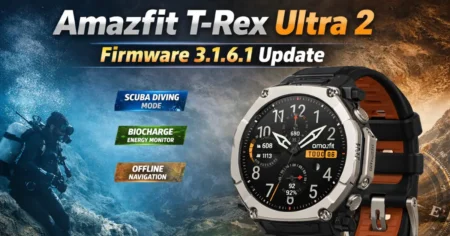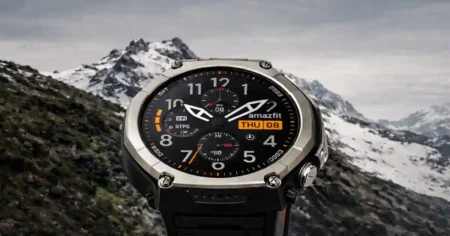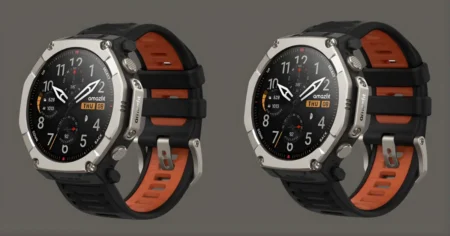

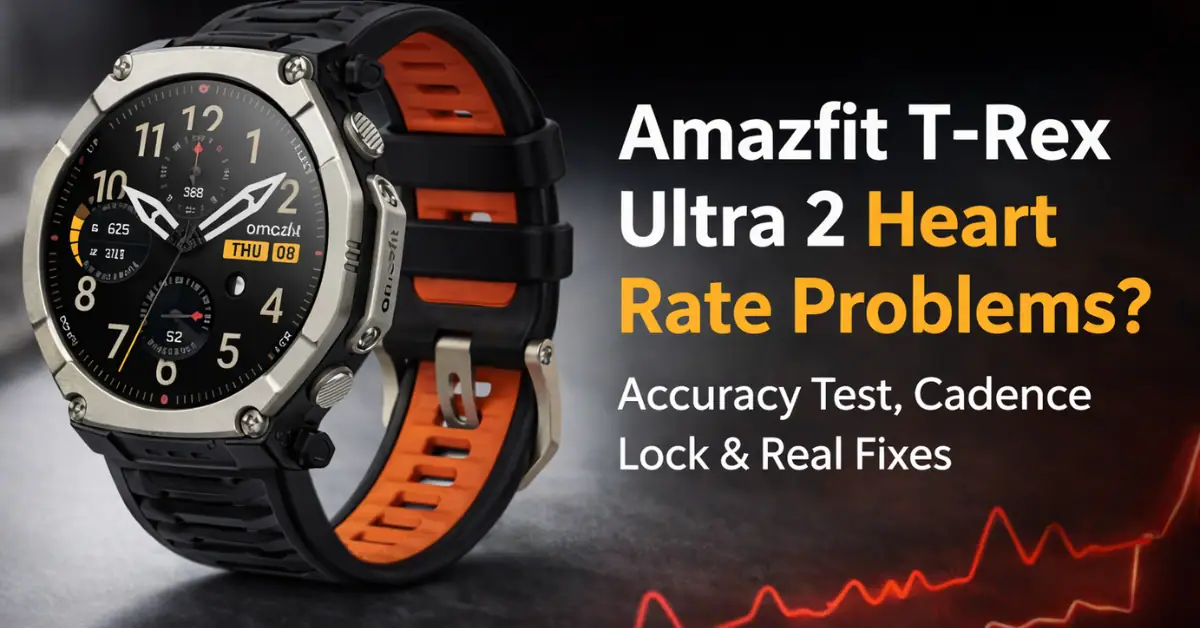
When the Amazfit T-Rex Ultra 2 launched, it quickly gained attention for its rugged build, offline maps, diving support, and multi-day battery life.
But alongside the praise, one concern kept appearing in reviews:
Heart rate accuracy during running.
Is this a hardware flaw?
A software issue?
Or simply the reality of wearing a 90-gram adventure watch during high-intensity movement?
This deep dive breaks down the complaints, the science behind them, real reviewer data, and what you should do if you’re considering buying one.
Quick Summary- amazfit t-rex ultra 2 heart rate Problems:
- Accurate at rest and steady workouts
- Can lag or “lock” during intervals
- Heavier weight increases wrist movement artifacts
- Supports chest straps (best fix)
- Not defective — but not elite-level for sprint training
Now let’s go deeper.
Why Heart Rate Accuracy Drops During Running
To understand this properly, you need to understand how optical heart rate works.
The Ultra 2 uses a PPG (photoplethysmography) sensor. It shines light into your skin and measures blood flow reflection.
For accurate readings, three things must stay stable:
- Consistent skin contact
- Minimal external light interference
- Controlled motion
Now here’s where physics enters.
The Ultra 2 weighs around 90 grams.
During sprinting or intervals:
- Arm acceleration increases
- Direction changes become sharper
- The watch lags microseconds behind wrist movement due to inertia
That micro-movement is enough to:
- Break optical contact stability
- Introduce motion artifacts
- Cause signal lag
Firmware can smooth data — but it cannot remove physical inertia.
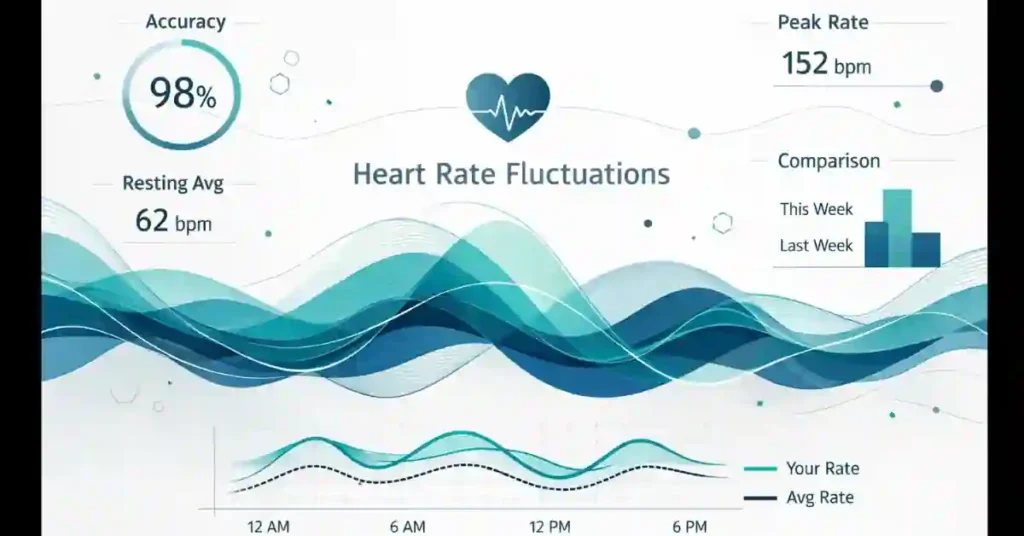
Visual Insights
The Cadence Lock Effect Explained
One common complaint is “cadence lock.”
This happens when:
- Your running cadence (e.g., 170–180 steps/min)
- Closely matches your heart rate (e.g., 165–175 bpm)
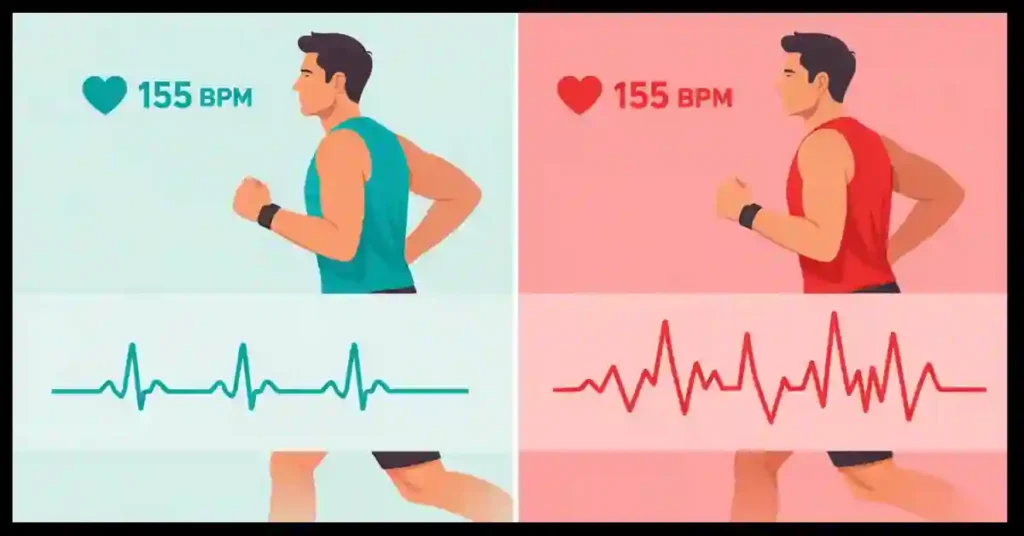
Because the watch bounces rhythmically, the sensor may mistakenly sync to step rhythm instead of pulse rhythm.
Heavier watches are more susceptible because:
- They amplify wrist oscillation
- They generate slightly more bounce
- They create stronger repetitive movement signals
This is not unique to Amazfit.
But mass increases risk.
Is the BioTracker 6.0 Sensor the Problem?
The Ultra 2 uses Amazfit’s BioTracker 6.0 PPG sensor.
Evidence suggests:
- Hardware is capable
- Daily tracking is solid
- Sleep HR tracking performs well
The limitation appears during:
- Rapid heart rate spikes
- HIIT sessions
- Sprint repeats
- Sharp pace changes
This suggests algorithm tuning under motion stress is the bottleneck — not defective hardware.
What Reviewers Found During Testing
Several respected sports tech reviewers have tested the Ultra 2 in controlled and outdoor conditions.
DC Rainmaker
In field tests, he noted that while hardware is impressive, heart rate consistency during intensity shifts still trails category leaders.
The Quantified Scientist
Lab testing showed:
- Good resting HR accuracy
- Acceptable steady cardio tracking
- Noticeable deviation during high-intensity intervals compared to chest straps
T3
Praised durability and battery life, but suggested some software elements feel “still being refined.”
The pattern is consistent:
- Stable efforts = good accuracy.
- Explosive intervals = variable accuracy.
How It Compares to Competitors
Compared to:
Why do those often perform better in intervals?
- Lighter or better-balanced chassis
- More mature motion filtering algorithms
- Larger datasets from competitive athletes
Garmin and Apple have spent years refining interval detection models.
Amazfit is improving — but not yet at that level.
Who Should Buy the T-Rex Ultra 2?
The Amazfit T-Rex Ultra 2 is ideal for:
- Hikers and trekkers
- Mountaineers
- Divers
- Multi-day adventurers
- Users prioritizing battery life
- Harsh environment athletes
It is less ideal for:
- Track runners
- Interval-focused athletes
- Zone-based race trainers
It’s an adventure tool first — a race tool second.

How to Improve Accuracy (Practical Fixes)
If you already own one, here’s how to optimize heart rate tracking:
1. Wear It Slightly Higher
Avoid placing it directly on the wrist bone.
2. Tighten the Strap Properly
Secure contact reduces light leakage.
3. Warm Up Before Starting Intense Work
Cold skin reduces optical clarity.
4. Use a Chest Strap (Best Solution)
The Ultra 2 supports Bluetooth heart rate monitors.
Chest straps eliminate wrist motion interference entirely and provide near ECG-level accuracy.
Frequently Asked Questions
Is Amazfit T-Rex Ultra 2 heart rate accurate?
Yes for steady cardio and daily tracking. Less reliable during rapid intensity shifts or sprint intervals.
Does it support external heart rate sensors?
Yes, Bluetooth chest straps are supported.
Is cadence lock a defect?
No. It’s a known limitation of wrist-based optical sensors under certain movement conditions.
Can firmware updates fix it?
Firmware can improve filtering, but cannot eliminate movement physics entirely.
Final Verdict: Should You Be Concerned?
The Amazfit T-Rex Ultra 2 is not a broken smartwatch.
It is a rugged, adventure-focused wearable that prioritizes durability and battery life over lightweight racing ergonomics.
If your primary training includes:
- Hiking
- Long endurance efforts
- Outdoor navigation
- Multi-sport exploration
It’s a strong choice.
If your priority is:
- Track intervals
- Precision heart rate zones
- Competitive race training
You may want a lighter performance-focused device — or simply pair this with a chest strap.
The reality behind the complaints isn’t scandal.
It’s physics