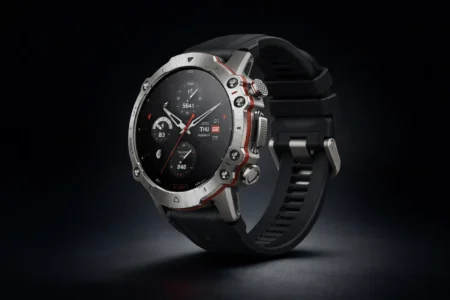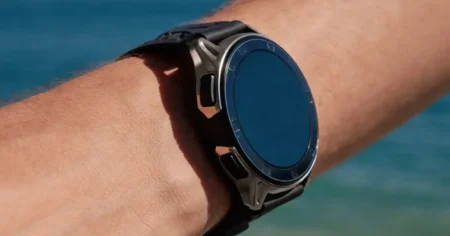

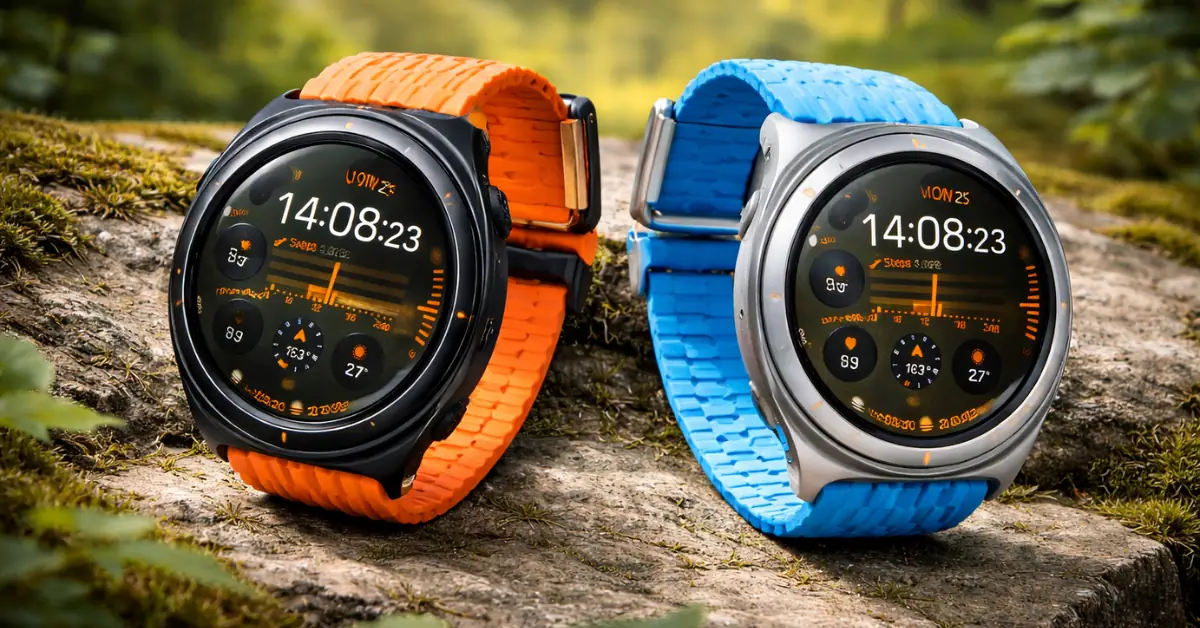
Samsung skipped a year. Now it’s back — with two versions of its Galaxy Watch Ultra 2 instead of one. One has 5G. The other doesn’t. That gap could be the most interesting thing about this watch.
What the Samsung Galaxy Watch Ultra 2 Leak actually tells us
Dutch publication Galaxy Club spotted something quiet but telling in Samsung’s servers: a firmware build tied to a device labeled SM-L715F.
Cross-reference that with Samsung’s naming conventions — where “6” in the model number signals 5G — and you get a clear split. The SM-L716 is the 5G Galaxy Watch Ultra 2 everyone expected.
The SM-L715F is something different: a non-5G variant that hadn’t surfaced until now.
Neither model has been officially confirmed. But firmware builds don’t show up for devices that don’t exist.
Two models, two very different buyers
SM-L716 · 5G MODEL
Full cellular independence Leave your phone behind entirely. Calls, messages, streaming — all on-wrist. Expect flagship pricing to match.
SM-L715F · NON-5G MODEL
Smarter entry point 4G/LTE or Bluetooth/Wi-Fi connectivity. Lower price at launch. Built for buyers who want the Ultra experience without the Ultra premium.
Samsung’s pricing problem — and why two models fixes it
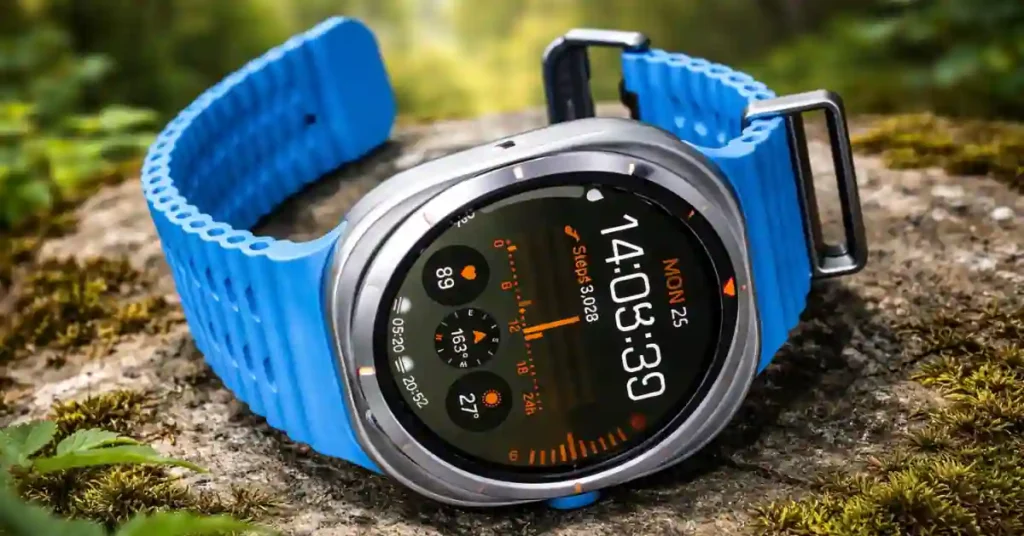
The original Galaxy Watch Ultra launched at $649. It was Samsung’s answer to Apple Watch Ultra 2 — slightly more accessible, slightly less polished.
Then the price started falling not long after launch, which may suggest the $649 number was harder to justify than Samsung anticipated.
Launching a lower-cost non-5G variant from day one is a smarter play. It gives buyers who balked at the original price a real option at launch — instead of waiting around for a discount that signals the watch wasn’t worth full price in the first place.
In a year where Samsung is already raising prices on devices like the Galaxy Z Fold 7 and Z Flip 7, giving watch buyers a genuine choice feels less like a compromise and more like strategy.
Worth flagging: 5G on a smartwatch isn’t as essential as it sounds. Most users keep their watch paired to a phone most of the time. If you’re not regularly leaving your phone behind, the non-5G model may be the more honest purchase.
And there’s a second-order effect here: dropping 5G could also mean better battery life. Cellular radios are one of the biggest power drains in wearables.
If Samsung leans into that — positioning the non-5G model as the longer-lasting Ultra — it could end up being not just the cheaper option, but the more practical one for everyday use.
The competition is no longer just Apple
Apple Watch Ultra 3 made 5G a centrepiece feature — so Samsung’s flagship variant is a direct response to that. But the more interesting fight is with Garmin.
The Forerunner 965 and the Instinct 3 have pushed serious outdoor and fitness capabilities into more accessible price brackets, pulling away exactly the users Samsung’s Ultra was meant to attract: active, performance-focused, and willing to pay for it.
Samsung doesn’t just need to beat Apple on price. It needs to give Garmin users a genuine reason to switch ecosystems.
What the Galaxy Watch Ultra 2 still needs to get right
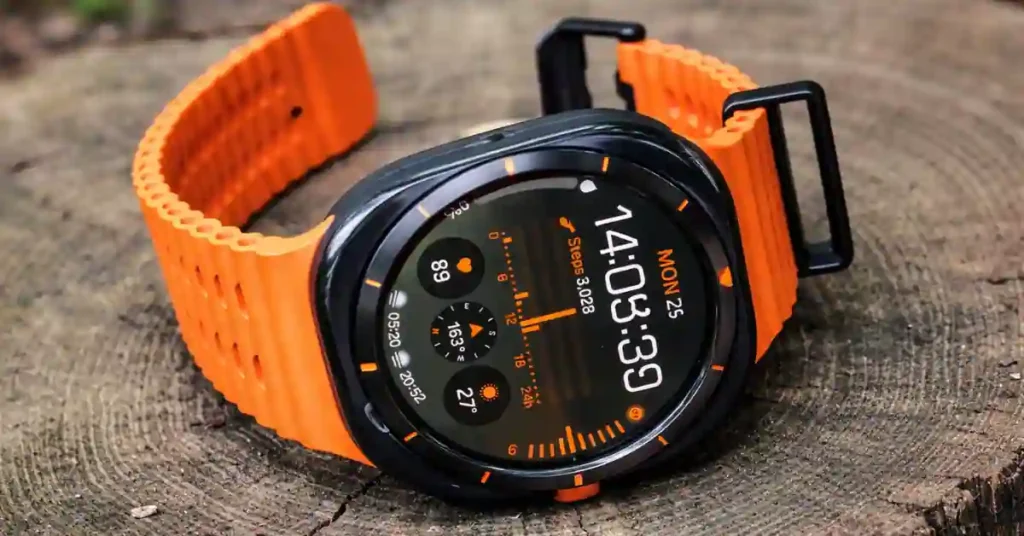
The first-gen Galaxy Watch Ultra had a strong display and a bold look, but its navigation and mapping features were noticeably behind where they needed to be for a watch with “Ultra” in the name.
If Samsung is serious about competing in this space — not just participating in it — the Ultra 2 needs to close that gap decisively, not incrementally.
There’s also a bigger positioning question: is the Ultra line meant to be a true outdoor watch, or just a more rugged Galaxy Watch? Right now, it sits somewhere in between — and that ambiguity is exactly where competitors like Garmin are winning.
Galaxy Watch Ultra 2 release date and what to expect
No official launch date yet. Given that firmware is already surfacing and Samsung typically announces new Galaxy Watch hardware alongside its major Unpacked events, a mid-to-late 2026 announcement is the most reasonable expectation.
If the leak holds, expect Samsung to clearly separate the two models not just on connectivity, but on positioning — with one focused on independence and the other on value and battery efficiency.
We’ll update this page when more details are confirmed.
THE TAKE
Two models is the right call. But the dual-model strategy only works if Samsung actually prices the non-5G version aggressively enough to matter — and only if the hardware improvements justify coming back after a year off.
A cheaper watch that still underdelivers on navigation and outdoor features isn’t a strategy. It’s a markdown.


Also Read
Source – Galaxy Club