
Samsung finally brought one of its most-requested health features to American users. Here’s what it does, how accurate it really is, and what you need to know before trusting it.
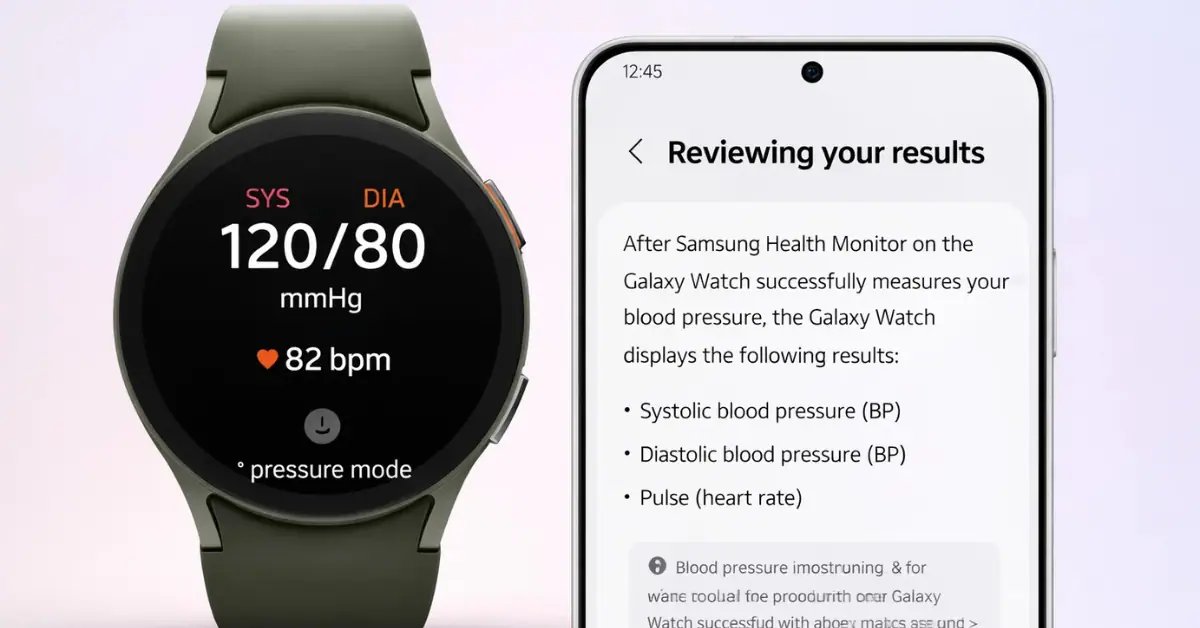
Quick take: From March 31, 2026, Galaxy Watch 4 and newer can show your blood pressure numbers — systolic and diastolic — on your wrist via the Samsung Health Monitor app. You need an arm cuff to set it up and must recalibrate every 28 days. It’s a useful trend-tracker, not a medical device replacement.
If you’ve had a Galaxy Watch for a few years and wondered why blood pressure tracking wasn’t available in the US, you weren’t imagining it. Users in South Korea and parts of Europe had this feature for years. Americans kept waiting.
That wait ended on March 31, 2026. Samsung rolled out the feature to US users on compatible Galaxy Watch models — and there’s one important limitation you need to know about upfront.
- 119.9M – US adults with high blood pressure (CDC, 2025)
- ~50%- of all US adults affected by hypertension
- 28 days- how often you need to recalibrate
What does Galaxy Watch blood pressure actually do?
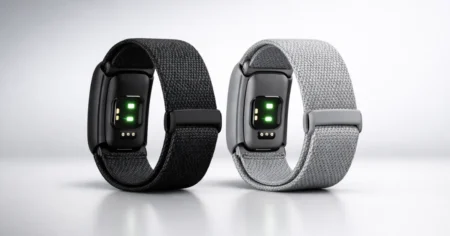
When you take a reading, the optical sensors on the back of the watch — the same ones tracking your heart rate — capture data about blood flow through your wrist.
The Samsung Health Monitor app processes this into an estimated systolic (top number) and diastolic (bottom number) reading.
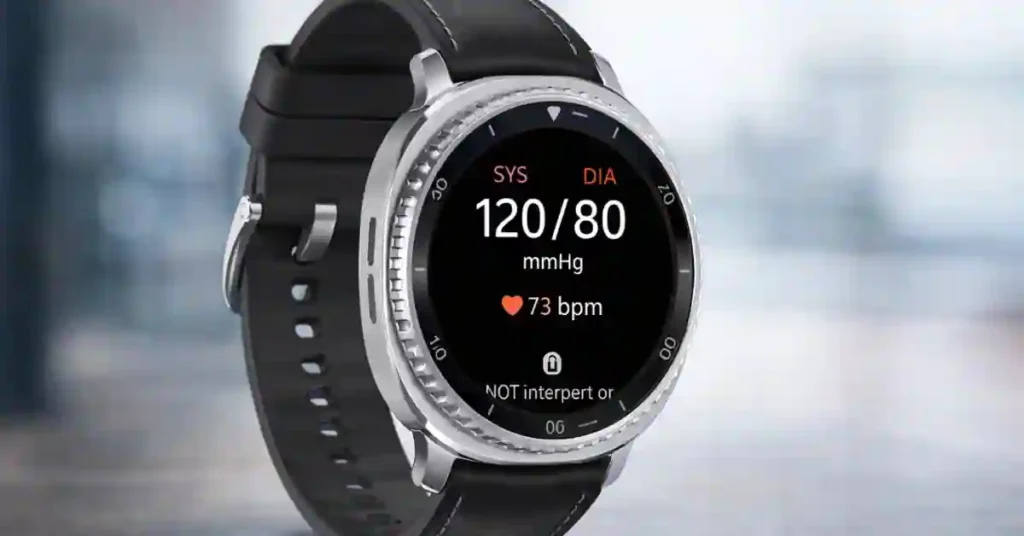
This method is called pulse wave analysis. It’s not the same as a traditional inflatable cuff, but when calibrated to your body it can track changes in your blood pressure over time with reasonable consistency.
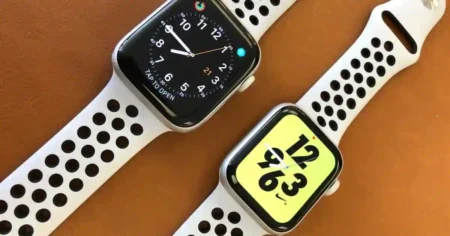
Unlike Apple Watch, which mostly flags trends or warns you about possible hypertension, Samsung actually gives you the numbers. For anyone already keeping an eye on their BP, that’s a meaningful difference.
These are estimated readings calibrated to your personal baseline — not clinically certified measurements. Good for trend monitoring. Not for medical decisions.
Galaxy Watch blood pressure supported devices — full list
The feature works on Galaxy Watch 4 and all newer models — that includes the Watch 5, Watch 6, Watch 7, and the latest Galaxy Watch 8 series. Your phone must be a Samsung device running Android 12 or later.
Non-Samsung Android phones and iPhones are not supported. The Samsung Health Monitor app is free on the Galaxy Store.
How to measure blood pressure on Galaxy Watch — step by step
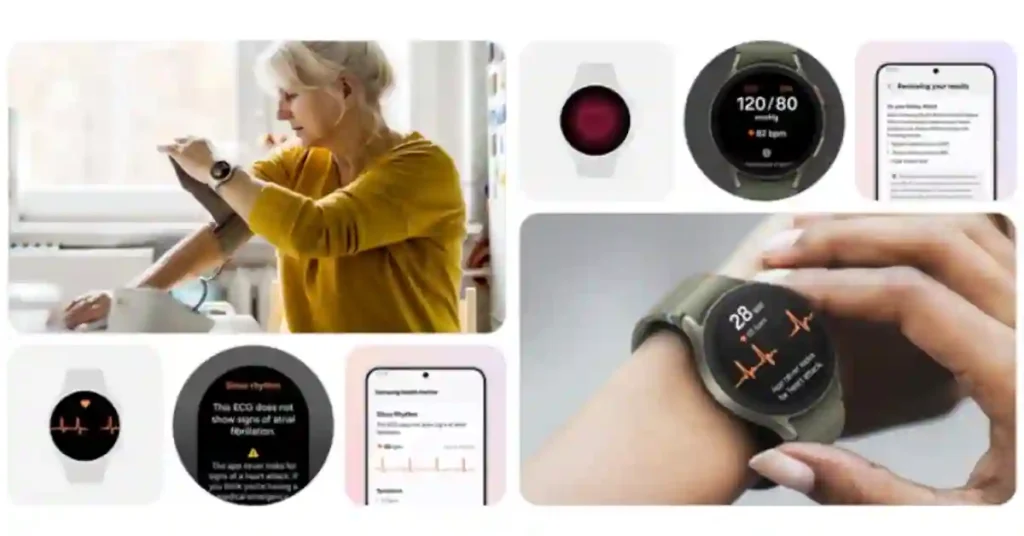
- Download the Samsung Health Monitor app from the Galaxy Store (free)
- Open the app and tap the Blood Pressure section
- Follow the calibration steps using your upper-arm cuff — takes about 5 minutes
- Once calibrated, open the app on your watch and take a reading anytime
- Set a reminder to recalibrate before the 28-day window is up
Don’t skip the 28-day recalibration. When the window lapses, readings stop until you redo it. Keep your arm cuff somewhere accessible — not buried in a drawer.
Galaxy Watch BP accuracy — how good is it really?
This is the question most people actually want answered. Here’s the straight answer.
Samsung’s personal calibration approach — rather than relying on generic population-wide estimates — is what separates it from many wrist-based BP trackers.
The watch learns your baseline, so changes in your readings reflect changes in your actual blood pressure, not random noise.
That said, wrist position, movement, and how snugly the watch sits on your wrist all affect results. For tracking whether your blood pressure is trending up or down week to week, it’s solid.
For a number you’d share with your doctor or use to adjust medication, always use a validated upper-arm cuff — the standard recognized by the FDA for clinical accuracy.
Samsung Health Monitor blood pressure US — Galaxy Watch vs Apple Watch
Here’s how the two compare across every feature that matters:
| Feature | Galaxy Watch (Watch 4+) | Apple Watch (Series 10+) |
|---|---|---|
| Actual BP numbers (systolic/diastolic) | Yes | No — trend alerts only |
| Calibration required | Yes — every 28 days | No calibration needed |
| Arm cuff needed | Yes (sold separately) | No |
| FDA cleared / authorized | Health Monitor App cleared | Hypertension alerts cleared |
| ECG feature | Yes — FDA cleared | Yes — FDA cleared |
| Sleep Apnea detection | Yes — FDA authorized | Yes — FDA cleared |
| Compatible phones | Samsung Android only | iPhone only |
| Passive BP trend tracking | Coming later 2026 | Available now |
Samsung gives you more detailed data. Apple keeps it simpler and friction-free. If you want actual numbers and don’t mind the calibration step, Galaxy Watch wins this round.
If you just want a low-effort heads-up that something might be off, Apple’s approach is less hassle.
What’s the catch with Galaxy Watch blood pressure?
The main limitation is that Galaxy Watch requires an upper-arm blood pressure cuff for initial setup and must be recalibrated every 28 days. Without recalibration, the feature stops working, so it cannot fully replace a traditional blood pressure monitor.
Why did US users have to wait so long?
Short answer: the FDA.
In the US, blood pressure measurement is classified as a medical device function. That means Samsung had to go through a more rigorous regulatory process before launching here — the same process that delayed ECG readings and sleep apnea detection in the past.
It’s frustrating, but it’s not Samsung dragging their feet. Health tech in the US has a higher bar — and honestly, when it comes to features people might use to make health decisions, that’s a reasonable thing.
What else can Galaxy Watch track for your heart?
Blood pressure joins a solid lineup of heart health tools, most of which have gone through FDA review. See our Galaxy Watch 8 full review and the best smartwatches for health tracking for full context.
- ECG readings — FDA-cleared, can flag signs of atrial fibrillation
- Irregular heart rhythm notifications — FDA-cleared
- Sleep apnea detection — first smartwatch feature of its kind authorized by the FDA
- 24/7 continuous heart rate monitoring
- Ectopic beat detection
- Passive blood pressure trend monitoring — coming later in 2026
Other Health Features Available on Galaxy Watch
Blood pressure isn’t the only health tool Samsung has packed into Galaxy Watch. Here’s what the full health suite looks like in 2026:
- Sleep Apnea Detection — The first of its kind to receive FDA authorization. Detects signs of moderate-to-severe obstructive sleep apnea over two nights of monitoring.
- ECG (Electrocardiogram) — FDA-cleared. Records a single-lead ECG right from your wrist to check for signs of atrial fibrillation.
- Irregular Heart Rhythm Notifications — Also FDA-cleared. Passively monitors your heart rhythm during the day and alerts you to irregularities.
- Ectopic Beat Detection — Flags premature or irregular heartbeats that can sometimes indicate underlying cardiac conditions.
- Sleep Tracking — Tracks sleep stages (light, deep, REM), sleep score, and overall sleep quality with actionable insights.
- 24/7 Heart Rate Monitoring — Continuous background monitoring with high/low heart rate alerts.
Frequently asked questions
Does Samsung Health Monitor blood pressure work in the US now?
Yes. It officially launched for US users on March 31, 2026, through the Samsung Health Monitor app on compatible Galaxy Watch models.
Which Galaxy Watch models support blood pressure monitoring?
Galaxy Watch 4, 5, 6, 7, and the Galaxy Watch 8 series (including Watch 8 Classic). You also need a Samsung phone running Android 12 or later.
How accurate is Galaxy Watch blood pressure?
Reliable enough for day-to-day trend tracking when properly calibrated. Not accurate enough to replace a clinical cuff or inform medical decisions.
Do I still need a blood pressure cuff?
Yes. A standard upper-arm cuff is required for the initial calibration and every 28-day recalibration after that. It’s not included in the box.
Is the Samsung Health Monitor app free?
Yes — free to download on the Galaxy Store for all compatible devices.
Does Galaxy Watch 3 support blood pressure monitoring?
No. The feature is only available on Galaxy Watch 4 and newer models.
Does this work with iOS / iPhone?
No. Galaxy Watch requires a Samsung Galaxy Android smartphone. The Samsung Health Monitor App is not available for iPhone.
Sources & references
Centers for Disease Control and Prevention (CDC) — High Blood Pressure Facts, 2025
Worth setting up — just know what it’s for
If you have a Galaxy Watch 4 or newer and a Samsung phone, this is worth turning on. It won’t replace your arm cuff, and it’s not something to act on medically without a proper device.
But for keeping a daily eye on your blood pressure — especially if hypertension runs in your family — having that data on your wrist is genuinely useful. US users have been waiting years for this. Better late than never.