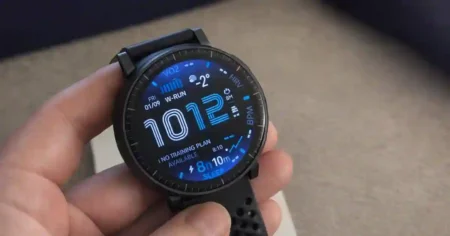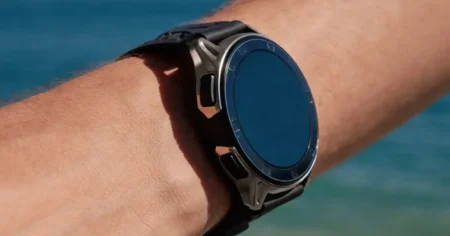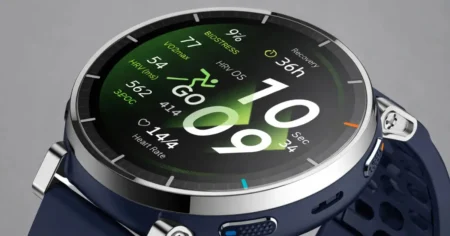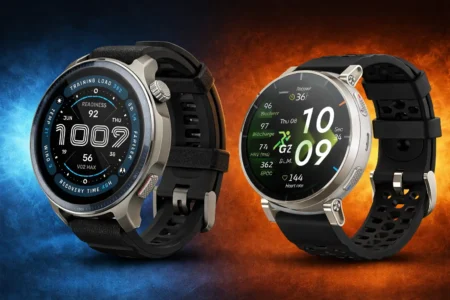


If you’ve been patiently waiting for Zepp Health to refresh its premium multisport watch lineup, a recent deep dive into the Zepp Health Android app may be the most encouraging sign yet.
A string buried inside version 10.0.8 of the Zepp Health app — released just a few days ago — contains what looks like an internal device flag labelled SUPPORT_BIND_FALCON2025. For anyone who has followed the Amazfit ecosystem, that single line of code is enough to set pulses racing.
What Was Actually Found in the APK?
App teardowns have become a reliable way to peek behind the curtain at what smartwatch brands are preparing.
When developers build support for a new device inside a companion app, code references tend to show up weeks or even months before any product announcement. That is exactly what appears to have happened here.
Inside the Zepp Health 10.0.8 APK, a cluster of internal support flags was discovered that maps to a range of devices the platform recognizes. The full list of strings reads:
SUPPORT_BIND_COLOGNESUPPORT_BIND_Cheetah2SUPPORT_BIND_DUBLINSUPPORT_BIND_FALCON2025SUPPORT_BIND_GENEVASUPPORT_BIND_LUMISUPPORT_BIND_MAKALU
These flags act as hardware pairing markers — they let the Zepp Health app identify and communicate with specific physical devices.
The important thing to understand is that these flags have to be in place before a product ships. There’s no other reason for them to exist this early.
The SUPPORT_BIND_FALCON2025 entry is the one that has enthusiasts buzzing. It directly implies a device from the Falcon family was being scoped — or at minimum coded for — in 2025. Whether it arrived on schedule is a different conversation entirely.
Also present in the code is a reference to the Cheetah2, which aligns with a separate leak from a few days ago that revealed a Cheetah 2 Pro model.
As for the others — Cologne, Dublin, Geneva, Makalu — these are almost certainly internal project codenames, a common practice where brands use city names or geographic references as placeholder identifiers before a final product name is locked in.
A Quick Refresher on the Original Amazfit Falcon
To appreciate why this matters, it helps to go back to where the Falcon story began.
Zepp Health launched the original Amazfit Falcon in October 2022 as a high-end training watch aimed squarely at serious athletes.
It came with an aircraft-grade TC4 titanium unibody construction, sapphire crystal glass rated at a Mohs hardness of 9 out of 10, and an impressive 20 ATM water resistance rating — meaning it could handle water pressure equivalent to 200 meters deep.
On land, it passed 15 military-grade toughness certifications including resistance to extreme temperatures, humidity, and shock.
The watch featured a 1.28-inch always-on AMOLED display running at 416×416 resolution with brightness up to 1,000 nits, dual-band GPS across six satellite systems, and a BioTracker 3.0 PPG sensor capable of simultaneous heart rate, blood oxygen, and stress monitoring.
It retailed at $499 — a price point that positioned it firmly in the premium segment alongside names like Garmin and Polar.
Despite all of that, the Falcon has sat untouched since launch day. While other lines in the Amazfit catalog — the T-Rex, Active, Balance, Bip, and GTR families — have all received updates and successor models, the Falcon has been left standing still. That’s an unusually long gap for what was supposed to be Zepp Health’s flagship athletic offering.
What Does “FALCON2025” Actually Mean?
This is where the analysis gets genuinely interesting. The “2025” appended to the string raises an obvious question: was this device originally planned for a 2025 release?
If so, there are two possible interpretations. Either the project is on track and was always internally scoped as a 2025 development cycle even if launch spills into 2026, or it has been delayed and the naming convention is an artifact of when the project was originally greenlit.
Neither scenario is unusual in consumer hardware. Development cycles often start with a year attached to the product scope, and the final release date can drift by six to twelve months depending on component availability, software readiness, or shifting market priorities.
What matters more than the year in the string is the fact that the flag exists at all. Internal pairing support doesn’t get written into a companion app unless there is an actual device in some stage of development to pair with.
This is not vaporware or a brand trademark filing — it is functional code designed to make a real piece of hardware work.
No Regulatory Filings Yet — Launch Is Still Some Way Off
Here is the sobering part for anyone hoping for a near-term announcement: as of now, neither a Falcon successor nor the Amazfit Cheetah 2 Pro have appeared in any known regulatory certification databases.
For context, smartwatches carrying wireless radios must be registered with telecommunications and safety regulators in each market before they can legally be sold.
Filings with bodies like the FCC in the United States, SIRIM in Malaysia, NRRA in South Korea, or Indonesia’s DJID tend to surface several months ahead of a product launch.
In fact, a separate mystery Amazfit device carrying the model number A2557 — widely speculated to potentially be the Falcon 2 — appeared across the SIRIM, NRRA, and DJID databases in late 2025, generating significant speculation at the time.
But a device tied specifically to the Falcon name or the FALCON2025 flag has not cleared those regulatory hurdles yet, at least not publicly.
That absence tells us a launch is probably not imminent. Realistically, if the Falcon 2 is in active development, the earliest anyone should expect a public announcement is several months from now.
Why This Actually Matters for the Wearables Market
The premium multisport GPS watch segment is not exactly short on competition right now. Garmin continues to iterate aggressively across its Fenix, Forerunner, and Epix lines.
Polar keeps refining the Grit X. Apple’s Ultra platform continues to make headway with endurance athletes. COROS has carved out a loyal following in the ultra-running community.
Against that backdrop, Zepp Health’s long silence on the Falcon line is a strategic gap. The original watch was well-reviewed for its build quality and hardware feature set, but three-plus years without a refresh has allowed competitors to pull significantly ahead in software intelligence, AI-driven coaching, and sensor accuracy.
A true Falcon 2 — assuming it comes with upgraded sensors, a new version of Zepp OS, enhanced training analytics, and improvements to GPS accuracy — could give Zepp Health a credible flagship to put back into the conversation.
The brand has already demonstrated in recent releases like the T-Rex 3 Pro and Active 2 that it is capable of competitive hardware at strong price points. Applying that same momentum to the Falcon lineup would make sense.
What to Realistically Expect
App code findings like this one are exciting precisely because they reflect real development work rather than speculation.
But they also carry an important asterisk: features and devices that appear in APK teardowns do not always make it to a public release. Projects get cancelled, timelines get reorganized, and code references sometimes outlive the products they were intended for.
With that caveat clearly in place, here is a grounded summary of where things stand:
What we know: The Zepp Health 10.0.8 APK contains a device support flag specifically labeled SUPPORT_BIND_FALCON2025, indicating a Falcon-family device is in some stage of development.
What we don’t know: Specifications, final product name, pricing, launch markets, or a confirmed release window.
What the absence of regulatory filings tells us: A launch in the next few weeks or even the next couple of months is unlikely. The realistic window, if everything proceeds smoothly, is further down the road in 2026.
What the code does confirm: Zepp Health has not abandoned the Falcon line. After years of silence on this product family, that alone is meaningful news for anyone invested in the Amazfit ecosystem.
Should You Wait, or Buy the Original Falcon Now?
If you already own a Falcon and it’s serving you well, there’s no particular urgency either way. The original remains a capable watch despite its age, and a successor with no confirmed specifications or timeline doesn’t warrant an indefinite wait.
If you’re in the market for a new premium multisport watch right now and the Falcon catches your eye, the lack of a confirmed launch date makes it a harder sell to hold off. Competitors have moved considerably in the time since October 2022, and the existing Falcon is showing its age in areas like software depth and AI coaching.
The smarter play is probably to keep an eye on regulatory database filings. When a Falcon 2 appears in SIRIM or the FCC database, that will be the reliable signal that something is actually close to coming out the other side of the development pipeline.
For now, the hidden code in the Zepp Health app is the most concrete indication we have that the wait may finally be approaching an end. Whether that end arrives in the next few months or stretches further into the year remains to be seen.
FAQ About the Amazfit Falcon 2
Q: Is the Amazfit Falcon 2 officially confirmed?
No. Zepp Health has not made any official announcement about a Falcon successor. The only evidence of its existence so far is an internal device support flag — SUPPORT_BIND_FALCON2025 — found inside the Zepp Health Android app version 10.0.8. Until Zepp Health makes a public statement, everything should be treated as unconfirmed.
Q: What does SUPPORT_BIND_FALCON2025 mean in the Zepp Health app?
It is an internal hardware pairing flag embedded in the Zepp Health companion app. These kinds of flags are used to allow the app to recognize and connect to specific devices. Their presence in the app code typically means a device is somewhere in the development pipeline, since app support has to be built before a product can officially launch. The “2025” in the name likely reflects the internal development year the project was scoped under.
Q: When will the Amazfit Falcon 2 be released?
There is no confirmed release date. The fact that neither the Falcon 2 nor the Amazfit Cheetah 2 Pro have appeared in any regulatory certification databases — such as the FCC, SIRIM, or NRRA — suggests a launch is still several months away at minimum. Regulatory filings are typically one of the last steps before a product ships, so their absence is a meaningful indicator that we are not close to a launch.
Q: What improvements can we expect from the Amazfit Falcon 2 over the original?
Nothing is confirmed, but based on how the rest of the Amazfit lineup has evolved since 2022, reasonable expectations would include a newer Zepp OS version with deeper AI coaching features, an updated BioTracker sensor for more accurate health metrics, improved dual-band GPS performance, potentially a higher-resolution or larger display, and possibly a longer battery life. Whether the titanium build and sapphire glass from the original carry over remains to be seen.
Q: How does the original Amazfit Falcon compare to Garmin’s watches?
The original Amazfit Falcon punched above its weight in terms of hardware construction at its $499 price point — the titanium body, sapphire glass, and 20 ATM water resistance were genuinely premium specs. Where Garmin has historically led is in the depth of its training ecosystem, recovery analytics, course navigation, and third-party app support. The Falcon hardware was strong; the software depth was the area where Garmin kept a clear edge. A Falcon 2 built on a more mature Zepp OS could meaningfully close that gap.
Q: Is the Amazfit Cheetah 2 Pro also coming soon?
A reference to the Cheetah 2 was also found in the same batch of Zepp Health app code, and a separate leak specifically pointed to a Cheetah 2 Pro variant. Like the Falcon 2, it has not appeared in any regulatory filings yet. The two watches may be on overlapping development timelines, but neither appears to be close to a public announcement based on current evidence.
Q: Should I buy the original Amazfit Falcon right now or wait for the Falcon 2?
That depends entirely on your timeline. If you need a premium multisport GPS watch now, waiting on a device with no confirmed specs, pricing, or launch date is a difficult position to hold. The original Falcon is still a capable piece of hardware. However, if you can afford patience and are specifically invested in the Amazfit ecosystem, monitoring regulatory database filings for a Falcon 2 entry is a worthwhile exercise. When it shows up there, you’ll know a launch is genuinely around the corner.
Q: What is an APK teardown, and how reliable is it?
An APK teardown involves extracting and analyzing the contents of an Android app package file to look for hidden strings, code references, and device flags that haven’t been publicly announced. It’s a legitimate and widely used method in the tech media world for uncovering upcoming products. The reliability varies — sometimes every device flagged in an APK teardown makes it to market, and sometimes a project gets quietly cancelled. The findings should be treated as strong hints rather than hard announcements.
⚠️ APK teardowns analyze work-in-progress code to identify potential future devices or features. There is no guarantee that anything found through this method will reach a public release.