Smartwatches have come a long way from counting steps and showing notifications. Today, they check your heart rate, blood oxygen, sleep quality, and even stress levels. But one thing they haven’t cracked yet — at least not reliably — is blood sugar monitoring.
That might be about to change.
Huawei is reportedly working on a brand-new wearable specifically built to monitor blood glucose levels, and according to leaks, it could launch as early as Q2 2026 — meaning somewhere between April and June of this year.
If the rumors hold up, this could be one of the biggest wearable health tech launches we’ve seen in years. Let’s break down everything we know.
Where Did This Leak Come From?
The rumor comes from Fixed-Focus Digital, one of the most reliable Weibo-based tech insiders who has a consistent track record with Huawei hardware leaks.
According to this source, Huawei is actively developing a dedicated blood sugar monitoring wearable that will use a more advanced sensor system than anything the company has released before. The focus, specifically, is on accuracy — which has historically been the biggest roadblock for any smartwatch trying to measure blood glucose without breaking the skin.
A second Weibo tipster, @GuoJing, also independently confirmed back in September 2025 that Huawei had a new-generation blood sugar wearable in development for 2026, adding more weight to the claim.
When two separate insiders point to the same product, it stops being just a rumor.
Why Q2 2026 Makes Perfect Sense
This didn’t come out of nowhere. Huawei has been building toward this for years — and the timing lines up with a very clear pattern.
At the World Health Expo 2026 in Dubai (held February 9–13), Huawei made headlines by showcasing its expanding diabetes ecosystem. The company officially unveiled its Diabetes Risk Study feature for the Huawei Watch GT 6 Pro via an OTA update — making it the first major smartwatch brand to ship a working diabetes risk detection tool to consumers.
Huawei Arabia confirmed it on social media, calling it a “24/7 blood sugar monitoring feature.” The response was enormous, and even major publications like TechRadar reported that Huawei had beaten both Apple and Samsung to a feature both companies have been chasing for years.
So why would a Q2 2026 hardware launch make sense? Because Huawei just showed the world its software ecosystem works. Now they’re ready to pair it with purpose-built hardware.
Huawei’s Blood Sugar Journey: A Clear Timeline
To understand just how significant this upcoming device could be, you need to see how Huawei got here.
2021 — Huawei Watch D (First Generation) Huawei launched the Watch D as its first medical-grade wearable, featuring an inflatable wrist cuff for clinical-level blood pressure monitoring. It introduced the idea of a health-focused wearable line within the company.
2023 — Huawei Watch 4 Huawei debuted its first blood sugar tracking feature on the Watch 4, but it was restricted entirely to the Chinese market. International users never got access to it. It was an early experiment — not a finished product.
2024 — Huawei Watch D2 The second generation of the medical Watch D line launched with a bigger display, improved design, and a sharper focus on health monitoring. It reinforced Huawei’s commitment to the medical wearable category.
February 2026 — Diabetes Risk Study (Watch GT 6 Pro, OTA Update) Huawei rolled out its Diabetes Risk Study feature globally through an over-the-air update. This is a software-based wellness tool that analyzes your PPG signals over 3 to 14 days and categorizes your diabetes risk as Low, Medium, or High. It doesn’t give you a glucose reading — but it tells you whether you should see a doctor.
Q2 2026 (Rumored) — Dedicated Blood Sugar Monitoring Wearable This is where the story goes next. A device built specifically to track blood glucose levels with dedicated hardware sensors — going far beyond what any previous Huawei wearable has attempted.
What Is the Difference Between Blood Pressure and Blood Sugar Monitoring?
A lot of people confuse these two, so it’s worth being clear.
Blood pressure monitoring measures how hard your blood pushes against the walls of your arteries. Huawei’s Watch D series already does this with an inflatable cuff — similar to the kind you’d find at a doctor’s office.
Blood sugar monitoring is completely different. It measures the concentration of glucose — sugar — circulating in your bloodstream. Glucose is your body’s main energy source, and keeping it in a healthy range is critical, especially for people with or at risk of diabetes.
Traditionally, checking blood sugar means pricking your finger and using a glucose meter. Non-invasive blood glucose tracking through a wrist sensor is something the entire tech industry has been trying — and struggling — to pull off. The core challenge is accuracy. Skin layers, hydration levels, and movement all interfere with optical sensors trying to measure glucose.
That’s why the leaker’s specific claim about “more accurate, advanced measurement features” is the most important detail in this whole story.
Could This Be the Huawei Watch D3?
Here’s where speculation enters the picture — but it’s educated speculation.
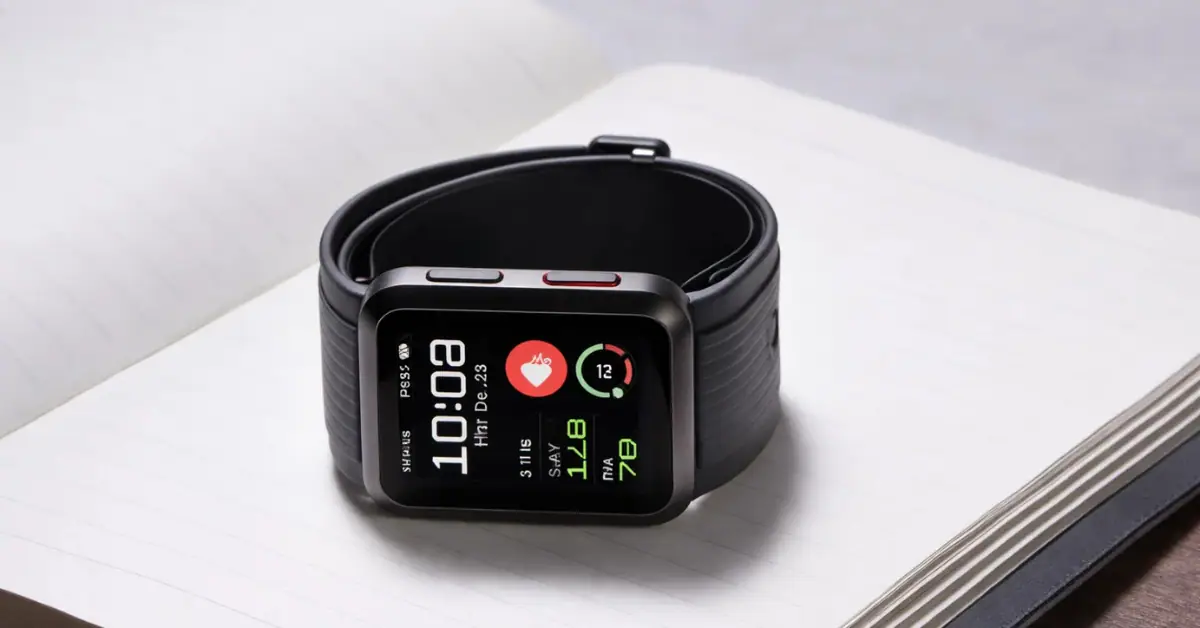
According to Huawei Central, FixedFocus found that Huawei has a new-gen Watch D model in the 2026 pipeline, with the smartwatch potentially going official in the second quarter of this year. The leaker noted this next-generation blood sugar monitoring smartwatch will offer more accurate, advanced measurement features.
Given that the Watch D line is already Huawei’s home for medical-grade wearables — blood pressure monitoring, clinical-level accuracy, a distinct form factor — it’s the most logical platform to house a serious blood glucose tracking system.
A Huawei Watch D3 with dedicated glucose sensors would make the Watch D series a comprehensive metabolic health device: one wearable that monitors both blood pressure and blood sugar levels with hardware precision.
No official name has been confirmed. But the Watch D3 theory is the strongest candidate right now.
How Does the Current Technology Work? (And What Comes Next?)
The existing Diabetes Risk Study feature on the Watch GT 6 Pro runs on PPG — Photoplethysmography technology.
At the heart of Huawei’s diabetes risk feature is photoplethysmography, or PPG — a non-invasive optical method that tracks tiny changes in blood flow just beneath the skin. Huawei is taking those signals and analyzing them for patterns that may be linked to diabetes risk.
Users need to wear the watch consistently for between 3 to 14 days, during which time the watch continuously gathers cardiovascular data from the wrist.
In simple terms: the sensor shines light through your skin, detects how your blood absorbs that light, and looks for patterns associated with metabolic changes linked to diabetes.
The current version is a risk assessment tool, not a glucose meter. It tells you your risk level — it doesn’t tell you your actual blood sugar number.
The rumored Q2 2026 device is expected to go much further, using dedicated hardware sensors rather than relying purely on software algorithms running on a general-purpose health watch. Think of it as the difference between a fitness app estimating your calorie burn and an actual metabolic test at a sports lab.
How Does Huawei Compare to Apple and Samsung Here?
Huawei has just beaten Apple and Samsung to a much-requested smartwatch feature — the ability to check your risk to diabetes. However, the non-invasive feature is still a long way from replacing finger pricks and glucose monitors.
Apple has been rumored to be working on blood glucose monitoring for the Apple Watch for several years. Samsung has been doing the same with its Galaxy Watch lineup. Neither company has shipped it.
Huawei has now lapped both of them — first with the Watch 4’s early attempt in 2023 (China only), then with the Watch GT 6 Pro’s Diabetes Risk Study in 2026, and now with a dedicated hardware device allegedly arriving in Q2 2026.
For a company largely blocked from US and some European markets, that’s a significant technical lead.
Will This Wearable Be Available Outside China?
This is the question everyone is asking, and the honest answer is: we don’t know yet.
Huawei’s health wearable innovations have historically launched in China first. The Watch 4’s blood sugar feature never left China. The Watch GT 6 Pro is not sold in the United States.
But the Dubai World Health Expo was a deliberate, public-facing international move. Huawei wasn’t there to talk to Chinese consumers — it was there to talk to global health institutions, regulators, and media. That signals the company is actively trying to position these features for international markets.
For Europe, that likely means navigating CE medical device certification. For the United States, it would require FDA clearance — a much longer and more uncertain process given Huawei’s current regulatory environment in the US.
The most realistic scenario is a China launch in Q2 2026, with European availability potentially following later in the year if CE approval comes through. Global availability at launch remains unlikely but not impossible.
Who Should Actually Care About This Device?
If you’re healthy and have no particular concerns about blood sugar, this probably isn’t for you — at least not yet.
But for these groups, a reliable non-invasive blood glucose wearable would be genuinely life-changing:
People with Type 2 diabetes who currently rely on finger-prick testing multiple times a day would gain a far more comfortable, continuous monitoring option.
People with prediabetes — estimated at over 380 million globally — who need to track metabolic trends without clinical tools at home.
Health-conscious individuals who want to understand how diet, exercise, sleep, and stress affect their glucose levels in real time.
Caregivers monitoring elderly parents or family members with metabolic conditions who need simple, at-a-glance health data.
The market for this kind of device is enormous. That’s exactly why Apple, Samsung, and now Huawei are all racing toward it.
What to Watch For Before the Official Announcement
If this device is real and on track for Q2 2026, here’s what will likely tip us off before Huawei makes it official:
Regulatory filings — Keep an eye on SRRC (China’s radio frequency certification body) and Bluetooth SIG listings. New model numbers often appear weeks before announcements.
HarmonyOS health updates — Any OTA updates referencing glucose tracking modules or new metabolic monitoring frameworks could signal a hardware launch is close.
Huawei China events — Major Huawei product launches in China typically happen at dedicated events, and we’re now inside the rumored window.
Final Thoughts: Is This the Real Deal?
Looking at everything together, this rumor has more substance than most.
You have two independent Weibo insiders pointing to the same product. You have Huawei’s clear, publicly documented progression from the Watch 4’s early experiment to the Watch GT 6 Pro’s diabetes risk feature to now — all pointing toward dedicated hardware as the next logical step. You have the World Health Expo presentation showing the company is serious about its metabolic health ecosystem on a global stage.
Unlike traditional fitness metrics, blood sugar measurement crosses into the realm of medical technology, making this development particularly significant. If Huawei successfully delivers this feature, it could represent one of the most meaningful breakthroughs in consumer wearables in recent years.
This isn’t a sudden left turn. It’s the next step in a plan Huawei has been executing for the past three years. And if the accuracy claims hold up and the device ships on schedule, it could genuinely change what people expect from a health wearable.
We’ll be watching closely. Stay tuned.
Frequently Asked Questions
When is Huawei launching its blood sugar smartwatch?
According to Leaks from Weibo insider Fixed-Focus Digital point to a Q2 2026 release window, meaning April to June 2026.
Is the Diabetes Risk Study the same as glucose monitoring?
No. The current Diabetes Risk Study on the Watch GT 6 Pro assesses your risk of diabetes using PPG data. The rumored new device is expected to offer actual blood glucose tracking using dedicated hardware sensors.
Will the Huawei blood sugar wearable be available outside China?
International availability is unconfirmed. Regulatory approvals like CE certification in Europe will likely determine whether and when it reaches global markets.
What is the difference between blood pressure and blood sugar monitoring?
Blood pressure measures force on artery walls. Blood sugar measures glucose concentration in your bloodstream. They require completely different sensor technologies.
Is this the Huawei Watch D3?
No official name has been confirmed, but industry analysts strongly believe the device could be the next evolution of the Watch D series — potentially called the Watch D3.
Disclaimer: All product details in this article are based on leaks and third-party reports. Huawei has not officially confirmed this wearable. Specifications, pricing, and launch dates are subject to change.