
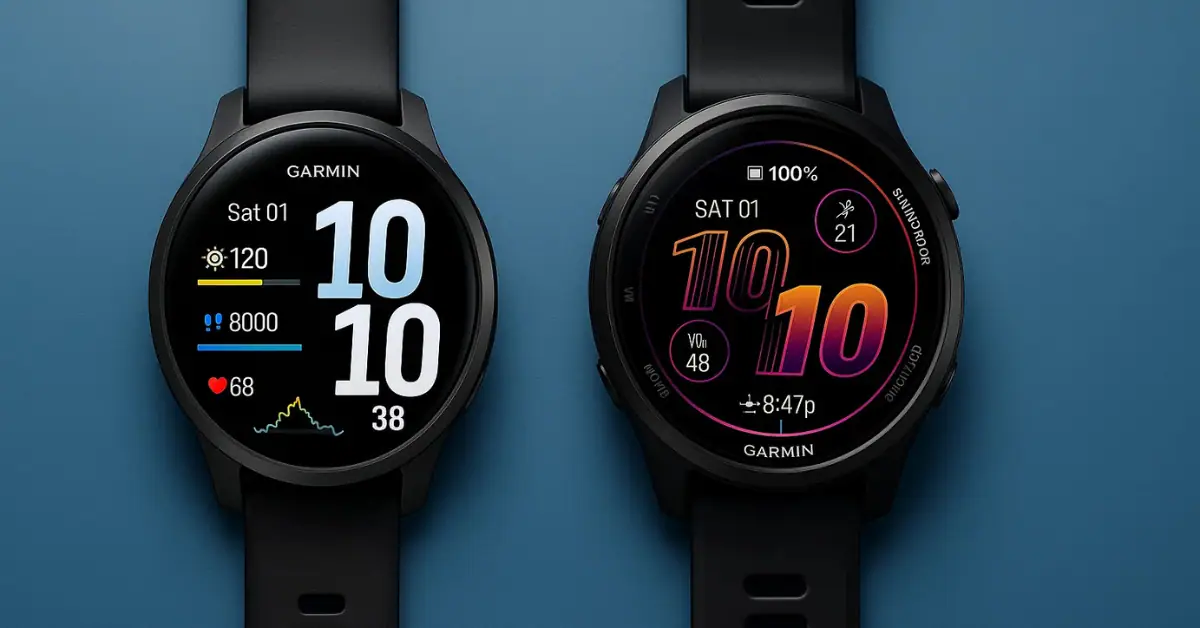
If you thought buying a new Garmin watch is simple, think again. The Venu 4 and the Forerunner 570 are identical in every way that matters… and different in every way that counts.
They share the stunning AMOLED screen, strong health features, and serious training tools. But one is built for the office and the treadmill, while the other is built for gloves, rain, and the finish line.
We cut through the confusion to detail the critical differences: Buttons vs. Touchscreen. Metal vs. Plastic. Flashlight vs. Pure Utility.
By the end of this definitive breakdown, you’ll know which watch is the essential tool for your life—and which one you absolutely must leave on the shelf.
Overview: Why These Two Watches Exist
For years, the Forerunner series was the “serious runner” line, built around simple MIP screens and long-lasting batteries.
The Venu line was the stylish side of Garmin, meant to compete with watches like the Apple Watch SE, featuring an AMOLED display, strong health tracking, and decent Exercise tools.
With the new Garmin models, that gap almost disappears. Both the smaller Venu 4 and the sportier Forerunner 570 now share a long list of core features.
Key things the Garmin Venu 4 vs Forerunner 570 share include:
- A sharp AMOLED display that stays easy to read in the sun or indoors
- Speakers and microphones for calls and voice assistants
- Onboard storage for music and apps
- Strong Garmin fitness tools like training status and recovery advisor
- Support for external Sensor accessories
- A big list of sports features and activity profiles
- Turn‑by‑turn breadcrumb navigation, although no full maps
In other words, for many runners, cyclists, and people who just want a solid smartwatch, the 570 and the Venu 4 will feel almost the same.
That is why this product comparison matters, because small details like buttons, case size, and a tiny built-in flashlight can change how the watch feels every single day.
Price, Sizes, and Display
Price and Availability
On paper, price and availability are almost identical.
- The Venu 4 starts at $549.
- The Forerunner 570 also starts at $549.
- There is a premium Venu 4 option at $599 that swaps in a nicer leather Strap and a dressier look.
If you want to pick one up, you can find the Venu 4 and, Garmin Forerunner 570 is also available on Amazon.
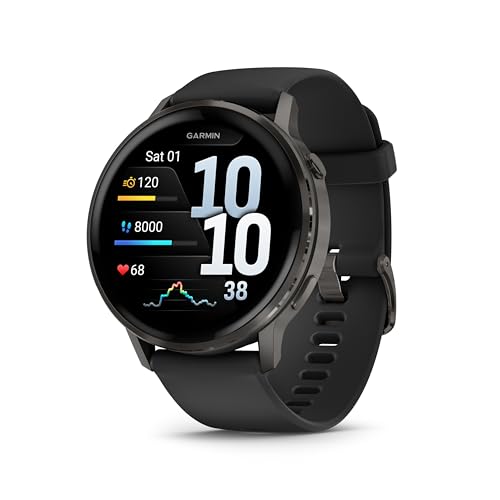

So, in terms of spec and price, this product comparison is less about budget and more about how you plan to use the watch.
Case Sizes: 41mm and 45mm vs 42mm and 47mm
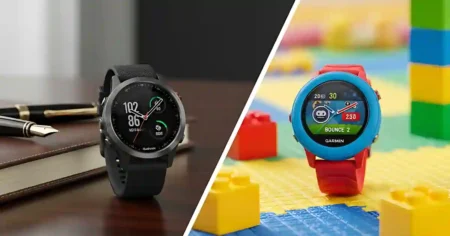
The Venu 4 comes in 41mm and 45mm sizes. The 41mm is an excellent option for smaller wrists or for anyone coming from a Venu 3S. The 45mm model feels like a solid mid‑size running watch, not huge, not tiny.
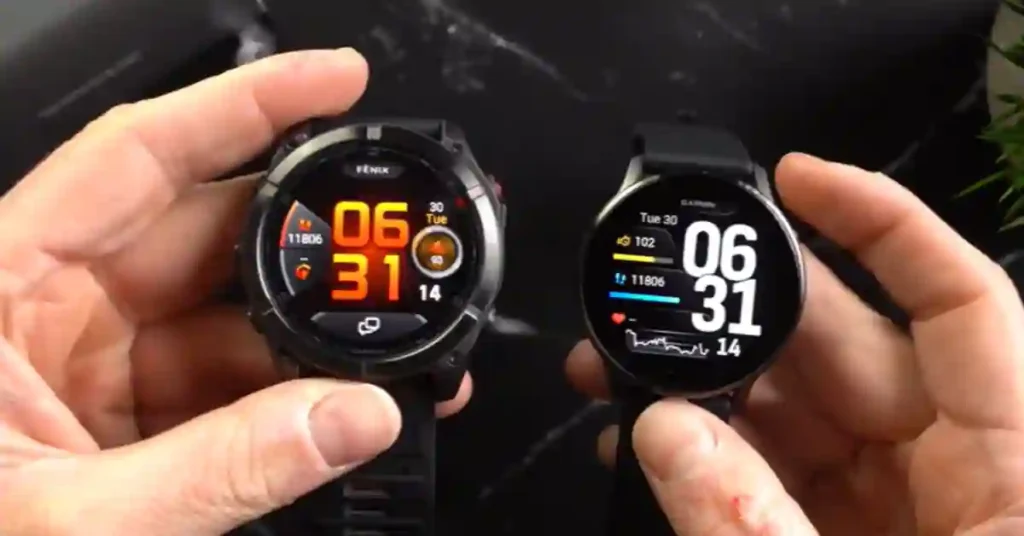
The Forerunner 570 is a bit larger, with 42mm and 47mm case options. That 42mm size is still pretty friendly on medium wrists, and the 47mm gives you a touch more screen space without feeling like a brick.
So, if you look at them side by side:
- Venu 4: 41mm and 45mm, slightly smaller overall
- Forerunner 570: 42mm and 47mm, a little bigger in both sizes
Even though the 45mm and 47mm cases are different on paper, on the wrist, they are closer than you might think in terms of Weight and feel.
Display: AMOLED on Both
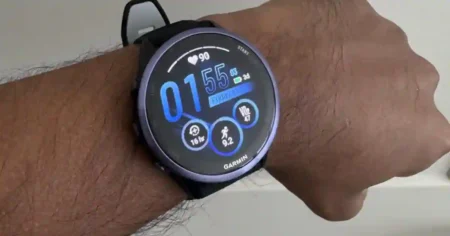
Older Forerunners used MIP screens that looked more “tool than toy”. With these models, both watches feature an AMOLED display, making each Garmin watch feel more like a modern sports watch than a basic training tool.
You get:
- High contrast text and graphics
- Deep blacks and bright colors
- A very readable Display device outdoors
Venu 4 is also using one of the newest Garmin panels, so animations look crisp and smooth. The Forerunner 570 matches it closely, so you are not giving up screen quality with the more “athlete” model.
Hardware and Build: Premium Metal vs Sporty Plastic
Venu 4: Metal Case and Premium Feel
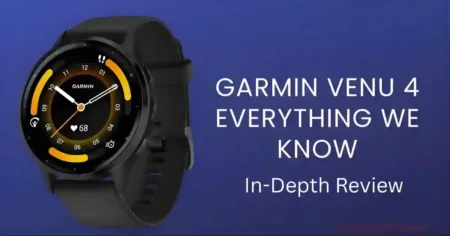
Flip the Venu 4 over, and you notice the design change right away. Compared to older models like the Venu 3 or Venu 3s, the Venu 4 adds a full stainless steel frame.
The bezel, lugs where the watch bands connect, and the two buttons on the side are all metal. Only the core around the Sensor and Heart Data on the back stays plastic.
This gives Venu4 a more premium, raw-metal look. Many people will see it as one of the best-looking Garmin watches in this mid‑range.
Forerunner 570: Sporty Plastic and More Buttons
The Forerunner 570 goes the other way. The case is mostly plastic with a metal bezel and metal buttons. It feels tougher and more “tool‑like”, which fits the sportier Forerunner 570 style.
The big story here is the buttons. The Forerunner 570’s five-button layout is the classic Garmin style for the Garmin Forerunner line.

You get three buttons on one side and two on the other. The buttons on the Forerunner 570 let you navigate menus, start and stop workouts, and control almost everything without ever touching the screen.
You can even turn the touchscreen off completely and run it only by buttons. That makes it far easier to control during workouts in Rain, sweat, Swimming (sport), or when wearing gloves.
By contrast, the Venu 4 now has only two buttons on one side. Older Venu models had three shortcut buttons, so you lose one of them.
You can still map shortcuts to those extra buttons, but with fewer buttons, you lean more on the touchscreen.
If you often train in cold weather or spend a lot of time wearing gloves, the extra buttons on the Forerunner can make it much easier to use and easier to control during workouts.
Standout Venu 4 Features
On paper, you might think the pure “runner” watch would get all the fun extras. In reality, there are a few things you only get on the Forerunner 570’s sibling, the Venu 4, and they are not minor details.
Built‑In Flashlight
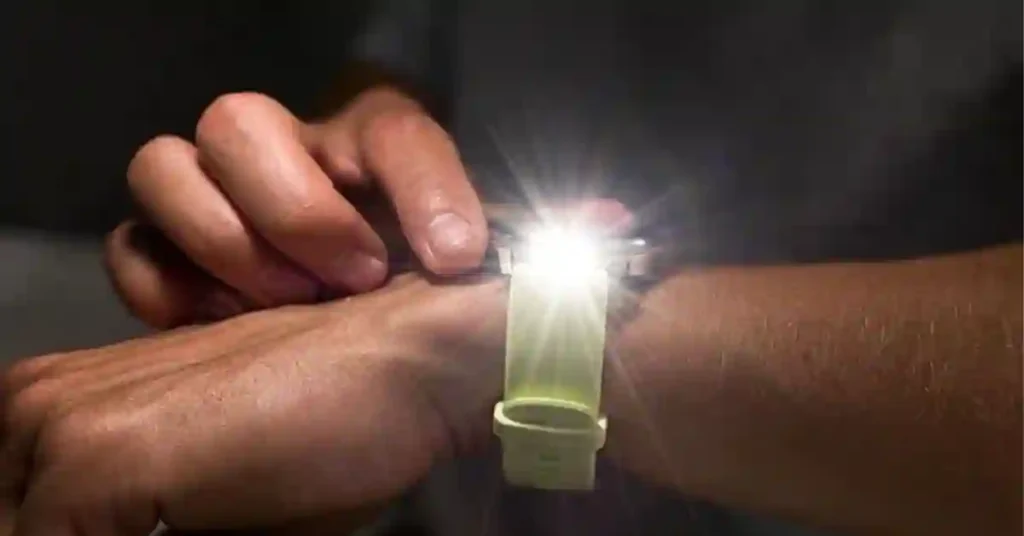
One of the most fabulous additions is the small built-in flashlight on the top edge of the Venu 4. A long press of the back button turns the flashlight on, and you can swipe to adjust brightness or switch to red.
You can even set it to blink while running or cycling to add a bit of visibility during Outdoor recreation or other outdoor activities.
In daily life, it shines when you are walking to the bathroom at night, searching under a couch, or digging in a dark car.
The Forerunner 570 lacks this feature, so if you want a flashlight on your wrist, the Venu 4 is a better option.
ECG on the Wrist
Both watches share the latest optical Heart rate Sensor from Garmin, which also tracks blood oxygen saturation. However, the Venu 4 now supports ECG measurements.
With ability to take ECG measurements on the Venu 4, you can record a short trace by touching the bezel, then export a PDF and share it with a doctor.
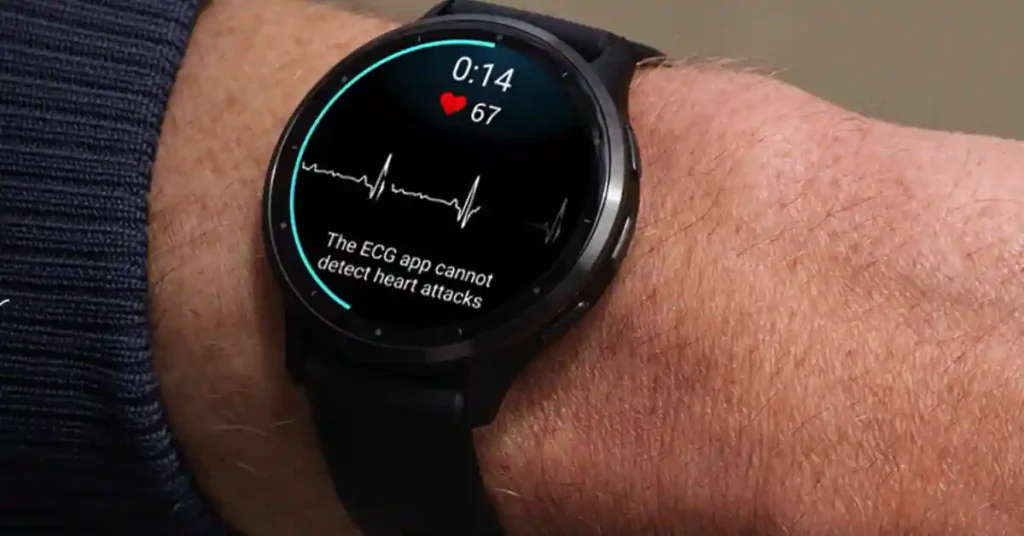
This can help flag conditions like Atrial fibrillation, though it does not replace medical testing.
The Garmin Forerunner 570 uses the same hardware Sensor, but Forerunner’s software does not unlock ECG.
If you care about heart rate tracking tools beyond standard Heart rate graphs, this is a strong point for the Venu.
In short, if you had to choose between the two Forerunner 570 and Venu 4 models, the Venu 4 is the better pick for everyday use and health-focused tracking.

GPS, GNSS, and Battery Life
GPS and SatIQ
Both watches use multi‑band GNSS, which pulls signals from several satellite systems to help produce accurate GPS tracks.
Think of it as a smarter Global Positioning System, especially around tall buildings, trees, or canyons.
On top of that, both the Forerunner 570 and Garmin Venu 4 include SatIQ. This auto mode adjusts GPS settings on the fly.
When your signal is strong, it can drop to a simpler mode to save the battery. When the signal is weak, it switches to the best-performing metrics mode to maintain accuracy.
In real use, both are capable of producing accurate GPS tracks for running and triathlon, Cycling, High-intensity interval training, and Swimming workouts.
While the Forerunner 570 is a robust training partner, its specialized focus may exceed your specific needs if you are a general fitness enthusiast.
If you prioritize versatility and value across gym workouts, hiking, and daily wear, you should consult our comprehensive guide on the Best Budget Garmin Watches for Gym, Hiking, and Value to find your ideal match.
Battery Life: Big vs Small Sizes
Battery life is where things get a bit strange.
| Feature / Model | Venu 4 (45mm) | Forerunner 570 (47mm) | Venu 4 (41mm) | Forerunner 570 (42mm) |
| Smartwatch Mode (Max) | Up to 12 Days | Up to 11 Days | Up to 10 Days | Up to 10 Days |
| All-Systems GPS (Standard) | Up to 19 Hours | Up to 24 Hours (Estimated) | Up to 13 Hours | Up to 18 Hours |
| Multi-Band GPS (High Accuracy) | Up to 17 Hours | Up to 14 Hours | Up to 12 Hours | Up to 13 Hours |
| AOD (Always-On Display) Mode | Up to 4 Days | Up to 5 Days | Up to 3 Days | Up to 4 Days |
On the larger models, the Venu 4 usually edges out the Forerunner 570. You see more days in simple smartwatch mode and more hours in high-accuracy GPS.
That feels almost backward, since the FR 570 is framed as the pure athlete tool.
On the smaller sizes, the script flips, and the Forerunner 570 range does a little better than the smaller Venu 4. The gap is not huge, but it is there.
You do not get official numbers here, but both are strong enough for:
- Daily wear as a Smartwatch
- Tracking a full marathon without stress
- Shorter ultra events, up to about 50 miles, if you manage GPS mode
If you mainly do shorter runs, Aerobic exercise, gym work, or Swimming (sport) sessions, both watches have more than enough battery life.
User Interface and Health Tracking
How the Interface Looks
Under the hood, both watches run in the usual Garmin style. Menus, widgets, and controls will feel familiar if you have used Garmin Connect devices before.
The Forerunner 570 leans into simple data: squared widget cards, clean fonts, and fewer graphics. It feels practical and focused on Data.
The Venu 4 uses more rounded cards, gradients, and color accents. It looks closer to something you might see on an Apple Watch SE, while still feeling like a Garmin design.
Functionally, the info is the same. You still sync to the Garmin Connect app, review analysis features, and dig into long‑term trends in Garmin Connect.
Shared Health Metrics
Both watches handle the basics you expect from a modern Smartwatch:
- Steps and calorie burn
- All‑day Heart rate and heart rate tracking
- Sleep tracking and HRV
- VO2 max estimates inside Garmin Connect
- Garmin run coach plans and guidance for structured Exercise
They also include Body Battery, one of Garmin’s more useful tools that combines stress and recovery into a simple energy bar.
Health Status, Sleep, and Lifestyle Logging
Where the Venu 4 adds something new is on‑watch health status and lifestyle logging.
- Health status pulls together Heart rate, HRV, respiration, skin temperature, blood oxygen, and other metric values while you sleep. Over time, it builds a baseline, then flags when something looks off.
- Lifestyle logging lets you track habits like alcohol intake, caffeine intake, late meals, and other factors, so you can see how they align with your sleep and recovery trends.
These features live in the Garmin Connect app on many devices, but the Venu 4 is also the first model to show them directly on the watch itself.
The Venu 4 also adds sleep extras inside the Sleep Coach, such as:
- Sleep alignment, which shows how your sleep lines up with your natural rhythm
- Sleep consistency, which tracks how stable your bed and wake times are
Both the Forerunner 570 and the Venu 4 can coach your rest, but some of these new visual tools show up on‑watch only for the Venu 4 right now.
Training, Sports Features, and Activities
Shared Sports Features
Both watches support a wide range of sports features and profiles, such as:
- Road and trail running
- Cycling and an indoor bike
- Strength training and High-intensity interval training
- Yoga, mobility, and more
- Triathlon and other multisport modes
They tie into Garmin fitness tools like Training Status and Recovery Advisor, as well as long-term logging in Garmin Connect.
You can use either a watch for running and triathlon events, general Outdoor recreation, or pool Swimming and open-water swimming(sport).
Mixed Multisport on Venu 4
There is one training mode where Venu 4 is the better option. Under the multisport profiles, the Venu 4 adds a “mixed session” mode.
Instead of only doing the classic swim‑bike‑run, you can build a custom block, like:
- Strength workout
- Then mobility
- Then a run
- Then a bike ride
The Forerunner 570 and the Venu 4 both support triathlon, but the mixed session mode is still unique to the Venu 4 at the time of recording. If your Exercise days jump between activities, that flexibility is handy.
Just remember, the Forerunner 570’s five buttons may feel easier to control during workouts when your hands are sweaty or when you’re switching sports quickly.
Buttons vs Touchscreen: Daily Use and Control
This is where the decision between the Forerunner 570 and the Venu 4 often becomes clear.
- The Venu 4 has a smooth Touchscreen and two buttons. It is excellent for swiping around your Smartwatch widgets, reading notifications, and enjoying that bright display.
- The Forerunner 570 relies more on the five buttons, which is a huge benefit when your hands are wet, you are in the rain, or you are swimming.
During hard intervals or High-intensity interval training, pressing a real button can feel more precise than tapping a screen that might be damp with sweat. The extra buttons on the Forerunner also give you more ways to map shortcuts.
If you want something that feels closer to a traditional timer or running watch, the sportier Forerunner 570 wins here.
If you’re exploring more performance-focused options, don’t miss our expert guide: Best Garmin Watches for Runners — a thoroughly tested roundup tailored to every type of runner and budget.
Pros and Cons: Venu 4 vs Forerunner 570
Why Venu 4 Is the Better Everyday Watch
Reasons the Venu 4 is better for most people who want a blend of style and function:
- Venu 4 comes in 41mm and 45mm, so it suits a wider range of wrist sizes.
- The stainless steel case looks premium and feels like a step up from plain plastic.
- The built-in flashlight is convenient in real life.
- You get ECG support and the ability to take wrist ECG measurements.
- The larger Venu 4 gets slightly better battery life than the prominent Forerunner 570.
- You see on‑watch health status, lifestyle logging, and the latest sleep tools.
- Mixed multisport gives more flexibility between activities.
If you want a Smartwatch that looks good in the office, works well in the gym, and still covers running and triathlon, the Venu 4 package is hard to beat.
Why Forerunner 570 Still Makes Sense
Reasons the Garmin Forerunner 570 or Venu 4 might still be your pick:
- The five buttons and extra buttons make it rock-solid when wearing gloves, in the rain, or during intense Exercise.
- The larger 47mm model gives you a bit more screen area for pace, distance, and running metrics.
- The 42mm Forerunner 570 tends to outperform the Venu 4 in battery life.
- The plastic build can feel more forgiving for Outdoor recreation and rough outdoor activities.
If you are deep into structured workouts, care about details like stride Oscillation, or use accessories that track ground contact, the “tool” style of the Forerunner 570 might fit your mindset, even when the features compared are close to the Venu 4.
If you want a higher‑end option in this style, you can also look at the Forerunner 970, available on Amazon, which builds on what you get with the Forerunner 570 with more advanced analysis features.
Extra Notes and Small Things to Consider
There are a few more points worth thinking about when you compare these two watches:
- You will still manage your data and settings through the Garmin Connect app, which is central to any Garmin device.
- If you care about extras like Garmin Pay, always confirm on the product page. This breakdown focuses on features such as GPS, training, and health that were demonstrated in use.
- Both are Smartwatch‑level devices that can sit next to an Apple Watch SE 2 in daily life, but with stronger Garmin fitness tools and Garmin run coach style guidance.
- Neither is some random code like Venu X1. Their names tell you where they sit in the lineup.
Overall, this is less about which one is “better on paper” and more about how you like to tap, press, and wear your watch.
Final Thoughts: Which Watch Should You Buy?
When you line up the Garmin Venu 4 vs the Forerunner 570, the overlap is huge. The most significant differences lie in the case materials, button layout, built-in flashlight, and on‑watch health tools.
If you want a more stylish Smartwatch with a metal build, ECG, mixed multisport, and that clever wrist flashlight, the Venu 4 is also the one that will probably make you smile every day.
If you want physical controls, more rigid plastic, and a pure “runner tool” feel that is easier to use in rough conditions, the Forerunner 570 and its five buttons are tough to beat.
Either way, you are getting strong Garmin tech, plenty of health and training Data, and watches that can handle everything from basic Exercise to full Triathlon days.
Which one fits your wrist and your routine best?
Whichever you pick, you are getting one of the best mid‑range Garmin options on the market right now.